The post If selling $2 billion crashes the BTC price, why doesn’t buying $83B send it to space? appeared on BitcoinEthereumNews.com. In the spirit of no stupid questions, Bitcoin influencer Crypto Tea released a post on X that many people are wondering but haven’t said out loud. If previously dormant whales can crash the BTC price by selling $2 billion in BTC, why doesn’t a year of relentless buying pressure to the tune of over $80 billion from Saylor and ETFs send it to the moon? The Bitcoin Therapist picked it up: “Explain how this is possible,” he pondered. Sudden trades vs algo buying Creator of The Bitcoin Quantile Model, Plan C, quickly came to the rescue to explain the phenomenon. A big fat-finger sale of $2 billion in BTC can send the market down faster than a piano from a 10-storey building. Yet the $83 billion gobbled up in 2025 by Michael Saylor and the ETF brigade? Well, that seems to leave the BTC price making slow, steady tracks rather than moonshots. What gives? The logic is almost boringly simple, Plan C explains: “Easy. To compare the impact of trades, you need to consider the rate of trading by dividing the total dollars by the time over which they occurred.” In other words: price moves at the edges, not the averages. Sudden, massive sell orders, especially in thin liquidity, can wipe out order books and cause sharp price drops. Algobot buying, on the other hand, is precisely designed to blend in, spread out, and avoid crashing the party. Buy $83 billion in a year, and you build a floor, not a rocket, unless the pace picks up. The Crypto Investor Blueprint: A 5-Day Course On Bagholding, Insider Front-Runs, and Missing Alpha Nice 😎 Your first lesson is on the way. Please add [email protected] to your email whitelist. ‘Paper’ Bitcoin: The X Factor But wait. What about paper Bitcoin? The Bitcoin… The post If selling $2 billion crashes the BTC price, why doesn’t buying $83B send it to space? appeared on BitcoinEthereumNews.com. In the spirit of no stupid questions, Bitcoin influencer Crypto Tea released a post on X that many people are wondering but haven’t said out loud. If previously dormant whales can crash the BTC price by selling $2 billion in BTC, why doesn’t a year of relentless buying pressure to the tune of over $80 billion from Saylor and ETFs send it to the moon? The Bitcoin Therapist picked it up: “Explain how this is possible,” he pondered. Sudden trades vs algo buying Creator of The Bitcoin Quantile Model, Plan C, quickly came to the rescue to explain the phenomenon. A big fat-finger sale of $2 billion in BTC can send the market down faster than a piano from a 10-storey building. Yet the $83 billion gobbled up in 2025 by Michael Saylor and the ETF brigade? Well, that seems to leave the BTC price making slow, steady tracks rather than moonshots. What gives? The logic is almost boringly simple, Plan C explains: “Easy. To compare the impact of trades, you need to consider the rate of trading by dividing the total dollars by the time over which they occurred.” In other words: price moves at the edges, not the averages. Sudden, massive sell orders, especially in thin liquidity, can wipe out order books and cause sharp price drops. Algobot buying, on the other hand, is precisely designed to blend in, spread out, and avoid crashing the party. Buy $83 billion in a year, and you build a floor, not a rocket, unless the pace picks up. The Crypto Investor Blueprint: A 5-Day Course On Bagholding, Insider Front-Runs, and Missing Alpha Nice 😎 Your first lesson is on the way. Please add [email protected] to your email whitelist. ‘Paper’ Bitcoin: The X Factor But wait. What about paper Bitcoin? The Bitcoin…

If selling $2 billion crashes the BTC price, why doesn’t buying $83B send it to space?

2025/09/08 04:03

In the spirit of no stupid questions, Bitcoin influencer Crypto Tea released a post on X that many people are wondering but haven’t said out loud. If previously dormant whales can crash the BTC price by selling $2 billion in BTC, why doesn’t a year of relentless buying pressure to the tune of over $80 billion from Saylor and ETFs send it to the moon?

The Bitcoin Therapist picked it up:

Sudden trades vs algo buying

Creator of The Bitcoin Quantile Model, Plan C, quickly came to the rescue to explain the phenomenon. A big fat-finger sale of $2 billion in BTC can send the market down faster than a piano from a 10-storey building.

Yet the $83 billion gobbled up in 2025 by Michael Saylor and the ETF brigade? Well, that seems to leave the BTC price making slow, steady tracks rather than moonshots. What gives?

The logic is almost boringly simple, Plan C explains:

In other words: price moves at the edges, not the averages.

Sudden, massive sell orders, especially in thin liquidity, can wipe out order books and cause sharp price drops. Algobot buying, on the other hand, is precisely designed to blend in, spread out, and avoid crashing the party. Buy $83 billion in a year, and you build a floor, not a rocket, unless the pace picks up.

‘Paper’ Bitcoin: The X Factor

But wait. What about paper Bitcoin? The Bitcoin Therapist asks. You know, the supply we think we see on exchanges? Plan C’s take:

Reported purchases might be diluted if significant volumes of “paper” Bitcoin (IOUs or synthetics) are traded instead of real coins, creating the illusion of buy pressure without actually moving real coins off the market.

What really moves the BTC price?

Ultimately, the difference comes down to pace, execution, and market structure. ETF and institutional buying in 2025 was deliberate, steady, and highly fragmented across exchanges and OTC desks, sometimes even facilitated by algorithmic order books designed to minimize price impact.

Crashes, by contrast, tend to be abrupt, concentrated, and, yes, panic-inducing, particularly when carried out over thin liquidity weekends.

So, the next time a headline screams market meltdown over a quick $2 billion dump, remember it’s not just the size, it’s the speed and the source. Slow burns build floors. Sudden shocks bring flames. And somewhere in between, paper Bitcoin lurks as the market’s ultimate wildcard.

Mentioned in this article

Source: https://cryptoslate.com/if-selling-2-billion-crashes-the-btc-price-why-doesnt-buying-83b-send-it-to-space/

Piyasa Fırsatı
Chainbase Logosu
Chainbase Fiyatı(C)
$0,07995
$0,07995$0,07995
+3,76%
USD
Chainbase (C) Canlı Fiyat Grafiği
Sorumluluk Reddi: Bu sitede yeniden yayınlanan makaleler, halka açık platformlardan alınmıştır ve yalnızca bilgilendirme amaçlıdır. MEXC'nin görüşlerini yansıtmayabilir. Tüm hakları telif sahiplerine aittir. Herhangi bir içeriğin üçüncü taraf haklarını ihlal ettiğini düşünüyorsanız, kaldırılması için lütfen service@support.mexc.com ile iletişime geçin. MEXC, içeriğin doğruluğu, eksiksizliği veya güncelliği konusunda hiçbir garanti vermez ve sağlanan bilgilere dayalı olarak alınan herhangi bir eylemden sorumlu değildir. İçerik, finansal, yasal veya diğer profesyonel tavsiye niteliğinde değildir ve MEXC tarafından bir tavsiye veya onay olarak değerlendirilmemelidir.

Ayrıca Şunları da Beğenebilirsiniz

BitGo expands its presence in Europe

BitGo expands its presence in Europe

The post BitGo expands its presence in Europe appeared on BitcoinEthereumNews.com. BitGo, global leader in digital asset infrastructure, announces a significant expansion of its presence in Europe. The company, through its subsidiary BitGo Europe GmbH, has obtained an extension of the license from BaFin (German Federal Financial Supervisory Authority), allowing it to offer regulated cryptocurrency trading services directly from Frankfurt, Germany. This move marks a decisive step for the European digital asset market, offering institutional investors the opportunity to access secure, regulated cryptocurrency trading integrated with advanced custody and management services. A comprehensive offering for European institutional investors With the extension of the license according to the MiCA (Markets in Crypto-Assets) regulation, initially obtained in May 2025, BitGo Europe expands the range of services available for European investors. Now, in addition to custody, staking, and transfer of digital assets, the platform also offers a spot trading service on thousands of cryptocurrencies and stablecoins. Institutional investors can now leverage BitGo’s OTC desk and a high-performance electronic trading platform, designed to ensure fast, secure, and transparent transactions. Aggregated access to numerous liquidity sources, including leading market makers and exchanges, allows for trading at competitive prices and high-quality executions. Security and Regulation at the Core of BitGo’s Strategy According to Brett Reeves, Head of European Sales and Go Network at BitGo, the goal is clear: “We are excited to strengthen our European platform and enable our clients to operate smoothly, competitively, and securely.§By combining our institutional custody solution with high-performance trading execution, clients will be able to access deep liquidity with the peace of mind that their assets will remain in cold storage, under regulated custody and compliant with MiCA.” The security of digital assets is indeed one of the cornerstones of BitGo’s offering. All services are designed to ensure that investors’ assets remain protected in regulated cold storage, minimizing operational and counterparty risks.…
Paylaş
BitcoinEthereumNews2025/09/18 04:28
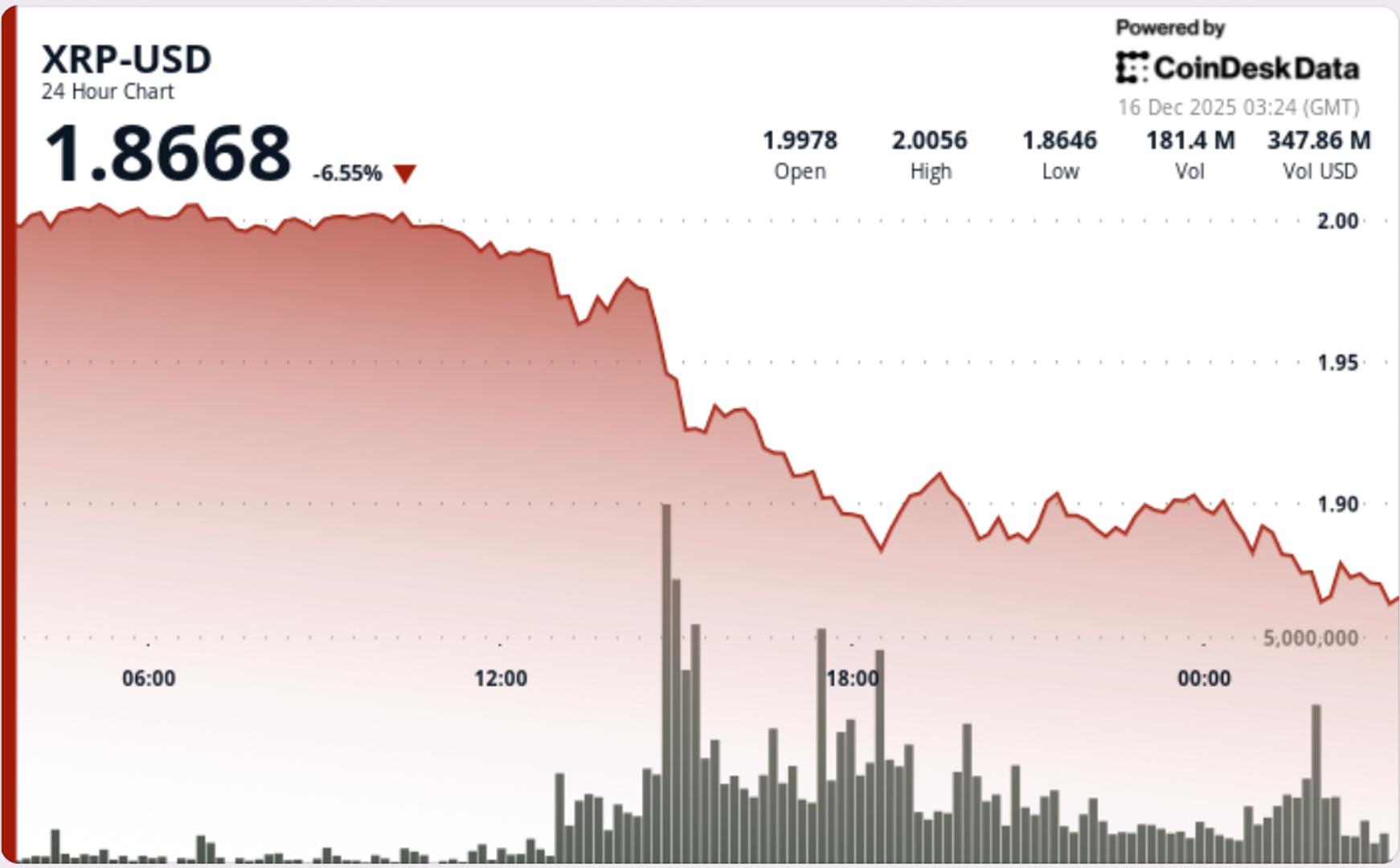
XRP price weakens at critical level, raising risk of deeper pullback

XRP price weakens at critical level, raising risk of deeper pullback

Markets Share Share this article
Copy linkX (Twitter)LinkedInFacebookEmail
XRP price weakens at critical level, raising
Paylaş
Coindesk2025/12/16 11:34
Visa Targets Banks and Fintechs With Stablecoin Advisory Launch as Adoption Pressure Tightens

Visa Targets Banks and Fintechs With Stablecoin Advisory Launch as Adoption Pressure Tightens

The post Visa Targets Banks and Fintechs With Stablecoin Advisory Launch as Adoption Pressure Tightens appeared on BitcoinEthereumNews.com. Visa is moving deeper
Paylaş
BitcoinEthereumNews2025/12/16 11:43