For nearly two decades, the Technology sector was defined by the relentless migration toward centralized public clouds. However, 2026 marks the definitive arrivalFor nearly two decades, the Technology sector was defined by the relentless migration toward centralized public clouds. However, 2026 marks the definitive arrival

The Cloud 3.0 Manifest: Sovereignty, Geopatriation, and the Rise of the Distributed Backbone

2026/02/22 05:00
Okuma süresi: 3 dk

For nearly two decades, the Technology sector was defined by the relentless migration toward centralized public clouds. However, 2026 marks the definitive arrival of “Cloud 3.0.” This era is defined not by where data is stored, but by how it is governed and processed across a fragmented global landscape. Driven by the “Paradox of Sovereignty,” businesses are no longer content with a “one-size-fits-all” infrastructure. Instead, the modern enterprise is embracing “Geopatriation”—the strategic return of critical workloads to local or private infrastructure—and the adoption of “Sovereign Cloud” architectures. This shift represents a fundamental rebuilding of the digital foundations upon which all future innovation depends.

The Geopatriation Movement

In 2026, the concept of “Geopatriation” has moved from a niche technical strategy to a core Business imperative. Large organizations have realized that while the public cloud offers unmatched scalability, it often introduces unacceptable levels of jurisdictional risk and “latency-to-insight.”

The Cloud 3.0 Manifest: Sovereignty, Geopatriation, and the Rise of the Distributed Backbone

Geopatriation involves migrating specific, high-value applications from global public clouds back to on-premises data centers or nationally hosted “Sovereign Enclaves.” This is not an abandonment of the cloud, but a refinement of it. Companies are repatriating data to:

  • Ensure Regulatory Compliance: Adhering to strict national data residency laws that vary wildly between the EU, Asia, and North America.

  • Reduce “Cloud Tax”: Avoiding the escalating “Egress Fees” and unpredictable “Consumption Volatility” that characterized the early 2020s.

  • Optimize for AI Training: Building “Private AI Superfactories” where proprietary datasets can be used to fine-tune models without ever exposing sensitive intellectual property to the public internet.

Cloud 3.0: The Active Enabler

Unlike its predecessors, Cloud 3.0 is an “Active Enabler” of intelligence. It is no longer just “Storage and Compute”; it is a “Living Ecosystem” of modular services. In 2026, the cloud is “AI-Native” by design. This means the infrastructure itself predicts “Workload Spikes” and dynamically reallocates “Compute Cycles” across distributed networks.

The architecture of Cloud 3.0 is built on three pillars:

  1. Hybrid-Sovereign Integration: Seamlessly blending public cloud flexibility with the security of private, sovereign infrastructure.

  2. Edge-First Connectivity: Shifting processing power to the “Edge” of the network—near the sensors and the users—to enable sub-millisecond response times for 6G sensing and autonomous systems.

  3. Intent-Driven Provisioning: Instead of manually configuring servers, developers now “Express Intent” (e.g., “I need a low-latency environment for a 5,000-agent swarm”), and the Cloud 3.0 backbone autonomously assembles the necessary resources.

The Energy Crisis and Infrastructure Density

The massive energy requirements of Artificial Intelligence have forced a revolution in data center density. In 2026, we are seeing the rise of “Liquid-Cooled Modular Racks” that pack 10x the compute power into the same physical footprint as legacy systems. Furthermore, “Energy-Aware Scheduling” allows Cloud 3.0 to route heavy compute tasks to data centers powered by “Real-Time Renewable Excess,” effectively turning the global cloud into a tool for “Grid Stabilization.”

Conclusion: Constructing the Durable Foundation

Cloud 3.0 is the “Year of Truth” for infrastructure. It is the realization that the digital economy requires a backbone that is as resilient as it is intelligent. The companies that master “Distributed Sovereignty” in 2026 will not just be faster; they will be “Untethered” from the limitations of legacy centralized thinking.

Comments
Piyasa Fırsatı
Cloud Logosu
Cloud Fiyatı(CLOUD)
$0.03675
$0.03675$0.03675
-2.31%
USD
Cloud (CLOUD) Canlı Fiyat Grafiği
Sorumluluk Reddi: Bu sitede yeniden yayınlanan makaleler, halka açık platformlardan alınmıştır ve yalnızca bilgilendirme amaçlıdır. MEXC'nin görüşlerini yansıtmayabilir. Tüm hakları telif sahiplerine aittir. Herhangi bir içeriğin üçüncü taraf haklarını ihlal ettiğini düşünüyorsanız, kaldırılması için lütfen service@support.mexc.com ile iletişime geçin. MEXC, içeriğin doğruluğu, eksiksizliği veya güncelliği konusunda hiçbir garanti vermez ve sağlanan bilgilere dayalı olarak alınan herhangi bir eylemden sorumlu değildir. İçerik, finansal, yasal veya diğer profesyonel tavsiye niteliğinde değildir ve MEXC tarafından bir tavsiye veya onay olarak değerlendirilmemelidir.

Ayrıca Şunları da Beğenebilirsiniz

Why Smart Whales Abandon Cardano And Solana, Choosing Pepeto Presale For 100x Potential

Why Smart Whales Abandon Cardano And Solana, Choosing Pepeto Presale For 100x Potential

But a new player is emerging quickly: Pepeto (PEPETO), still in presale at just $0.000000153, already garnering over $6.7 million. […] The post Why Smart Whales Abandon Cardano And Solana, Choosing Pepeto Presale For 100x Potential appeared first on Coindoo.
Paylaş
Coindoo2025/09/20 01:35
US Crypto Legislation: Unlocking a New Era for the Market Cycle

US Crypto Legislation: Unlocking a New Era for the Market Cycle

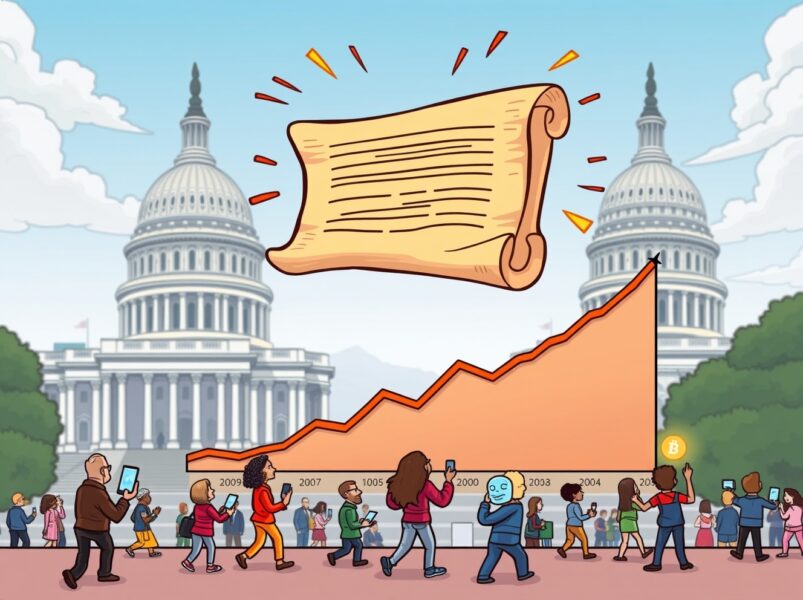
BitcoinWorld US Crypto Legislation: Unlocking a New Era for the Market Cycle Get ready for a potentially monumental shift in the crypto world! Galaxy Digital CEO Mike Novogratz has shared a fascinating prediction: significant US crypto legislation could fundamentally reshape the market’s traditional four-year cycle. This isn’t just speculation; it points to a future where crypto’s trajectory might look very different from what we’ve seen before. How is US Crypto Legislation Changing the Game? In a recent interview with Bloomberg, Novogratz highlighted two key pieces of legislation: the Genius Act and the CLARITY Act. These aren’t just bureaucratic terms; they represent a concerted effort to bring clarity and regulation to the cryptocurrency space. The Genius Act, enacted in July, focuses on stablecoin regulation. This is crucial because stablecoins, which are cryptocurrencies pegged to a stable asset like the US dollar, are becoming central to many digital transactions. The CLARITY Act aims to provide a clearer market structure. This means establishing defined rules for how cryptocurrencies are traded and regulated, making the market more transparent and accessible. Novogratz believes these legislative developments will act as a powerful magnet, drawing a massive influx of new investors into the market. Imagine millions of new participants feeling confident enough to engage with digital assets thanks to clear guidelines. Will We See a Different Crypto Market Cycle This Time? One of Novogratz’s most intriguing predictions challenges the historical pattern of crypto. He suggests that this current cycle might not conclude with the kind of large-scale sell-off that characterized previous Bitcoin (BTC) peaks. Historically, after major bull runs, investors often sold off their holdings, leading to significant market corrections. Consider the cycles of 2017 and 2021. Both saw incredible highs followed by substantial downturns as investors took profits. However, Novogratz argues that the investment environment has undergone a significant transformation. The presence of robust US crypto legislation is a key factor here, fostering a more mature market. The Power of Legitimized Stablecoins and Wider Adoption What exactly is different now? A major part of Novogratz’s argument centers on legalized stablecoins. These digital assets are poised to become seamlessly integrated into our daily lives. Think about using them directly within apps on your iPhone or across various social media platforms. This widespread usability has profound implications: Reduced Volatility Concerns: For everyday transactions, stablecoins offer the speed and efficiency of crypto without the wild price swings often associated with assets like Bitcoin or Ethereum. Easier Onboarding for New Users: When stablecoins are integrated into familiar platforms, the barrier to entry for new users dramatically decreases. People can engage with digital assets without needing to navigate complex exchanges immediately. Mainstream Acceptance: This level of integration pushes cryptocurrency further into the mainstream, moving it beyond niche trading circles and into everyday commerce. The clarity provided by US crypto legislation around these assets builds trust and encourages broader adoption. Navigating the Future: Opportunities and Potential Hurdles While the outlook is overwhelmingly positive, it’s also wise to consider the evolving landscape. The introduction of comprehensive US crypto legislation presents both immense opportunities and potential hurdles. Opportunities: A clearer regulatory framework can attract institutional investors, foster innovation within the blockchain space, and provide consumer protection, all contributing to a more robust and sustainable market. Potential Hurdles: Crafting effective legislation is complex. There might be ongoing debates, adjustments, and unforeseen impacts that could influence market dynamics. The industry will need to adapt to new compliance requirements. Ultimately, a regulated environment aims to create a more predictable and secure space for growth, benefiting both seasoned investors and newcomers alike. A New Dawn for Crypto Market Cycles Mike Novogratz’s vision paints an exciting picture for the future of cryptocurrency. The advent of clear US crypto legislation, particularly the Genius and CLARITY Acts, appears set to usher in a new era. This could mean a departure from the dramatic boom-and-bust cycles of the past, paving the way for more sustained growth and widespread adoption. As stablecoins become integral to our digital interactions, the crypto market is evolving into a more mature, integrated, and accessible financial ecosystem. The potential for a less volatile, more inclusive market is truly transformative. Frequently Asked Questions About Crypto Legislation Q1: What is the significance of the Genius Act and CLARITY Act? A1: The Genius Act focuses on regulating stablecoins, providing a clear framework for their issuance and use. The CLARITY Act aims to establish a clear market structure for cryptocurrencies, defining how they are traded and regulated. Together, they bring much-needed legal certainty to the crypto space. Q2: How could new US crypto legislation prevent large-scale sell-offs? A2: Novogratz suggests that with increased regulatory clarity and the widespread integration of stablecoins into daily apps, the market will attract a broader base of long-term investors. This could lead to more stable growth and reduce the likelihood of the rapid, panic-driven sell-offs seen after previous market peaks. Q3: How will legalized stablecoins change everyday use? A3: Legitimized stablecoins are expected to be integrated into common applications on devices like iPhones and social media platforms. This will make them easier to use for everyday transactions, payments, and remittances, much like traditional digital currency, but with the benefits of blockchain technology. Q4: What are the main benefits of clearer US crypto legislation for investors? A4: Clear legislation provides several benefits: it reduces regulatory uncertainty, which can attract more institutional and retail investors; it offers better consumer protection; and it fosters a more predictable and stable environment for innovation and growth within the crypto market. Q5: Are there any potential challenges with new crypto legislation? A5: While largely positive, challenges could include the complexity of implementing and enforcing new regulations, the need for continuous adaptation as technology evolves, and potential disagreements within the industry or among regulators on specific rules. However, these are part of any maturing market. If you found this article insightful, consider sharing it with your network! Help us spread the word about the exciting future of cryptocurrency and how US crypto legislation is shaping it. Your shares help inform and educate others about these pivotal market changes. To learn more about the latest crypto market trends, explore our article on key developments shaping Bitcoin and Ethereum institutional adoption. This post US Crypto Legislation: Unlocking a New Era for the Market Cycle first appeared on BitcoinWorld.
Paylaş
Coinstats2025/09/24 12:25
XRP Price Prediction February 2026: Senator Warren Warns Fed as Pepeto’s 100x Presale Steals the Spotlight From Ripple

XRP Price Prediction February 2026: Senator Warren Warns Fed as Pepeto’s 100x Presale Steals the Spotlight From Ripple

Senator Elizabeth Warren reportedly sent a letter to Fed Chair Jerome Powell and Treasury Secretary Scott Bessent demanding they not […] The post XRP Price Prediction
Paylaş
Coindoo2026/02/22 05:55