Stablecoins

Stablecoins are digital assets pegged to a stable reserve, such as the US Dollar or Gold, to minimize price volatility. Serving as the primary medium of exchange in Web3, tokens like USDT, USDC, and PYUSD facilitate global payments and DeFi liquidity. In 2026, the focus has shifted toward yield-bearing stablecoins and compliant stablecoin frameworks under global regulations like MiCA. This tag covers the intersection of traditional finance (TradFi) and crypto through stable on-chain liquidity solutions.

23430 Articles
Created: 2026/02/02 18:52
Updated: 2026/02/02 18:52
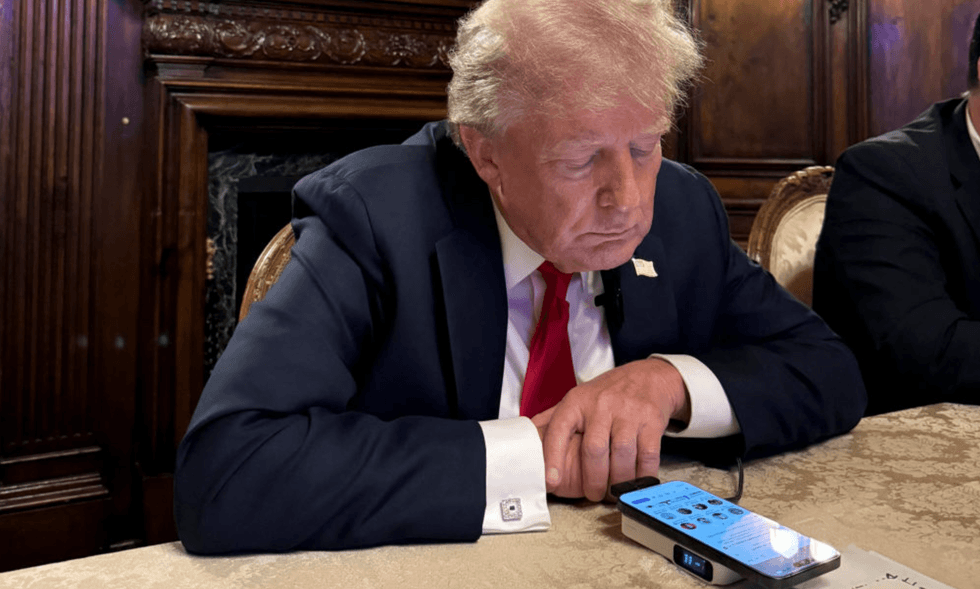
Trump signs landmark crypto bills into law, setting new rules for digital currency

Trump signs landmark crypto bills into law, setting new rules for digital currency

President Trump has signed the GENIUS Act and two other major crypto bills into law, marking a turning point for U.S. digital asset regulation. #partnercontent

Author: Crypto.news
A preview of the White House digital asset report has been released, revealing the outlines of Trump's "golden age of cryptocurrency."

A preview of the White House digital asset report has been released, revealing the outlines of Trump's "golden age of cryptocurrency."

PANews reported on July 30th that, according to CoinDesk, a preview of a White House report to be released later today indicates that the Trump administration has a friendly stance

Author: PANews
RedStone launches the first oracle with liquidation intelligence, Atom, equipped with a lending enhancement engine with liquidation intelligence.

RedStone launches the first oracle with liquidation intelligence, Atom, equipped with a lending enhancement engine with liquidation intelligence.

RedStone is proud to unveil a major breakthrough in oracle technology: RedStone Atom—the first liquidation-intelligent oracle. Unlike traditional oracles, RedStone Atom is the first solution to proactively improve the efficiency

Author: PANews
White House Gears Up to Publish Key Report on U.S. Crypto Strategy

White House Gears Up to Publish Key Report on U.S. Crypto Strategy

A cryptocurrency task force established by President Donald Trump is expected to release its long-awaited crypto strategy report on Wednesday, detailing the administration’s digital asset policy objectives. According to Reuters , this will be the group’s first public update and will reflect months of behind-the-scenes coordination to craft the White House’s stance on tokenization, crypto markets, and blockchain-based financial products. The report follows Trump’s January executive order, which called for developing a comprehensive national approach to cryptocurrency regulation and innovation. BREAKING: TRUMP WHITE HOUSE CRYPTO REPORT TO INCLUDE RECOMMENDATIONS FOR #BITCOIN AND CRYPTO MARKET STRUCTURE BILL – REUTERS CLARITY ADVANCING. THIS IS HUGE 🔥 pic.twitter.com/EuqpxUDtcs — The Bitcoin Historian (@pete_rizzo_) July 30, 2025 Reuters reports that the policy document will offer guidance on what legislation and regulatory frameworks should be pursued to align with the administration’s pro-crypto goals. One source told Reuters that the report is expected to recommend a defined role for the Securities and Exchange Commission (SEC) in regulating blockchain-based securities such as tokenized stocks and bonds. A second source indicated that the document would also reflect the administration’s position on ongoing congressional efforts to establish clearer rules for the crypto industry. Mortgage and Retirement Accounts Could Include Crypto One of the most anticipated elements of the upcoming crypto strategy report is the potential inclusion of digital assets in traditional financial systems, particularly mortgages and retirement savings plans like 401(k)s. If implemented, this would represent a landmark shift in how crypto holdings are treated within mainstream finance. “If the report backs the inclusion of digital assets in mortgage assessments and 401(k) plans, it would mark a significant change in how digital asset wealth is treated,” said Liat Shetret, Vice President of Global Policy and Regulation at blockchain analytics firm Elliptic. Such a move could have wide-reaching effects. For homebuyers who hold substantial crypto assets, these could be counted toward their financial profile, potentially increasing mortgage access for a new class of crypto-first consumers. However, it would also introduce new challenges for banks and lenders, including how to assess, verify, and safeguard volatile and decentralized assets. Strategic Reserve and Regulatory Clarity While some in the crypto space are eyeing the possibility of a strategic Bitcoin reserve or national digital asset stockpile, experts say that regulatory clarity is far more important. Shetret stresses that institutions are eager for streamlined oversight and consistency. “Many are watching closely for signals around a pro-growth and innovation-friendly federal regulatory framework that balances a commitment to making the U.S. the global center for digital assets while also maintaining financial integrity,” adds Shetret. Such a framework would likely involve cross-agency coordination, with defined supervisory roles for the SEC, Commodity Futures Trading Commission (CFTC), and Treasury. Industry Braces for Policy Impact The report’s release could reshape the U.S. crypto sector and send ripple effects through global markets. While speculative attention focuses on dramatic initiatives like a Bitcoin reserve, the true impact may come from how the U.S. integrates digital assets into legacy financial systems and the degree to which legal and regulatory ambiguity is resolved. Earlier this month, in a landmark week for the U.S. crypto industry, President Trump signed the GENIUS Act into law . The move marked a seismic shift in the regulatory framework for digital assets, particularly dollar-backed stablecoins, and indicated a broader push by the Trump administration to bring clarity and control to the sector. 🚨 Weekly Crypto Regulation Roundup: Trump signed the GENIUS Act into law — the first major U.S. crypto bill to clear Congress. #CryptoRegulation #GeniusAct https://t.co/fSH8DZnCIo — Cryptonews.com (@cryptonews) July 18, 2025

Author: CryptoNews
From sandbox to licensing, a comprehensive guide to Hong Kong’s upcoming stablecoin policy

From sandbox to licensing, a comprehensive guide to Hong Kong’s upcoming stablecoin policy

Starting August 1, 2025, the Hong Kong Monetary Authority will open applications for stablecoin issuance licenses, marking a new phase of formal implementation for stablecoin development in Hong Kong. This

Author: PANews
Interpretation of Hong Kong Stablecoin Application Guidelines: The first batch of licenses are expected to be issued early next year, and holders must complete identity verification

Interpretation of Hong Kong Stablecoin Application Guidelines: The first batch of licenses are expected to be issued early next year, and holders must complete identity verification

Author: Nancy, PANews Hong Kong's stablecoin regulation is accelerating into a substantive phase. With the Stablecoin Ordinance set to officially come into effect on August 1, 2025, the Hong Kong

Author: PANews
RI Mining launches next-generation cloud mining contracts for XRP, DOGE, USDT holders

RI Mining launches next-generation cloud mining contracts for XRP, DOGE, USDT holders

RI Mining has launched its upgraded AI-powered cloud mining platform, offering XRP, DOGE, and USDT holders a secure and compliant way to earn a daily passive income. #sponsored

Author: Crypto.news
White House Crypto Report Coming: How Much BTC Can Be Used for Strategic Reserves?

White House Crypto Report Coming: How Much BTC Can Be Used for Strategic Reserves?

Author: BitpushNews On July 30th, Eastern Time, a document highly anticipated by the crypto industry will be released: the White House's first digital asset policy report. It is not only

Author: PANews
Song Min, President of the Hong Kong Institute of International Finance, said: "Institutional advancement" will help Hong Kong explore the development path of stablecoins, which should be anchored in

Song Min, President of the Hong Kong Institute of International Finance, said: "Institutional advancement" will help Hong Kong explore the development path of stablecoins, which should be anchored in

PANews reported on July 30 that Hong Kong's Stablecoin Ordinance will officially take effect on August 1, 2025. Song Min, Dean of the China Central Development Research Institute at Wuhan

Author: PANews
South Korean Central Bank Unveils New ‘Cryptoassets Department’

South Korean Central Bank Unveils New ‘Cryptoassets Department’

South Korea’s Central Bank has announced it will reorganize its structure to include a “cryptoassets department” as a wave of public sector stablecoin -related activity continues to build momentum. The South Korean media outlet News1 reported that the Bank of Korea (BOK) has established a new division named the “Cryptoasset Department.” Cryptoassets Department: New BOK Division to Monitor Crypto Sector The BOK also announced that its Digital Currency Research Lab, which operates within its Financial Settlement Bureau, will be renamed the Digital Currency Lab on July 31. News1 explained: “This appears to be an attempt to emphasize its status as a business unit.” The bank added that it has also reorganized the roles of the teams that make up the lab, and will assign staffers to test token usability. The BOK said its Cryptoasset Team Department would operate within its Financial Settlement Bureau. This division, it said, will be responsible for monitoring the crypto market. Its remit will also include Korean won-pegged stablecoins and legislative matters. The media outlet wrote that experts have interpreted the reshuffle as an “attempt to better respond to recent discussions on stablecoin issuance, while continuing work on its central bank digital currency (CBDC).” The Bank of Korea remains concerned at the tariff impact on economic expansion rather than inflation, Governor Rhee Chang-yong says https://t.co/e4gpV9bZqs — Bloomberg (@business) July 1, 2025 CBDC Plans on Ice? The BOK recently hit the pause button on its CBDC rollout plans, seemingly in direct response to the government’s stablecoin legalization plans. The bank seems to believe that CBDC-based deposit tokens are no different from bank-supported KRW stablecoins. The BOK Governor Rhee Chang-yong said last year that deposit tokens are essentially “stablecoins issued by banks.” Rhee said earlier this month: “No matter if we are talking about a won stablecoin or a deposit token, we will need a digital currency in the future. We will carefully consider whether it is better to gradually move forward with a focus on the banking sector or to expand this to the wider private sector.” From Breakingviews – Breakingviews – Samsung’s $16.5 bln Tesla coup comes with caveats https://t.co/SRFpPxv2Ey https://t.co/SRFpPxv2Ey — Reuters (@Reuters) July 29, 2025 South Korean Stablecoin Regulation Incoming The bank’s move comes just hours after the nation’s two biggest political parties rolled out stablecoin regulation bills . Both bills propose giving the Financial Services Committee sweeping regulatory powers over the stablecoin industry. Critics think this will significantly diminish the role of the BOK. And the BOK has previously hit out at private sector stablecoin adoption plans. It claims that KRW-pegged coins could undermine Seoul’s ability to conduct effective monetary policy. Some of the country’s biggest tech firms have already registered KRW stablecoin-themed trademarks in anticipation of a green light from Seoul.

Author: CryptoNews