RWA

RWA (Real World Assets) refers to the tokenization of tangible assets—such as real estate, private credit, and government bonds—on the blockchain. By bringing traditional financial instruments on-chain, RWA protocols like Ondo and Centrifuge provide DeFi users with stable, real-yield opportunities. In 2026, the RWA sector is a multi-trillion-dollar bridge between TradFi and DeFi, enabling fractional ownership and global liquidity for previously illiquid assets. Follow this tag for insights into on-chain credit markets, regulatory compliance, and asset-backed security innovations.

42977 Articles
Created: 2026/02/02 18:52
Updated: 2026/02/02 18:52
Federal Reserve Maintains Cautious Approach as Rate Uncertainty Lingers

Federal Reserve Maintains Cautious Approach as Rate Uncertainty Lingers

The post Federal Reserve Maintains Cautious Approach as Rate Uncertainty Lingers appeared on BitcoinEthereumNews.com. Key Points: The Fed’s cautious stance impacts crypto markets and investor actions. Rate uncertainty triggers significant ETH and BTC market activities. Institutional and whale movements heavily influence asset repositioning. The CME’s “FedWatch Tool” indicated an 87.3% chance of a 25 basis point rate cut by the Fed in September 2025, with unchanged rates at 12.7%. Market participants are adjusting to potential interest rate changes, impacting major cryptocurrencies like ETH, BTC, and BNB, as they assess the Federal Reserve’s upcoming decisions. Fed’s 87.3% Rate Cut Probability Sparks Crypto Fluctuations The Federal Reserve’s interest rate decisions have taken center stage, with Jerome Powell’s remarks at the Jackson Hole symposium emphasizing the Fed’s dual mandate and making only minor policy framework clarifications. Richard Clarida, former Fed Vice Chair, noted the Fed’s preparation for a cautious rate cut, highlighting the cautious climate among central bank observers. The probability of a 25 basis point rate cut now stands at 87.3% according to the FedWatch tool, indicating a strong market expectation for a shift in monetary policy. The potential rate change has already sparked significant market responses. ETH surged beyond its all-time high amid these deliberations, although it later narrowed its gains. In parallel, BTC experienced fluctuations, momentarily dropping before clawing back above key support levels. These market moves have been accompanied by substantial staking and whale activity, reflecting an assertive repositioning strategy amid rate cut speculations. High-profile figures in the crypto industry have acknowledged these developments. Mike Novogratz from Galaxy Digital highlighted the robust performance of Hyperliquid’s platform within the market ecosystem: “Impressive work…we hold a long position in the HYPE token.” The narrative of institutional engagement persists, as evidenced by large BNB investments that pushed it to a new ATH. Meanwhile, the crypto community and other market participants remain vigilant, preparing for possible changes…

Author: BitcoinEthereumNews
Swiss Heroine Riola Xhemaili AimingTo Knock Man United Out Of Europe

Swiss Heroine Riola Xhemaili AimingTo Knock Man United Out Of Europe

The post Swiss Heroine Riola Xhemaili AimingTo Knock Man United Out Of Europe appeared on BitcoinEthereumNews.com. TOPSHOT – Switzerland’s midfielder #07 Riola Xhemaili celebrates at the end of the UEFA Women’s Euro 2025 Group A football match between Finland and Switzerland at the Stade de Geneve in Geneva, on July 10, 2025. (Photo by Fabrice COFFRINI / AFP) (Photo by FABRICE COFFRINI/AFP via Getty Images) AFP via Getty Images The player who scored perhaps the most important goal in the Swiss women’s team’s history now believes PSV can shock Manchester United and knock them out of Europe this week. Last month, Riola Xhemaili was brought on as a late substitute by UEFA Women’s Euro hosts Switzerland in their decisive final group stage match against Finland in Geneva. Trailing by a single goal, the Swiss were seconds away from becoming the first host nation to fail to qualify for the knockout stages in 20 years. Deep into stoppage time, the 22-year-old adeptly steered in a driven cross from the right and altered the course of her country’s fortunes. As a result of the goal, Switzerland qualified for the quarter-finals of the tournament for the first time ever and it ensured that local interest in the competition was sustained. Ultimately, the tournament broke the attendance records of the previous edition in England three years earlier. Unsurprisingly, Xhemaili told me that goal was the best moment of her career to date. “You have a home Euro, a sold-out stadium, scoring for your country to bring them into the quarter-final – it’s something that just happens once. I was running to my family, I saw them and I was just really, really happy. It was kind of like a movie, I would say, a really good movie.” GENEVA, SWITZERLAND – JULY 10: Riola Xhemaili of Switzerland celebrates towards fans after scoring her team’s first goal during the UEFA Women’s EURO…

Author: BitcoinEthereumNews
Chainlink, SBI Group partner to boost digital asset adoption

Chainlink, SBI Group partner to boost digital asset adoption

The post Chainlink, SBI Group partner to boost digital asset adoption appeared on BitcoinEthereumNews.com. Chainlink and Japan’s SBI Group have announced a strategic partnership to accelerate institutional adoption of blockchain-based financial products across global markets. Summary SBI and Chainlink partner to advance tokenized assets in Japan and APAC. CCIP to enable cross-chain RWAs, PvP settlements, and stablecoin transparency. SBI cited strong demand for tokenized securities, with 76% of surveyed institutions planning to invest despite infrastructure gaps. According to an Aug. 25 press release, SBI, one of Japan’s largest financial conglomerates with more than $200 billion in assets, will work with Chainlink (LINK) to roll out institutional-grade infrastructure for tokenized assets. The partnership builds on growing demand in Japan. 76% of financial institutions surveyed by SBI Digital Asset Holdings stated they intend to invest in tokenized securities due to cost savings and efficiency improvements. Fixing adoption barrier using Chainkink The absence of scalable, secure, and compliant infrastructure has been a significant obstacle despite growing interest. By utilizing Chainlink’s Cross-Chain Interoperability Protocol, the partnership seeks to unlock cross-chain tokenized real-world assets including bonds and real estate. Additionally, the integration will increase liquidity, facilitate more effective fund administration, and bring fund net asset value data onchain. The partnership will also use Chainlink’s Proof of Reserve to ensure stablecoin reserve transparency while investigating new settlement techniques, such as payment versus payment for foreign exchange and cross-border transactions. Expanding SBI and Chainlink partnership Chainlink co-founder Sergey Nazarov said SBI’s adoption of the protocol validates its role as the standard for secure and compliant institutional transactions. SBI chief executive officer Yoshitaka Kitao added that the partnership combines Chainlink’s leading interoperability solutions with SBI’s financial expertise to drive mainstream adoption. The two companies have previously worked together. Under Singapore’s Project Guardian, SBI Digital Markets, Chainlink, and UBS Asset Management tested automated fund administration in 2023, demonstrating early success in use cases…

Author: BitcoinEthereumNews
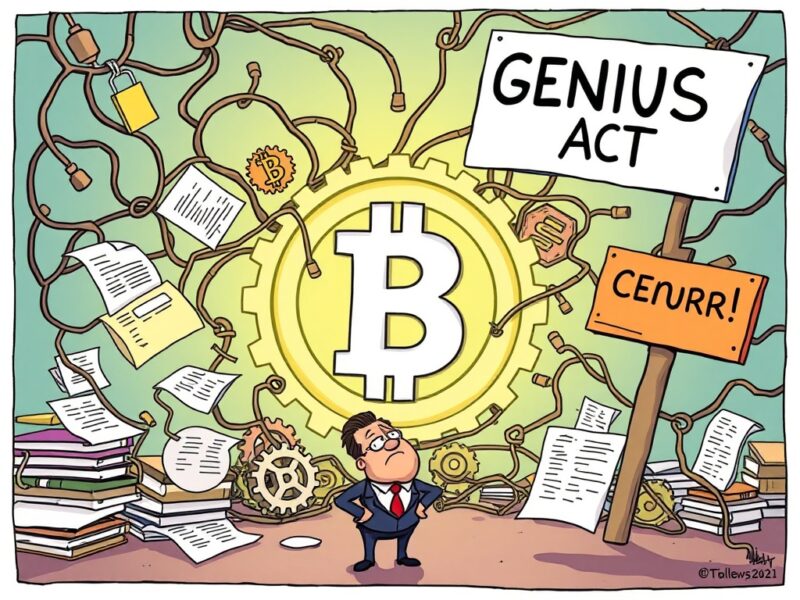
Stablecoin Regulation: Why Custodia CEO Caitlin Long Sees Persistent Uncertainty Despite GENIUS Act

Stablecoin Regulation: Why Custodia CEO Caitlin Long Sees Persistent Uncertainty Despite GENIUS Act

BitcoinWorld Stablecoin Regulation: Why Custodia CEO Caitlin Long Sees Persistent Uncertainty Despite GENIUS Act The world of digital finance is constantly evolving, yet one critical area continues to grapple with unresolved questions: stablecoin regulation. Despite legislative efforts like the U.S. GENIUS Act, a leading voice in the banking sector, Custodia Bank CEO Caitlin Long, suggests that significant uncertainty still looms. Her recent remarks underscore the complex landscape financial institutions and fintechs face when dealing with stablecoins. What’s Stirring the Waters in Stablecoin Regulation? Caitlin Long, a respected figure in the digital asset space, recently shared her insights on CNBC, as reported by Wu Blockchain. She pointed out that the GENIUS Act, while a step forward, has not fully addressed several fundamental issues. These unresolved questions are crucial for the seamless integration of stablecoins into the traditional financial system. Specifically, Long highlighted the ongoing debate around whether traditional banks can issue tokenized deposits. Tokenized deposits are essentially digital representations of traditional bank deposits on a blockchain, offering potential for faster, more efficient transactions. However, the regulatory framework for these is still unclear. Moreover, the level of capital banks must hold when dealing with stablecoins remains ambiguous. This uncertainty creates hesitation and impacts how financial institutions approach these digital assets. Long also noted compliance shortfalls among crypto-focused fintech firms, indicating a need for clearer guidelines across the board. Unpacking the GENIUS Act: A Step Towards Stablecoin Regulation? Enacted in mid-July, the GENIUS Act was indeed designed to bring more structure to the stablecoin industry. Its provisions aim to enhance transparency and stability, which are vital for investor confidence. Here are some key requirements introduced by the Act: Federal Licensing: Stablecoin issuers must obtain federal licenses, ensuring they operate under specific legal frameworks. 1-to-1 Reserve Backing: Issuers are mandated to maintain full 1-to-1 reserve backing for their stablecoins, meaning each digital coin is fully collateralized by an equivalent amount of fiat currency or other liquid assets. Annual Audits: Issuers with a market capitalization exceeding $50 billion must undergo annual audits, adding a layer of scrutiny and accountability. Oversight for Foreign Entities: The Act includes compliance and oversight rules for foreign entities involved in stablecoin issuance, extending its reach beyond domestic players. While these measures are commendable for establishing a baseline for stablecoin regulation, Long’s perspective suggests they haven’t entirely resolved the underlying complexities. Persistent Hurdles in Effective Stablecoin Regulation Despite the GENIUS Act’s introduction, critical areas of uncertainty persist. Caitlin Long emphasized the need for regulators to clarify liability for interbank transfers of tokenized deposits. Currently, banks face restrictions on sharing customer information, which complicates these transfers. Enabling secure information sharing could significantly reduce compliance costs, especially for regional lenders. This is a crucial point because lower compliance burdens can foster greater adoption and innovation. The lack of clear guidance on these operational aspects continues to be a major hurdle for effective stablecoin regulation and broader acceptance. Without definitive answers on issues like capital requirements and interbank liability, financial institutions find it challenging to fully embrace stablecoins. This hesitation, in turn, slows down the potential for growth and innovation within the digital asset ecosystem. Why Clear Stablecoin Regulation is Crucial for Growth Achieving comprehensive and clear stablecoin regulation is not just about compliance; it’s about unlocking immense potential. When regulations are unambiguous, it: Reduces Costs: Banks and fintechs can operate with greater certainty, lowering legal and operational expenses. Boosts Innovation: Clear rules provide a stable environment for developing new products and services around stablecoins. Enhances Trust: Robust regulation protects consumers and fosters confidence in digital assets, encouraging wider adoption. Promotes Stability: A well-regulated market is less prone to volatility and systemic risks, benefiting the entire financial system. Ultimately, addressing these lingering questions will pave the way for stablecoins to fulfill their promise as a stable, efficient, and integral part of the future financial landscape. In conclusion, while the GENIUS Act represents a significant step in establishing a framework for stablecoin regulation, the insights from industry leaders like Custodia Bank’s Caitlin Long highlight that the journey towards comprehensive clarity is far from over. Addressing the nuanced challenges of tokenized deposits, capital requirements, and interbank liability will be crucial for the stablecoin industry to truly flourish and integrate seamlessly into the global financial system. Frequently Asked Questions (FAQs) Q1: What is the GENIUS Act? A1: The GENIUS Act, enacted in mid-July, is a U.S. law requiring stablecoin issuers to obtain federal licenses, maintain full 1-to-1 reserve backing, undergo annual audits for larger issuers, and comply with oversight rules for foreign entities. Q2: Who is Caitlin Long and what is Custodia Bank? A2: Caitlin Long is the CEO of Custodia Bank, a Wyoming-based special purpose depository institution (SPDI) focused on serving the digital asset industry. She is a prominent advocate for clear cryptocurrency regulation. Q3: What are tokenized deposits? A3: Tokenized deposits are digital representations of traditional bank deposits recorded on a blockchain. They aim to combine the stability of bank deposits with the efficiency and programmability of blockchain technology. Q4: Why is regulatory clarity for stablecoins important? A4: Clear stablecoin regulation is crucial because it reduces compliance costs, encourages institutional adoption, fosters innovation, enhances market stability, and protects consumers, ultimately enabling the industry’s growth. Q5: What are the main unresolved issues concerning stablecoin regulation, according to Caitlin Long? A5: According to Caitlin Long, key unresolved issues include whether banks can issue tokenized deposits, the specific capital requirements for holding stablecoins, compliance shortfalls among crypto fintechs, and clarifying liability for interbank transfers of tokenized deposits. If you found this article insightful, please share it with your network! Your support helps us continue to provide valuable analysis on the evolving world of cryptocurrency and blockchain technology. To learn more about the latest stablecoin regulation trends, explore our article on key developments shaping stablecoin regulation institutional adoption. This post Stablecoin Regulation: Why Custodia CEO Caitlin Long Sees Persistent Uncertainty Despite GENIUS Act first appeared on BitcoinWorld and is written by Editorial Team

Author: Coinstats
Bitcoin Treasury Firm, Metaplanet Buys 103 More Bitcoin, Holdings Near 19,000 BTC

Bitcoin Treasury Firm, Metaplanet Buys 103 More Bitcoin, Holdings Near 19,000 BTC

The post Bitcoin Treasury Firm, Metaplanet Buys 103 More Bitcoin, Holdings Near 19,000 BTC appeared on BitcoinEthereumNews.com. The post Bitcoin Treasury Firm, Metaplanet Buys 103 More Bitcoin, Holdings Near 19,000 BTC appeared first on Coinpedia Fintech News Japanese-listed company Metaplanet Inc. has added another 103 Bitcoin to its treasury, spending around 1.736 billion yen ($11.78 million). With this latest move, the company’s total Bitcoin stash has climbed to 18,991 BTC, representing a massive investment of nearly 285.8 billion yen ($1.94 billion). This purchase is part of Metaplanet’s ongoing Bitcoin Treasury Operations, a strategy that uses metrics like BTC Yield and BTC Gain to track performance. Over the past few quarters, these numbers have shown strong results, providing a direct boost to shareholder value. A Steady Bitcoin Accumulation Strategy Metaplanet Bitcoin’s holding journey began in April 2024 and has been steadily stacking BTC ever since. This isn’t a one-time gamble but a clear sign the company sees Bitcoin as a long-term store of value. Fast forward to August 2025, and Metaplanet now holds nearly 19,000 BTC, putting it in 7th place worldwide among corporate Bitcoin holders, right up there with some of the biggest global names that also keep Bitcoin on their balance sheets.  With each reporting period, the company has revealed consistent accumulation, showing that Bitcoin is no longer just an investment for Metaplanet; it has become a core pillar of its business strategy. Metaplanet Q2 2025 Revenue Jumps 41%, Net Income Hits ¥11.1B The company’s growing Bitcoin position comes alongside impressive financial results. In the second quarter of 2025, Metaplanet reported revenues of 1.2 billion yen ($8.4 million), marking a 41% increase from the previous quarter. Net income also turned around dramatically, reaching 11.1 billion yen ($75.1 million), compared to a 5 billion yen ($34.2 million) loss in the first quarter. In its quarterly report, the company reaffirmed its full-year projections of 3.4 billion yen in…

Author: BitcoinEthereumNews
$400T TradFi market is a huge runway for tokenized RWAs: Animoca

$400T TradFi market is a huge runway for tokenized RWAs: Animoca

                                                                               RWA tokenization value recently surged to an all-time high, with more to come from TradFi's $400 trillion addressable market, researchers say.                     Tokenized real-world assets could eventually represent trillions of dollars worth of traditional finance assets in a multichain future, according to Animoca.“The estimated $400 trillion addressable TradFi market underscores the potential growth runway for RWA tokenization,” said researchers Andrew Ho and Ming Ruan in an August research paper from Web3 digital property firm Animoca Brands.The researchers found that the tokenized real-world asset (RWA) sector is just a small fraction ($26 billion) of the total addressable market currently, which is over $400 trillion. Read more

Author: Coinstats
Chainlink partners with Japan’s SBI Group, focusing on DeFi use cases

Chainlink partners with Japan’s SBI Group, focusing on DeFi use cases

Chainlink (LINK) edges higher by over 1% at press time on Monday with the announcement of securing a partnership with Japan’s financial conglomerate SBI Group. The firm, with over $200 billion in assets, will focus on decentralized finance (DeFi) product offerings.

Author: Fxstreet
Avail aims to revolutionize blockchain with a universal unification layer

Avail aims to revolutionize blockchain with a universal unification layer

The post Avail aims to revolutionize blockchain with a universal unification layer appeared on BitcoinEthereumNews.com. Blockchains scaled—and then splintered. Liquidity scattered across L2s, bridges kept breaking, and “data availability” turned into the new bottleneck. Avail wants to solve all three at once. Founded to deliver verifiable, scalable data availability, the project now positions itself as a full-stack unification layer: a DA base, Nexus for proof-based interoperability, and Fusion for shared security that can restake ETH, BTC, and rollup tokens. The thesis is simple but ambitious: developers should build once and scale everywhere; users shouldn’t have to think about chains at all. In this CryptoSlate Q&A, Avail co-founder Anurag Arjun walks us through how that thesis is moving from roadmap to reality. We start with a real-world stress test: Sophon’s $60 million node sale, which extended Avail’s light client to production scale and hinted at new, verifiable fundraising primitives for app-specific chains. From there, we dig into EnigmaDA—encrypted data availability designed to meet institutional privacy mandates without re-introducing trusted intermediaries—along with how banks and TradFi pilots can reconcile encryption, key management, and auditability on-chain. Interoperability is the other pillar. Rather than another bridge, Nexus promises “one SDK, nine chains, no network switching,” aiming to route flows across multichain stablecoin and DeFi liquidity while minimizing replay and quorum risks with TEE and ZK verification. On the user side, Avail’s light client targets <1 MB/s bandwidth and runs on phones and browsers via data-availability sampling and validity proofs—pushing “a full node in your pocket” toward emerging markets. We also explore the speed-vs-decentralization trade-offs behind TurboDA’s 250 ms pre-confirmations and the team’s “infinity blocks” research goal of 10 GB blocks in ~600 ms; the validator-set growth path from 105 validators and a Nakamoto coefficient of 34; and what Avail is learning from flagship deployments like Lens Chain (650k profiles) and Sophon. With 50+ integrations in the queue, Arjun outlines…

Author: BitcoinEthereumNews
Asia FX: Crucial Impact of Powell’s Dovish Tilt on Currency Markets

Asia FX: Crucial Impact of Powell’s Dovish Tilt on Currency Markets

BitcoinWorld Asia FX: Crucial Impact of Powell’s Dovish Tilt on Currency Markets In the fast-paced world of global finance, every utterance from a central bank leader can send ripples across continents. Recently, the cryptocurrency community and traditional investors alike have been keenly observing the movements in Asia FX following statements from Federal Reserve Chair Jerome Powell. While the initial reaction saw a surge in Asian currencies, a subsequent ‘ticking down’ has left many wondering about the true implications. This article delves into the nuances of Powell’s remarks, the immediate and potential long-term effects on Asian currency markets, and what it all means for your investment strategies. Decoding Powell’s Dovish Tilt: What Does It Mean for Global Markets? When Federal Reserve Chair Jerome Powell speaks, the world listens. His recent remarks, widely interpreted as a ‘dovish tilt,’ signaled a potential shift in the Fed’s aggressive monetary tightening stance. But what exactly constitutes a dovish tilt, and why did it create such a stir? What is a Dovish Tilt? A dovish stance indicates a central bank’s inclination towards lower interest rates or a less restrictive monetary policy. This often prioritizes economic growth and employment over inflation control. In contrast, a ‘hawkish’ stance favors higher rates to combat inflation. Powell’s Specifics: Powell’s comments suggested that the Fed might be nearing the end of its rate-hiking cycle, and that future rate increases could be smaller or paused sooner than previously anticipated. He acknowledged the progress made on inflation and hinted at a data-dependent approach. Initial Market Reaction: The immediate response was a classic ‘risk-on’ rally. Investors, anticipating an end to rising borrowing costs, moved capital into riskier assets, including emerging market currencies and equities. This explains the initial jump in Asia FX. This subtle but significant change in tone from the world’s most influential central bank has profound implications, particularly for regions sensitive to global capital flows like Asia. Asia FX Reacts: Initial Surge and Subsequent Correction Following Powell’s perceived dovish turn, Asian currencies initially experienced a notable rally. This was a direct consequence of improved risk sentiment and the potential for a narrowing interest rate differential between the US and Asian economies. However, this initial enthusiasm was tempered, leading to a slight tick down. What factors contributed to this dynamic? Why the Initial Jump? The immediate surge in Asia FX was driven by several interconnected factors: Risk-On Sentiment: A less aggressive Fed typically encourages investors to seek higher returns outside of safe-haven assets like the US dollar. This leads to capital inflows into emerging markets, boosting local currencies. Carry Trade Revival: With the prospect of US interest rates peaking, the attractiveness of carry trades (borrowing in a low-interest currency and investing in a high-interest one) increases. Many Asian economies offer higher yields, making their currencies more appealing. Improved Global Growth Outlook: A dovish Fed suggests less economic tightening globally, which can be beneficial for export-oriented Asian economies. Why the Subsequent Ticking Down? The subsequent slight correction or ‘ticking down’ in Asia FX can be attributed to a combination of profit-taking and a more nuanced re-evaluation of the situation: Profit-Taking: After an initial strong rally, some traders naturally took profits, leading to a temporary pullback. Re-evaluation of Fed’s Stance: While dovish, Powell’s statements were not an outright commitment to rate cuts. The market began to digest the possibility that future decisions remain data-dependent, and that inflation could still prove sticky. Local Factors: Domestic economic data, geopolitical tensions, and specific central bank policies within Asian countries also play a significant role. For instance, concerns over China’s economic recovery or specific regional inflation data can influence individual currency performance. To illustrate the dynamic, consider the performance of key Asian currencies around Powell’s remarks: Currency Initial Reaction (Jump) Subsequent Movement (Tick Down) Key Influences Japanese Yen (JPY) Strengthened against USD Slight weakening BOJ policy divergence, safe-haven demand fluctuations South Korean Won (KRW) Gained against USD Modest correction Export data, tech sector performance Indian Rupee (INR) Appreciated Stabilized/Slight dip Oil prices, capital flows, RBI intervention Chinese Yuan (CNY) Strengthened Consolidated China’s economic recovery, trade balance Understanding Central Bank Policy’s Global Ripple Effect The influence of the Federal Reserve extends far beyond US borders. Its monetary policy decisions create a significant ripple effect, impacting other central banks and global financial conditions. This interconnectedness is crucial for understanding currency movements, especially in emerging markets. How Does the Fed Influence Other Central Banks? Interest Rate Differentials: When the Fed raises rates, it makes dollar-denominated assets more attractive, drawing capital away from other regions. Conversely, a dovish Fed can reverse this trend, encouraging capital to flow into markets with higher growth potential or yields. Inflationary Pressures: US inflation and the Fed’s response can influence global inflation expectations. If the Fed is perceived to be taming inflation, it can alleviate pressure on other central banks to raise rates as aggressively. Policy Space: For many central banks, especially in developing economies, the Fed’s actions dictate their ‘policy space.’ If the Fed is tightening, they often feel compelled to follow suit to prevent capital flight and currency depreciation. A dovish Fed grants them more flexibility. This intricate dance of central bank policy means that even subtle shifts in rhetoric from the Federal Reserve can dictate the economic strategies of nations worldwide, directly influencing their currency valuations and overall economic stability. Navigating the Volatile Currency Markets: Challenges and Opportunities For traders and investors, the current environment in global currency markets presents both significant challenges and compelling opportunities. Understanding these dynamics is key to making informed decisions. Challenges for Market Participants Increased Volatility: Shifting expectations about central bank policy can lead to sudden and sharp movements in exchange rates, making it harder to predict short-term trends. Policy Divergence: While the Fed might be turning dovish, other central banks might still be fighting inflation or facing different domestic economic conditions, leading to complex and sometimes contradictory policy signals. Geopolitical Risks: Ongoing geopolitical tensions add another layer of uncertainty, impacting investor sentiment and capital flows, particularly in sensitive regions. Opportunities for Astute Investors Carry Trade Revival: As mentioned, a less aggressive Fed could re-energize carry trades, offering opportunities for investors willing to take on currency risk. Diversification: A weakening dollar could make a strong case for diversifying portfolios into other currencies, particularly those of economies with robust growth prospects. Hedging Strategies: For businesses with international operations, understanding these shifts allows for more effective hedging strategies to mitigate currency risk. Actionable Insight: In this environment, a diversified approach is paramount. Consider spreading your investments across different asset classes and geographies. Stay informed about economic indicators from major economies and the rhetoric from key central bankers. For those trading currency markets, employing robust risk management techniques, such as stop-loss orders, is more important than ever. The Federal Reserve’s Shadow: Long-Term Outlook for Asian Currencies The long-term trajectory of Asian currencies will heavily depend on the sustained stance of the Federal Reserve and its global implications. While a dovish pivot offers a near-term boost, the road ahead is complex. Potential for Capital Inflows into Asia If the Federal Reserve indeed pauses or begins to cut rates in the future, it could lead to significant capital inflows into Asian markets. This would be driven by: Search for Yield: Investors seeking higher returns will naturally look towards faster-growing Asian economies. Growth Prospects: Many Asian nations are projected to have stronger economic growth rates than developed economies in the coming years. Weaker Dollar: A weaker US dollar makes dollar-denominated debt cheaper to service for Asian governments and corporations, freeing up resources. Risks and Considerations However, the outlook is not without its challenges: Inflationary Pressures: A dovish Fed might lead to renewed inflationary pressures globally, which could force Asian central banks to tighten their own policies, potentially dampening growth. Slower Global Growth: While a dovish Fed aims to support growth, if underlying global economic issues persist, Asian export-dependent economies could still face headwinds. Domestic Policy Risks: Political instability, regulatory changes, or unforeseen economic shocks within individual Asian countries could always derail positive momentum. Ultimately, the long-term strength of Asia FX will be a delicate balance between the external influence of the Federal Reserve’s policies and the internal resilience and growth drivers of Asian economies themselves. Compelling Summary: Navigating the Nuances of Global Forex The recent ‘dovish tilt’ from Federal Reserve Chair Jerome Powell initially sent a wave of optimism through global currency markets, particularly boosting Asia FX. This reflected a renewed appetite for risk and the potential for reduced pressure from rising US interest rates. However, the subsequent ‘ticking down’ underscores the market’s careful re-evaluation, acknowledging that while the Fed’s tone has softened, the path forward remains data-dependent and subject to various economic and geopolitical factors. Understanding the intricate dance between global central bank policy, local economic conditions, and investor sentiment is paramount for navigating these dynamic waters. As we move forward, market participants must remain agile, employing robust strategies to capitalize on opportunities while mitigating the inherent risks in a world where every central bank utterance holds significant weight. To learn more about the latest Forex market trends, explore our article on key developments shaping global liquidity and institutional adoption. This post Asia FX: Crucial Impact of Powell’s Dovish Tilt on Currency Markets first appeared on BitcoinWorld and is written by Editorial Team

Author: Coinstats
RWA Projects, Emerging Meme Wave and 2025 DePIN King – Prime Narratives for This Bull Run Disclosed

RWA Projects, Emerging Meme Wave and 2025 DePIN King – Prime Narratives for This Bull Run Disclosed

Big changes are shaping the next market surge. Fresh ideas are gaining attention, including new uses for real-world assets, a rise in playful tokens, and the next leader in decentralized tech. These trends are standing out from the crowd. Why are they catching so much hype—and what do they promise for those chasing the next [...]]]>

Author: Crypto News Flash