Oracle

Oracles are essential infrastructure components that feed real-time, off-chain data (such as price feeds, weather, or sports results) into blockchain smart contracts. Without decentralized oracles like Chainlink and Pyth, DeFi could not function. In 2026, oracles have evolved to support verifiable randomness and cross-chain data synchronization. This tag covers the technical evolution of data availability, tamper-proof price feeds, and the critical role oracles play in ensuring the deterministic execution of complex decentralized applications.

5118 Articles
Created: 2026/02/02 18:52
Updated: 2026/02/02 18:52
From Government Adoption to ETFs: Why Chainlink LINK Could Be Heading for $100

From Government Adoption to ETFs: Why Chainlink LINK Could Be Heading for $100

The post From Government Adoption to ETFs: Why Chainlink LINK Could Be Heading for $100 appeared first on Coinpedia Fintech News With government adoption, institutional support, and growing market recognition, Chainlink is no longer just another crypto project, it is becoming a bridge between traditional finance and blockchain. This adoption not only boosts Chainlink’s credibility but also sparks talk about LINK’s future price, with some analysts even eyeing a run toward $100. LINK Gains from Real-World …

Author: CoinPedia
Pyth Network (PYTH) Price Prediction: What’s Next After 100% Rally?

Pyth Network (PYTH) Price Prediction: What’s Next After 100% Rally?

The post Pyth Network (PYTH) Price Prediction: What’s Next After 100% Rally? appeared first on Coinpedia Fintech News Pyth Network (PYTH) has gone from a quiet name in the oracle space to the center of a historic moment. The U.S. Department of Commerce shook the industry by announcing that official Q2 GDP data would be released on-chain using both Pyth and Chainlink.  For the first time ever, a U.S. federal agency is publishing …

Author: CoinPedia
US Department of Commerce Puts Macro Data on Chain, Boosting Bitcoin Hyper Use Case

US Department of Commerce Puts Macro Data on Chain, Boosting Bitcoin Hyper Use Case

The US government further expanded its venture into DeFi by publishing its economic data on-chain via a partnership with Pyth and Chainlink oracles. This signals growing adoption of blockchain technology and another step towards the continued evolution of the crypto market. At the same time, as crypto becomes mainstream and network demands soar, the development […]

Author: Bitcoinist
AI Agent Tokens: Hype Fades, Innovation Endures in Crypto’s Core

AI Agent Tokens: Hype Fades, Innovation Endures in Crypto’s Core

BitcoinWorld AI Agent Tokens: Hype Fades, Innovation Endures in Crypto’s Core The crypto world often experiences waves of excitement, and recently, AI agent tokens captured significant attention. While the initial speculative frenzy surrounding these tokens has subsided, a new report from Tiger Research, an Asia-based Web3 consulting firm, confirms that the underlying technology is actually advancing steadily. This shift highlights a crucial pivot from market hype to tangible development, focusing on long-term value over short-term gains. What Exactly Are AI Agent Tokens? Before diving deeper, let’s clarify what we mean by AI agent tokens. These are cryptocurrency tokens linked to projects that leverage artificial intelligence to perform autonomous tasks within decentralized networks. Essentially, they power AI entities capable of making decisions and executing actions, often interacting with smart contracts and other blockchain components. They aim to bring intelligent automation to the Web3 ecosystem. The Rollercoaster Ride: Hype and Reality of AI Agent Tokens Tiger Research noted that the AI agent sector initially drew immense interest, pushing the market capitalization for these tokens to an astounding $16 billion. However, this fervent enthusiasm proved unsustainable. Many projects struggled to deliver on their lofty promises, leading to a significant price collapse—over 90% from their peak. This decline underscores a common pattern in emerging crypto sectors: early speculation often outpaces actual technological readiness. What Caused the Dip in AI Agent Tokens? Unmet Expectations: Projects could not quickly deliver the advanced, autonomous AI capabilities promised. Technological Hurdles: Developing sophisticated AI agents for decentralized environments presents complex challenges. Market Volatility: The broader crypto market’s inherent volatility amplified the price correction. Why AI Agent Tokens Still Matter for Web3’s Future Despite the market correction, Tiger Research firmly states that this price decline does not signify a technological regression. Instead, it represents a maturation phase. AI agent tokens remain a vital field within the crypto industry. Discussions are now shifting towards more concrete, practical applications, moving beyond theoretical concepts. Developers are continually exploring new approaches and refining the underlying technology. How is the Technology Advancing for AI Agent Tokens? The focus has moved from speculative trading to building robust, functional AI agents. This includes: Improved Algorithms: Developing more efficient and intelligent AI models. Enhanced Interoperability: Creating agents that can seamlessly interact across different blockchain networks. Practical Use Cases: Identifying and building solutions for real-world problems. Beyond the Price: Real-World Applications of AI Agents The true value of AI agent tokens lies in their potential to revolutionize various sectors. Imagine AI agents autonomously managing decentralized finance (DeFi) portfolios, optimizing supply chains on a blockchain, or even facilitating complex data analysis for Web3 gaming. These intelligent agents can automate tasks, improve efficiency, and enable entirely new forms of decentralized applications. This ongoing development will unlock significant value. Examples of Potential Applications: DeFi Automation: Agents executing trades, managing liquidity pools, or optimizing yields. Decentralized Autonomous Organizations (DAOs): AI agents assisting in governance, proposal analysis, and decision-making. Data Oracles: Providing verified, real-time data to smart contracts with enhanced intelligence. Navigating the Future of AI Agent Tokens For investors and enthusiasts, understanding this shift is crucial. The era of quick gains from speculative hype might be over for AI agent tokens, but the long-term potential for innovation is stronger than ever. Focus on projects demonstrating tangible technological progress, clear use cases, and strong development teams. The future success of AI agent tokens will depend on their ability to deliver practical, scalable solutions that integrate seamlessly into the Web3 landscape. What to Look For in AI Agent Projects: Clear Roadmaps: Projects with well-defined development plans and milestones. Working Products: Evidence of functional prototypes or deployed applications. Community Engagement: An active and supportive community. Expert Teams: Teams with proven expertise in both AI and blockchain. Conclusion: A New Chapter for AI Agent Tokens The journey of AI agent tokens perfectly illustrates the dynamic nature of the crypto market. While speculative bubbles burst, genuine technological innovation persists. The report from Tiger Research serves as a vital reminder: the fading hype around AI agent tokens does not diminish their long-term significance. Instead, it marks a transition to a more mature phase where fundamental development and practical utility will drive true value in the Web3 space. The future of AI agent tokens is being built, not just traded. Frequently Asked Questions (FAQs) Q1: What caused the initial hype around AI agent tokens? A1: The initial excitement stemmed from the promising concept of combining advanced AI with decentralized blockchain technology, leading to speculative interest and high market valuations. Q2: Why did the price of AI agent tokens collapse by over 90%? A2: The price collapse occurred primarily because most projects failed to meet the high expectations set by the initial hype, and technological development lagged behind speculative fervor. Q3: Does the price decline mean AI agent technology is failing? A3: No, according to Tiger Research, the price decline does not signify technological regression. It indicates a market correction, while underlying AI agent tokens technology continues to advance and find practical applications. Q4: What are some practical applications for AI agent tokens? A4: Practical applications include automating tasks in DeFi, assisting in DAO governance, enhancing data oracles, and optimizing various processes within decentralized networks. Q5: What should investors look for in AI agent projects now? A5: Investors should focus on projects with clear roadmaps, demonstrable working products, strong community engagement, and expert development teams that prioritize utility over speculation. Did you find this analysis of AI agent tokens insightful? Share this article with your network on social media to spark a conversation about the future of AI and Web3! To learn more about the latest crypto market trends, explore our article on key developments shaping AI agent tokens’ future trends. This post AI Agent Tokens: Hype Fades, Innovation Endures in Crypto’s Core first appeared on BitcoinWorld and is written by Editorial Team

Author: Coinstats
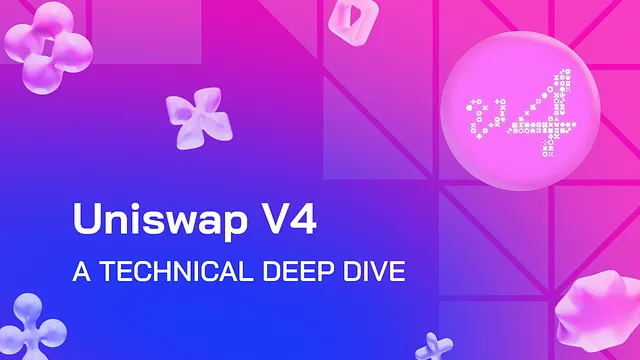
What is Uniswap v4? A Short Technical Breakdown

What is Uniswap v4? A Short Technical Breakdown

Uniswap has been the backbone of decentralized trading, replacing traditional order books with Automated Market Makers (AMMs). At the heart of this model are liquidity pools, where users supply tokens and earn fees in return. With each upgrade, Uniswap has aimed to improve efficiency, reduce costs, and create a better user experience. Now, with Uniswap v4, the protocol introduces a leap forward with: Singleton Architecture — consolidating all pools into a single contract to cut costs and reduce fragmentation. Customizable Hooks — allowing developers to build unique pool behaviors, from dynamic fees to on-chain strategies. Flash Accounting — settling balances only once per transaction for massive gas savings. Native ETH Support — streamlining ETH trading without wrappers. These innovations mark a turning point in how decentralized exchanges (DEXs) can scale and evolve. From v1 to v4: The Evolution Uniswap v1 (2018): Introduced the AMM model, enabling ETH ↔ ERC20 swaps but requiring ETH as a bridge for ERC20 ↔ ERC20 trades. Uniswap v2 (2020): Added ERC20 pools, flash swaps, and price oracles, but still lacked capital efficiency. Uniswap v3 (2021): Brought concentrated liquidity, letting LPs define price ranges, improving efficiency but increasing complexity. Uniswap v4 (2025): Introduces singleton contracts, hooks, and flash accounting, further boosting efficiency and flexibility. Impermanent Loss (IL) in Brief Liquidity providers risk impermanent loss when token prices move differently than if they had just held them. For example, providing ETH + USDC to a pool may yield fewer profits than simply holding both if ETH’s price doubles. LPs accept this trade-off because trading fees often offset IL. Uniswap v4 doesn’t eliminate IL entirely but provides new tools through hooks that could help reduce its impact in the future. Liquidity in v4 In v4, liquidity is managed by a singleton PoolManager. Unlike earlier versions where each pool had a separate contract, all pools now live under one roof. This structure makes liquidity management more efficient, reduces gas costs, and enables extensible behaviors through hooks. Hooks: The Game-Changer Hooks are perhaps the biggest innovation in Uniswap v4. They let developers customize pool behavior at critical points (before/after swaps, liquidity changes, etc.). Some applications include: Dynamic fee adjustments On-chain limit orders Auto-compounding yields MEV protection This flexibility turns Uniswap into a developer platform for building new financial primitives, far beyond standard AMM models. Uniswap v4 introduces powerful upgrades, singleton architecture, hooks, flash accounting, and ETH-native support that make DeFi trading more efficient and customizable than ever. At QuillAudits, we recognize how innovations like these raise the bar for decentralized exchanges while also demanding rigorous smart contract security audits to ensure reliability, cost savings, and developer flexibility. What is Uniswap v4? A Short Technical Breakdown was originally published in Coinmonks on Medium, where people are continuing the conversation by highlighting and responding to this story

Author: Medium
Chainlink and Pyth bring U.S. government economic data onchain

Chainlink and Pyth bring U.S. government economic data onchain

The U.S. Department of Commerce has launched a major blockchain initiative by using Chainlink and Pyth Network to publish official economic data onchain. The U.S. government has started publishing key economic indicators onchain. The initiative, led by the Department of…

Author: Crypto.news
U.S. GDP Goes Onchain as Bitcoin ETFs Extend Inflows, Solana Surges on Treasury Bid

U.S. GDP Goes Onchain as Bitcoin ETFs Extend Inflows, Solana Surges on Treasury Bid

Your daily access to the back room.

Author: Blockhead
Nvidia said two unnamed buyers made up 39% of its Q2 revenue

Nvidia said two unnamed buyers made up 39% of its Q2 revenue

The post Nvidia said two unnamed buyers made up 39% of its Q2 revenue appeared on BitcoinEthereumNews.com. Nvidia disclosed on Wednesday that just two unnamed customers were responsible for 39% of its total revenue in the second quarter of its fiscal year, a detail buried inside a regulatory filing submitted to the U.S. Securities and Exchange Commission. The company listed the buyers simply as “Customer A” and “Customer B,” with the first accounting for 23% and the second for 16% of Nvidia’s sales during the three-month period ending in July. Combined, they nearly controlled $6 billion of the chipmaker’s Q2 topline. That level of concentration is significantly higher than the same quarter last year, when Nvidia’s two biggest customers made up 14% and 11%. The spike is now fueling deeper scrutiny into who exactly is behind the massive surge in AI chip spending, and what that means for Nvidia’s revenue stability going forward. Despite repeated speculation that cloud heavyweights like Amazon, Microsoft, Google, or Oracle might be behind the numbers, Nvidia declined to name the clients. Nvidia keeps mystery buyers hidden behind layers of supply chain In the filing, Nvidia described Customer A and Customer B as “direct customers.” That doesn’t mean they’re using the chips themselves. These direct customers are firms that purchase Nvidia’s hardware to assemble complete systems or boards, which are then sold to the actual end users; like cloud companies, government agencies, and corporate enterprises. The list of potential intermediaries includes original design manufacturers and equipment builders such as Foxconn, Quanta, and big system integrators like Dell. Nvidia also acknowledged having indirect customers, the companies who eventually use the systems but don’t buy chips directly from Nvidia. These are the cloud infrastructure players, tech firms, and large organizations building internal AI platforms. The company said it can only estimate how much of its revenue comes from indirect buyers, using purchase orders and internal…

Author: BitcoinEthereumNews
Chainlink (LINK) Chosen By Nasdaq-Listed Caliber For New Crypto Treasury

Chainlink (LINK) Chosen By Nasdaq-Listed Caliber For New Crypto Treasury

An increasing number of asset managers are adopting cryptocurrencies as treasury reserves. Nasdaq-listed Caliber is the latest to join this trend, having recently announced the formal approval of its new Digital Asset Treasury (DAT) Strategy, which features decentralized oracle provider Chainlink (LINK) at its core. LINK Tokens As Reserve Assets The announcement came from Caliber’s […]

Author: Bitcoinist
Caliber Invests $40M in LINK to Establish Treasury, Stock Surges 80%

Caliber Invests $40M in LINK to Establish Treasury, Stock Surges 80%

TLDR Caliber is launching a $40M treasury strategy focused on Chainlink, diversifying its asset portfolio. The move helped Caliber’s stock surge 80%, indicating strong investor interest in blockchain integration. Chainlink’s partnerships with Mastercard and SWIFT boost Caliber’s confidence in LINK’s long-term value. The strategy is part of Caliber’s push to blend real estate investments with [...] The post Caliber Invests $40M in LINK to Establish Treasury, Stock Surges 80% appeared first on CoinCentral.

Author: Coincentral