What is MEXC pre-market perpetual futures trading? How to seize profit opportunities in pre-market trading?
1. What is pre-market perpetual futures trading?
2. Main advantages of pre-market perpetual futures trading
3. How to conduct pre-market perpetual futures trading on MEXC
3.1 Web
3.2 App
4. Pre-market perpetual contract risk
4.1 Lower liquidity
4.2 Higher price fluctuations
5. Frequently Asked Questions about Pre-market Perpetual Contracts
5.1 After the launch of the 5.1 token pre-market perpetual contract, what will be the follow-up process?
- Users do not need to manually operate, the system automatically changes to a formal perpetual contract.
- K-line data, trading entrance, etc. remain unchanged.
- Unfinished orders and existing positioning will remain unchanged.
- Settlement description
- A settlement will be made at a reasonable price.
- The settlement time will be announced in advance and displayed on the trading page.
- After the announcement, opening positions will be restricted and only position squaring is allowed.
5.2 Pre-market perpetual futures trading mechanism
5.3 Differences between pre-market trading (spot) and pre-market perpetual contracts
5.4 Whether the pre-market perpetual contract will affect the listing price of the token spot
5.5 When the pre-market user contract transitions to a formal contract, will it cause losses to the user?
6. What is the difference between premarket perpetual futures trading and USDT-M perpetual futures trading?
- Formal perpetual contracts : trading tokens that have been officially launched and have an active Spot Market .
- Pre-market perpetual contract : Trading tokens that have not yet been officially published or listed on mainstream exchanges is essentially a "quasi-futures" or "IOU" market for speculating on future token prices.
6.1 A brief comparison between pre-market perpetual contracts and conventional perpetual contracts
| Feature | Pre-Launch Perpetual Contract | USDT-Margined Regular Perpetual Contract |
| Underlying Asset | Tokens that have not yet launched or are not traded on mainstream exchanges. | Tokens that have already launched and have active spot trading pairs on multiple exchanges. |
| Trading Purpose | Price discovery and early speculation. Provides pre-launch price reference for new tokens. | Speculation, hedging, and arbitrage on mature tokens. |
| Price Source/Anchoring | No spot price anchoring. Price is entirely determined by supply and demand between buyers and sellers in this pre-launch market, forming a self-contained trading arena. | Price is closely anchored to spot index prices from one or more mainstream exchanges through the funding rate mechanism. |
| Lifecycle | Has a definite endpoint. After the token officially launches, the pre-launch contract will automatically settle according to rules and then be delisted. | Theoretically perpetual, with no expiration date. Can be held indefinitely as long as margin is sufficient. |
| Risk Level | Extremely high. Faces risks including project delays/cancellations, huge price differences between pre-launch and post-launch prices, extremely low liquidity, etc. | High. Mainly faces conventional derivative risks such as market volatility and leverage liquidation, but prices have spot reference, making them relatively transparent. |
| Liquidity | Usually lower, with larger bid-ask spreads and shallow market depth. | Usually higher, especially for mainstream tokens, with good market depth and active trading. |
| Funding Rate | Also has funding rates to balance long and short forces within the pre-launch market itself. However, due to extreme speculation, rates can be very high and volatile. | Funding rates are relatively stable, used to balance the deviation between contract price and spot price. |
| Target Users | Professional traders with extremely high risk appetite, well-informed early participants. | Broad cryptocurrency traders, including retail traders, professional traders, institutions, and hedgers. |
6.2 In-depth analysis of core mechanisms
6.2.1 Price Discovery and Risk
6.2.1 and settlement
- Pre-market trading phase :
- A certain exchange launched the "ABCUSDT Pre-Market Perpetual Contract" one week before the launch of ABC.
- At this time, there is nowhere to trade ABC spot. Investor Alice believes that ABC will become popular after it goes online, so she bought it at a price of 1 USDT in the pre-market. Investor Cindy thinks her expectations are too high and sells it at a price of 1 USDT.
- The price of 1 USDT here is completely negotiated by Alice, Cindy, and other market participants.
- Formal futures trading Stage :
- One week later, ABC officially launched spot trading on major exchanges, with a stable spot price of 1.5 USDT.
- The pre-market contract market will have a mandatory settlement according to the rules. Alice makes a profit (1.5 - 1) * quantity, Cindy loses.
- At the same time, the exchange launched the "ABCUSDT" official perpetual contract. The initial price of this contract will fluctuate closely around the spot price of 1.5 USDT, and traders can freely buy and sell it like trading BTC and ETH contracts.
Summary
- Pre-market perpetual contract : It is a high-risk, high-potential return early speculative tool . It provides a place for the market to play price games on unlisted assets, suitable for traders who have in-depth research on projects and can bear high risks.
- USDT Standard Formal Perpetual Contract : It is a mature and standardized derivative tool . It provides traders with a channel for leveraged trading and risk hedging based on transparent spot prices. It is currently the mainstream product in the cryptocurrency market and suitable for the vast majority of traders.
Recommended reading:
- Why choose MEXC futures trading? Learn more about the advantages and features of MEXC futures trading to help you seize the opportunity in the contract field.
- futures trading Operation Guide (App End) Learn more about the operation process of App-side futures trading, so that you can easily get started and play futures trading.

Popular Articles
View More
Oura Competitors: Samsung, Apple and the Smart Ring Market
Oura's competitors fall into three groups, according to its IPO prospectus: smartwatch makers such as Apple, Google and Samsung; fitness wearables such as Garmin, Coros and Whoop; and software-only
Is Oura Profitable? Revenue, Business Model and Valuation
Yes, Oura is profitable on a net income basis. Its IPO prospectus shows net income of $60.8 million on revenue of $1.21 billion in the nine months to June 30, 2026. The $924.3 million loss in some
Bitget Review 2026: 3.8 Out of 5, the Deepest Copy-Trading Shelf, and a Japan Exit With Three Dates You Need
Bitget scores 3.8 out of 5 on our six-dimension scorecard as of 25 September 2026, leading on derivatives, holding a provisional 3.5 on security after the hot-wallet incident of about $351.6 million
Trending News
View More
USDC SAP Payments: Can Stablecoins Transform ERP?
Circle is bringing stablecoin settlement deeper into corporate finance through a partnership with Tereina, the SAP-backed payments company powering SAP Pay. Announced on October 7, 2026, the partnersh
OpenAI Revenue Gap: Why Is the Latest Figure $20 Billion Lower?
OpenAI’s reported annualized revenue is $20 billion below earlier headlines. Here is what caused the gap and why it matters for its valuation.

Related Articles
View More
The Complete Guide to Coin-M Perpetual Futures on MEXC
In cryptocurrency derivatives, Futures trading enables investors to apply leverage to increase potential returns and to take positions in both rising and falling markets. MEXC offers two primary types
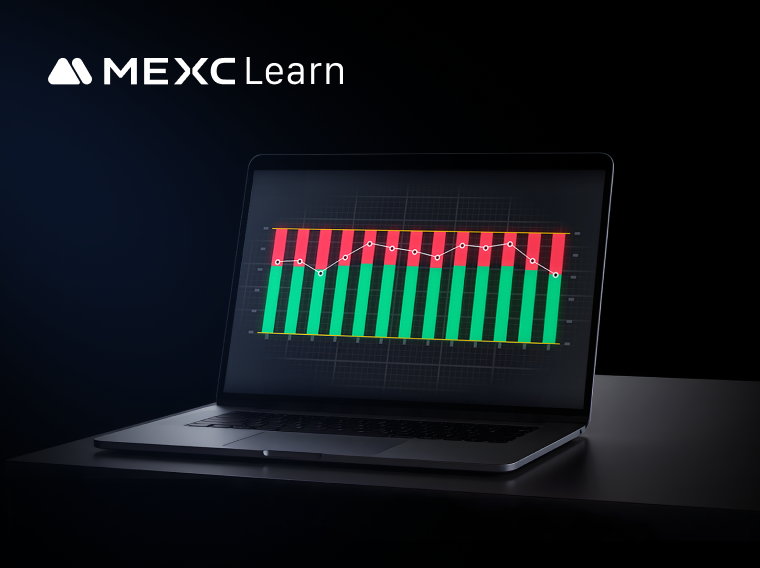
What Is the Long/Short Ratio? How to View Long/Short Ratio Data in Futures Trading?
BSL refers to long/short closing data. Currently, on the MEXC platform, both candlestick charts and line charts in Futures trading support the display of historical order data for long/short ratios. I
Why Choose MEXC Futures?
Cryptocurrency futures trading has attracted countless investors with its promise of high leverage and high returns. Choosing the right exchange is the first step on the journey to successful futures