MetaDAO Complete Guide 2025: Decentralized Governance Revolution Based on Prediction Markets
1. What is MetaDAO?
1.1 Core Definition
1.2 Concept of Futarchy
- Values are collectively established by the community (e.g., "maximize token value" or "accelerate network growth").
- Decision-making tools are determined by predicting the market, and market participants bet real money on which proposal will better achieve established values.
- The enforcement mechanism is automatic: if the market predicts that a proposal will bring better results, the proposal is automatically passed and executed.
- Incentive Alignment: Participants profit only through accurate predictions, encouraging rational analysis over emotional voting
- Information Aggregation: Market prices efficiently consolidate distributed knowledge and expertise
- Reduced Political Maneuvering: Decisions stem from economic projections rather than political alliances or lobbying efforts
- Enhanced Efficiency: Automated execution minimizes governance friction
1.3 MetaDAO's Unique Value Proposition
1.4 Application Scenarios
- Protocol Parameter Optimization: Market-predicted optimal rates, reward ratios, and other critical parameter configurations
- Capital Allocation Decisions: Market assessment of which investments or funded projects will generate maximum returns
- Technology Route Selection: Market-based evaluation of the most valuable paths among multiple options
- Partnership Selection: Assessing various strategic partnerships' potential impact on project value
- Crisis Response: Rapid, market-supported decision-making during critical situations
2. Core Mechanisms of MetaDAO
2.1 Prediction Market Operations
Any user holding sufficient META tokens can submit a proposal that clearly specifies:
- Implementation details (e.g., "reducing transaction fees from 0.3% to 0.25%")
- Success metrics (e.g., "META token price after 30 days")
- Market analysis parameters
The system establishes two distinct prediction markets for each proposal:
- PASS Market: Predicts future indicator values if the proposal is implemented
- FAIL Market: Predicts future indicator values if the proposal is rejected
Participants engage in market trading based on their analysis:
- Those believing the proposal will enhance outcomes purchase in the PASS market
- Those believing the proposal will prove detrimental purchase in the FAIL market
- Market prices dynamically reflect collective expectations
When the trading period concludes:
- If PASS market price exceeds FAIL market price: the proposal automatically activates
- If FAIL market price exceeds PASS market price: the proposal is rejected
- The magnitude of the price differential indicates market confidence in the outcome
Following proposal execution, the system observes outcomes through a predetermined period (e.g., 30 days) before settling based on actual results:
- Correct predictors receive profits
- Incorrect predictors lose principal
- The system automatically distributes profits and losses
2.2 Conditional Token Mechanism
- When proposals pass and results are verified, PASS token holders can redeem underlying assets plus returns
- When proposals fail, FAIL token holders can redeem the underlying collateral
- The opposing token becomes worthless
- Consistent market liquidity (through unlimited minting capability)
- Efficient price discovery (as arbitrageurs eliminate irrational price disparities)
- Transparent and equitable settlement (via automated smart contract execution)
3. META Token Economics
3.1 Token Functions
3.1.1 Governance Participation Threshold
- Proposal creation requires staking a certain META amount
- This prevents spam proposals and ensures proposers have a meaningful stake in outcomes
- Staked META remains locked throughout the proposal period, with failed proposals potentially forfeiting partial stakes
3.1.2 Prediction Market Collateral
- META serves as eligible collateral for prediction market participation
- META holders may receive fee discounts and additional benefits when participating in markets
3.1.3 Value Capture
- A portion of MetaDAO-generated revenue (including market transaction fees) flows back to META holders
- This occurs through mechanisms such as token buybacks, burns, and staking rewards
3.1.4 Ecosystem Incentives
- Rewards for early adopters, liquidity providers, and active governance participants
- Designed to attract and retain high-quality community contributors
3.2 Token Value Drivers
- Increasing proposal volume → More META staked → Reduced circulating supply
- Prediction market activity levels → Greater META collateral utilization
- Fee revenue growth → Enhanced buyback or dividend distribution
- Broader adoption of MetaDAO's governance framework → META positioning as a meta-governance token with enhanced value
- Improved prediction market accuracy → Expanded participant base → Enhanced liquidity and efficiency
- Growing interest in Futarchy concepts
- Narrative strength of governance innovation
- Broader cryptocurrency market sentiment
- Token distribution schedule
- Staking participation rates and lock-up durations
- Deflationary mechanisms (burns, etc.)
3.3 Sustainability of the Token Economy
Key challenges facing the token economy design of MetaDAO:
Long-Term Value Capture: How to ensure that META tokens continue to capture protocol value?
Inflation vs. Dilution: How to balance incentive issuance and token value protection?
4. How to Participate in MetaDAO
4.1 Acquiring META Tokens
- Available on Raydium, Orca, and other Solana ecosystem DEXs
- Requires SOL for transaction fee coverage
- Accessible through Phantom, Solflare, and other Solana-compatible wallets
- Provide liquidity in designated pools
- Earn META token rewards
- Consider impermanent loss risks before participating
4.2 Governance Participation
- Maintain the minimum required META token balance
- Submit your proposal through the MetaDAO platform
- Stake the required META tokens as collateral
- Craft a comprehensive proposal with clearly defined expected outcomes
- Await market evaluation of your proposal
- Review active proposal markets
- Evaluate each proposal's potential protocol impact
- Execute trades in either PASS or FAIL markets based on your analysis
- Generate returns through accurate predictions
- Supply liquidity to prediction markets
- Earn a share of transaction fees
- Contribute to overall market efficiency
4.3 Risk Considerations
- MetaDAO remains an experimental project with potential undiscovered vulnerabilities
- Only commit capital you can afford to lose
- META token prices may experience substantial volatility
- Prediction market participation carries potential principal loss
- The Futarchy model remains in the validation phase and may produce unexpected outcomes
- Markets could experience manipulation or exhibit irrational behavior
- Certain markets may experience liquidity constraints
- Position exits may encounter slippage
5. MetaDAO Compared to Competitors
5.1 Traditional DAOs (e.g., Uniswap, Compound)
- Well-established governance processes and substantial communities
- Widespread recognition and adoption
- Proven operational stability
- Persistently low voter participation (typically below 10%)
- Vulnerability to whale influence and control
- Decision quality is heavily dependent on voter rationality and knowledge
5.2 Other Innovative Governance Projects
- Implements a bicameral governance system combining token and citizen voting
- More conservative approach than MetaDAO, but with broader accessibility
- Continuously onboards new members through daily NFT auctions
- Maintains traditional voting mechanisms but offers more flexible funding allocation
- Minimizes voting costs while maximizing participation rates
- Still fundamentally relies on subjective opinions rather than objective predictions
FAQs:
Conclusion

Popular Articles
View More
Oura Competitors: Samsung, Apple and the Smart Ring Market
Oura's competitors fall into three groups, according to its IPO prospectus: smartwatch makers such as Apple, Google and Samsung; fitness wearables such as Garmin, Coros and Whoop; and software-only

Is Oura Profitable? Revenue, Business Model and Valuation
Yes, Oura is profitable on a net income basis. Its IPO prospectus shows net income of $60.8 million on revenue of $1.21 billion in the nine months to June 30, 2026. The $924.3 million loss in some
Bitget Review 2026: 3.8 Out of 5, the Deepest Copy-Trading Shelf, and a Japan Exit With Three Dates You Need
Bitget scores 3.8 out of 5 on our six-dimension scorecard as of 25 September 2026, leading on derivatives, holding a provisional 3.5 on security after the hot-wallet incident of about $351.6 million
Hot Crypto Updates
View More
Is BEEG Dead in 2026? On-Chain Data Tells a Very Different Story
Is BEEG dead in 2026? This deep-dive into Beeg Blue Whale (BEEG) on-chain data, holder structure, and Sui ecosystem tailwinds reveals the real story behind the 98% crash — and why MEXC is the best

Is BEEG Still Worth Buying in Q3 2026? A Deep-Dive into Sui's Most-Talked Meme Coin
Is Beeg Blue Whale (BEEG) worth buying in Q3 2026? This in-depth analysis covers BEEG tokenomics, Sui ecosystem growth, 2026 price predictions, and why MEXC is the top platform to trade BEEG when it

BEEG Q3 2026 New Update: What Traders Need to Know
What's new with Beeg Blue Whale (BEEG) in Q3 2026? This deep-dive covers the Blue Whale Branding Suite delivery window, Sui's Ethereum bridge mainnet launch, on-chain accumulation signals, and why

Sui Ecosystem Explosion: How BEEG Is Becoming "Web3's Canva" — Is the 100x Potential Still Real in 2026?
A deep-dive into Beeg Blue Whale (BEEG) and its strategic transformation from a pure speculative meme coin to the branding infrastructure layer of the Sui ecosystem. What is the Blue Whale Branding
Trending News
View More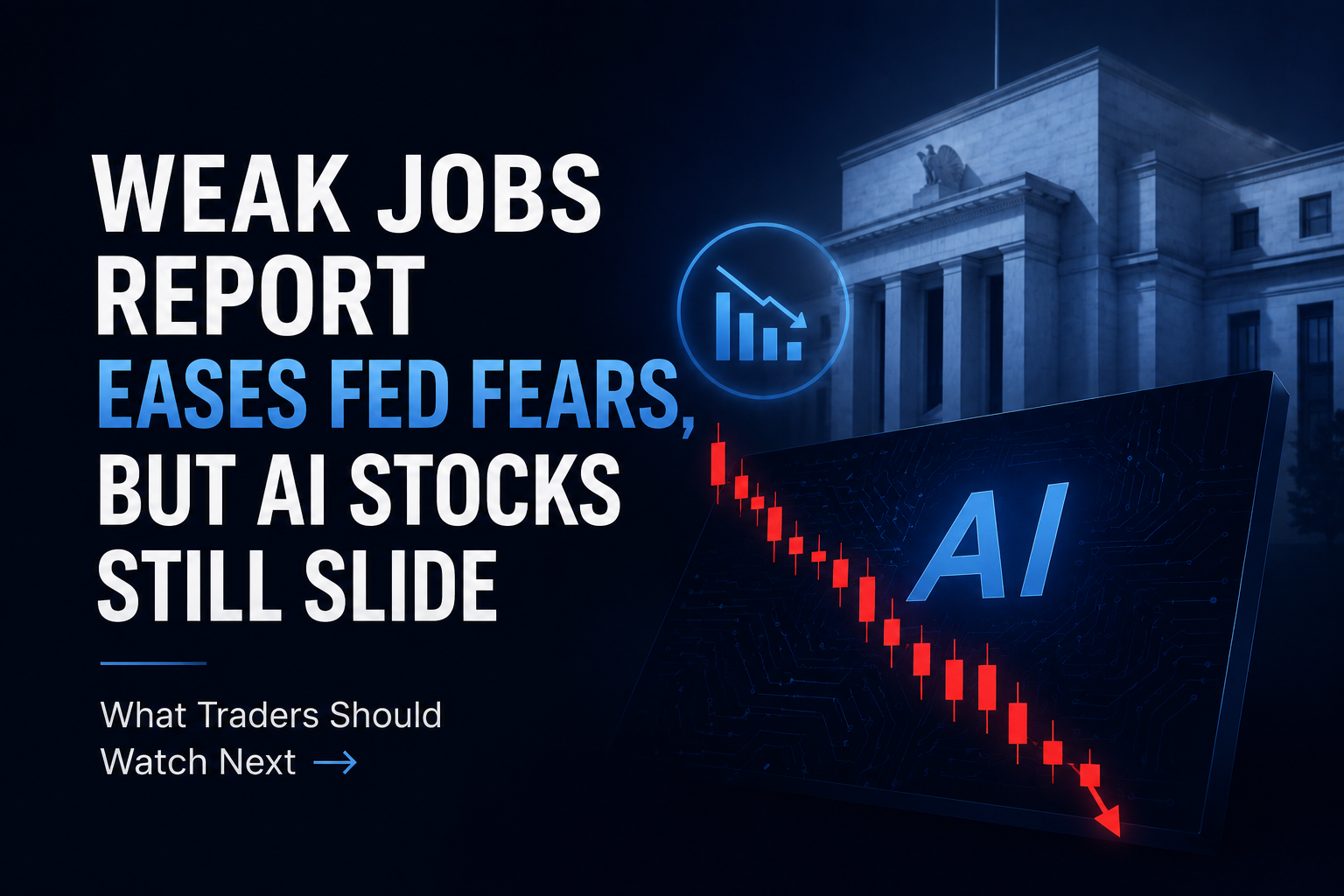
Weak Jobs Report Eases Fed Fears, But AI Stocks Still Slide: What Traders Should Watch Next
The U.S. June jobs report signaled a clear economic slowdown, missing expectations and lowering Federal Reserve rate hike fears. Despite lower Treasury yields, AI and tech stocks slid, proving that ma
OpenAI Revenue Gap: Why Is the Latest Figure $20 Billion Lower?
OpenAI’s reported annualized revenue is $20 billion below earlier headlines. Here is what caused the gap and why it matters for its valuation.
Related Articles
View More
What Is Concrete Crypto (CT)? CT Coin Tokenomics, Airdrop and How to Buy on MEXC
The Concrete crypto project runs on one simple idea: make a single deposit, and let curated strategies put it to work.Built by Blueprint Finance, Concrete runs ERC-4626 vaults that spread each deposit
What Is Anonymous Cat (ZCAT)? The Solana Meme Coin Paying ZEC
Most meme coins on Solana trade against SOL or a stablecoin.Anonymous Cat (ZCAT) trades against Zcash, and that single design choice defines the entire token.ZCAT is a Solana meme coin built on the Zc
What Is HAJIMI? Meaning, Contract Address, and How to Buy
哈基米 (HAJIMI) is a meme coin on BNB Chain built around one of the most widely shared cat memes in Chinese internet culture.The token has no whitepaper, no named founding team, and no technical roadmap.