

OverviewZcash (ZEC) lost roughly half its value in 48 hours in early June 2026, falling from a June 4 peak near $624 to about $309 on June 5 after Shielded Labs disclosed a critical soundness flaw in OverviewZcash (ZEC) lost roughly half its value in 48 hours in early June 2026, falling from a June 4 peak near $624 to about $309 on June 5 after Shielded Labs disclosed a critical soundness flaw in
ZEC Plunges on Infinite Mint Fears: Analyzing the Market Fallout of the Orchard Bug

Overview
Zcash (ZEC) lost roughly half its value in 48 hours in early June 2026, falling from a June 4 peak near $624 to about $309 on June 5 after Shielded Labs disclosed a critical soundness flaw in the Orchard shielded pool. Liquidations topped $116 million and more than $5 billion was erased from Zcash's market capitalization, yet the bug was never exploited: no funds were stolen, no counterfeit ZEC was confirmed, and the network's turnstile mechanism verified that total supply remained intact throughout. The crash was driven by something subtler and more dangerous than a hack; the inability to ever cryptographically prove the supply was clean.
This article looks past the headlines to analyze what actually happened at the level of market microstructure and zero-knowledge cryptography. The flaw, hidden in the Orchard circuit since its May 2022 activation, was an under-constrained element in the variable-base scalar multiplication gadget of the halo2_gadgets crate. It could have allowed an attacker to forge nullifiers and mint counterfeit ZEC inside the shielded pool with no on-chain signature. It was discovered on May 29, 2026 by security engineer Taylor Hornby, contracted by Shielded Labs, using Anthropic's Claude Opus 4.8; a finding that had eluded four years of expert human audits. Developers patched it through a two-stage emergency response culminating in the NU6.2 hard fork.
The Catalyst: An Under-Constrained Circuit
The root of the panic was a soundness flaw that sat dormant in the Orchard pool from its activation in May 2022. Orchard is Zcash's most advanced shielded pool, built on the Halo 2 proving system with no trusted setup, and it holds the large majority of shielded ZEC. Instead of publishing transaction details like Bitcoin, Zcash records an encrypted note plus a zero-knowledge proof that the transaction obeys the rules.
The vulnerability lived in the variable-base scalar multiplication gadget of the Orchard circuit, implemented in the halo2_gadgets Rust crate. According to theofficial Zcash security disclosure, the incomplete double-and-add loop held the per-iteration base coordinates constant across rows but never tied them to the real base. The coordinates were written into the circuit with assign_advice, and the chain failed to anchor to either the doubling-row base or the complete-addition base. In plainer terms, a constraint that was supposed to force a witnessed value to equal the actual base was missing.
The practical consequence was that a sophisticated attacker could push mathematically invalid inputs past an elliptic-curve check that should have rejected them, forging nullifiers to double-spend the same shielded note and mint counterfeit ZEC inside the pool with no observable on-chain signature.
Zcash's development lab was careful to frame what kind of bug this was. CEO Josh Swihart described it as a flaw in the protocol's "rulebook" loosely written rules that made fake transactions possible rather than a break in the underlying cryptography or the proof engine itself. That distinction matters for assessing systemic risk, even if it offered little comfort to the order book.
The discovery itself is the part that will be studied for years. Hornby found the flaw on May 29, hours after Anthropic released Claude Opus 4.8 on May 28, by pointing the model at the Orchard circuit through a purpose-built auditing framework. He went beyond flagging it, he wrote a complete proof-of-concept exploit that generated counterfeit ZEC in a local test environment. A blind spot that four years of expert human review had missed surfaced in a single concentrated effort. That is the genuinely novel element here, and it cuts both ways: AI tooling now hardens networks faster, but it also lowers the cost of finding latent flaws for anyone pointing the same tools at the same code.
The Turnstile Mechanism vs. The Market Narrative
When the disclosure broke, the market priced the worst case: chain-wide hyperinflation. The architecture tells a narrower story.
The bug did not enable an infinite global mint of spendable ZEC. The risk was confined to the Orchard pool. Zcash uses a "turnstile"; a public accounting boundary that tracks exactly how much transparent ZEC enters and exits each shielded pool. Consensus rules physically prevent more public ZEC from being withdrawn from Orchard than was ever deposited. The Zcash Foundation confirmed total supply integrity held throughout, verified by precisely this mechanism.
So the real worst case was Orchard insolvency, not global inflation. If counterfeit notes had been created, honest claimants would be competing with fraudulent ones for a finite pool of real, turnstile-backed ZEC. Structurally this resembles a liquid-staking or vault shortfall, where bad claims dilute a fixed reserve, rather than a transparent smart-contract drain. That analogy is illustrative; the disclosure describes the turnstile-containment mechanism, not a specific named comparison. The containment was real. The nuance was almost entirely lost in the panic.
Grayscale CLO Craig Salm and Gemini's Cameron Winklevoss both made the empirical case for calm: to believe the exploit was actually triggered, someone would have had to out-analyze every developer at ECC, ZODL, Shielded Labs, and the Foundation combined and then decline to drain the pool during a 20x-plus bull run. Possible, but improbable. Winklevoss framed the rapid discovery and remediation as a vote of confidence in the network's defenders rather than an indictment.
Why the Order Books Emptied
If the turnstile contained the damage, why the severe liquidity drain? The answer is the privacy paradox of zero-knowledge proofs. Because ZK proofs hide all private circuit inputs by design, an attacker manipulating those inputs leaves no observable on-chain signature. Nullifiers generated through this specific double-spend path would be cryptographically indistinguishable from legitimate activity. Even high-level statistical analysis of Orchard action counts cannot conclusively prove whether an exploit happened. As the project itself acknowledged, the flaw could have enabled undetectable counterfeiting. On a transparent chain like Bitcoin or Ethereum, a hack is visible—stolen funds can be traced, attacker wallets monitored, the exact supply impact quantified. With Orchard, the perfect privacy that gives ZEC its value also makes it mathematically impossible to prove the network was clean before the patch.
Markets abhor that kind of uncertainty. The combination of possible-but-unprovable insolvency and a permanently unverifiable history triggered a classic bank run. Being early to the exit is the rational move in a shielded liquidity crisis: traders unshielded ZEC and sold, depth thinned, and large holders liquidated outright. The most visible exit was Arthur Hayes, who closed his entire position, conceding he thought counterfeiting was unlikely but that the inability to prove it had broken his thesis for holding. The sell-off stayed largely Zcash-specific: Monero slipped only 3% to 4% and Dash held roughly flat, confirming the market read this as an idiosyncratic event rather than a privacy-coin contagion.
The Liquidity Fallout in Context
The drawdown landed on top of an enormous run. ZEC had closed 2025 up roughly 691%, the best-performing privacy coin, touching $744 in November before the June repricing pinned it near $309. The asset had also been attracting institutional attention, the SEC closed its investigation into the project in January 2026, and Grayscale filed to convert its Zcash Trust into what could become the first U.S. spot privacy-coin ETF. Roughly 30% of circulating supply now sits in shielded pools, up from around 8% in 2024.
That backdrop is why the disclosure hit so hard. ZEC had become the privacy trade, and the bug struck the exact property—verifiable supply integrity inside the shielded pool that the trade was built on. Updating a zero-knowledge circuit is not a simple node patch, either: it requires changing the pinned verifying key, which is why a hard fork was unavoidable rather than a quiet hotfix.
Moving Forward: Restoring the Peg of Trust
Closing the code was the first step, not the last. Thetwo-stage fix—an emergency soft fork on June 2 followed by the NU6.2 hard fork on June 3 repaired the circuit, but it did not, and cannot, retroactively prove that no counterfeit ZEC was ever minted. That is the trust deficit the market is now pricing.
Shielded Labs' answer is a proposed new shielded pool called Ironwood. The plan targets activation around late July 2026, following Orchard's end-of-support, and is backed by formal verification, independent audits, and AI-assisted review, a more rigorous assurance framework than Orchard ever had. The mechanism is the clever part. As funds migrate out of Orchard through the turnstile, one of two things happens: either all coins exit cleanly, confirming the supply was honest all along, which developers consider far more likely, or excess ZEC attempts to leave, gets rejected and destroyed by the turnstile, and in doing so creates publicly verifiable on-chain evidence that counterfeiting occurred. Either way, the question that cryptography alone cannot currently answer eventually becomes visible to everyone. MEXC'sbreakdown of the Ironwood proposal walks through the migration timeline in more detail. Until that migration completes and a provably clean pool exists, the market will likely keep applying a heavy risk premium to ZEC.
The Orchard episode is a historic stress test for privacy coins. It demonstrates that in advanced cryptography, the most dangerous vulnerabilities are not the loud ones that visibly drain a transparent contract. They are the silent ones buried in the math, where the same privacy that creates the asset's value also makes its safety unprovable.
Frequently Asked Questions
How much did ZEC fall, and was anyone robbed?
ZEC dropped from about $624 on June 4 to roughly $309 on June 5, 2026 close to 50% in 48 hours with liquidations over $116 million. No funds were stolen and no exploit was confirmed. The crash reflected uncertainty about whether the supply could be proven clean, not a realized loss.
What exactly was the Orchard bug?
A soundness flaw in the variable-base scalar multiplication gadget of the Orchard zero-knowledge circuit, in the halo2_gadgets crate. A missing constraint failed to bind a witnessed value to the real elliptic-curve base, which could have let an attacker forge nullifiers and mint counterfeit ZEC inside the Orchard pool without leaving any on-chain trace. The Zcash dev lab characterized it as a "rulebook" flaw, not a break in the core cryptography.
Could it have created infinite ZEC across the whole network?
No. Zcash's turnstile mechanism caps how much ZEC can ever leave a shielded pool at the amount deposited, so the risk was confined to potential Orchard insolvency, not chain-wide inflation. The Foundation confirmed total supply remained intact.
How was it discovered, and what role did AI play?
Security engineer Taylor Hornby, contracted by Shielded Labs in April 2026 to hunt protocol bugs, found it on May 29 using Anthropic's Claude Opus 4.8 (released May 28) inside a custom auditing framework. He wrote a working exploit that generated counterfeit ZEC in a local test environment. The flaw had survived four years and multiple expert audits.
How was it fixed?
In two stages: an emergency soft fork (Zebra 4.5.3) disabled Orchard transactions at block 3,363,426 on June 2, then the NU6.2 hard fork (Zebra 5.0.0) re-enabled Orchard with a corrected circuit at block 3,364,600 on June 3.
Why did ZEC keep falling after the fix?
Because zero-knowledge privacy makes it mathematically impossible to prove, from Orchard's records alone, that no counterfeit ZEC was created before the patch. Markets price unresolved, unprovable uncertainty heavily. Shielded Labs' proposed Ironwood pool aims to restore verifiable supply integrity by late July 2026.
Disclaimer: This article is for informational purposes only and does not constitute financial, investment, or trading advice. Digital assets are volatile and you may lose capital. Conduct your own research before making any decision.
市场机遇
4实时价格 (4)
--
----
USD
4 (4) 实时价格图表
描述:币圈脉动基于 AI 技术与公开信息,第一时间呈现最热代币趋势。如果想了解更多专业解读与深度分析,请访问新手学院。
本页面分享的文章均源自公开平台,仅供参考。该内容不代表 MEXC 的立场或观点。所有版权归 Emmanuel Olamiye 所有。如果您认为任何内容侵犯了第三方的权益,请联系 service@support.mexc.com 以便及时删除。 MEXC 不保证任何内容的准确性、完整性或及时性,且不对基于所提供信息而采取的任何行动负责。本内容不构成财务、法律或其他专业建议,亦不应被解释为 MEXC 的推荐或认可。如需专家见解和深入分析,请造访 MEXC 学院。
4 最新动态
查看更多
三星第二季度利润暴涨19倍,但股价却下跌:为什么AI存储芯片股票面临更高门槛
三星电子近期发布了2026年第二季度的业绩指引,预计营收约为171万亿韩元,营业利润约为89.4万亿韩元——较去年同期实现了惊人的19倍增长。从账面上看,这是迄今为止AI存储周期中释放出的最强劲的利润信号之一。
然而,市场并没有将其视为一个简单的盈利超预期事件来交易。三星股价在韩国股市盘中一度大跌10.1%,收盘下跌6.9%,并拖累了SK海力士、美光和西部数据等同行。向投资者传递的信号响亮而清晰:投资者不再仅仅关注AI存储需求是否强劲。在经历了一轮历史性的板块大涨之后,他们现在开始质疑当前的存储芯片定价、扩张的利润率以及激进的AI资本支出(capex)是否具有可持续性。
2026/07/08
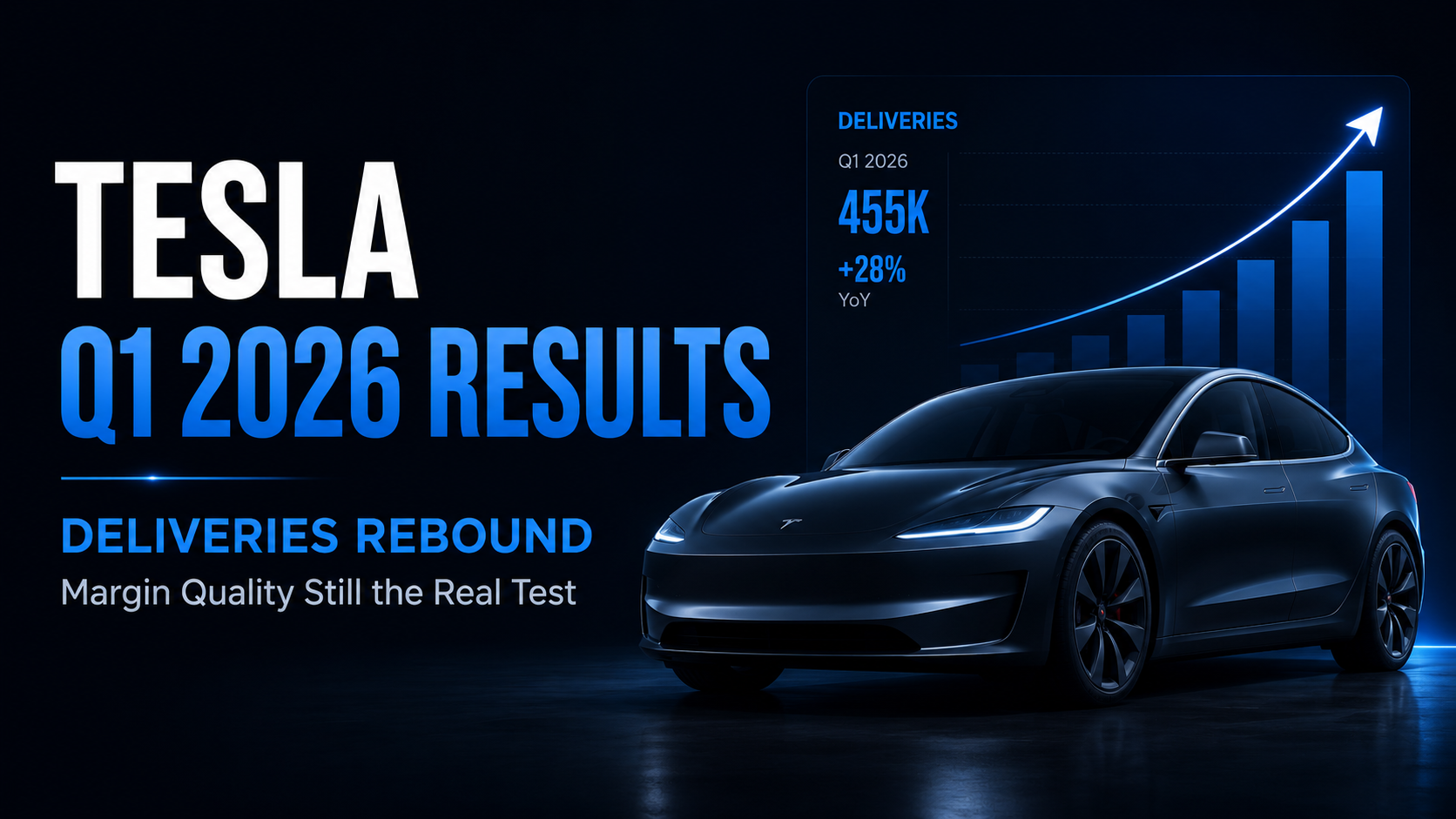
特斯拉2026年第一季度财报回顾:交付量反弹,但利润率质量仍是真正的考验
特斯拉于2026年4月22日美国股市收盘后公布了其2026年第一季度的财务业绩。该公司本季度交付了358,023辆汽车,创造了224亿美元的总营收,并报告归属于普通股股东的GAAP净利润为4.77亿美元。总GAAP毛利率提升至21.1%,而营业利润率达到4.2%。
核心信号不仅在于特斯拉的交付量从去年同期的疲软基数中恢复。更重要的问题是:更高的交付量、FSD相关营收、更低的单车成本以及改善的汽车毛利率,能否重建市场对特斯拉盈利能力的信心。对于寻找下一次TSLA财报日期或关注特斯拉财报的投资者来说,第一季度的表现为第二季度设立了一个关键考验:即销量的增长能否可持续地转化为更高质量的收益。
2026/07/09
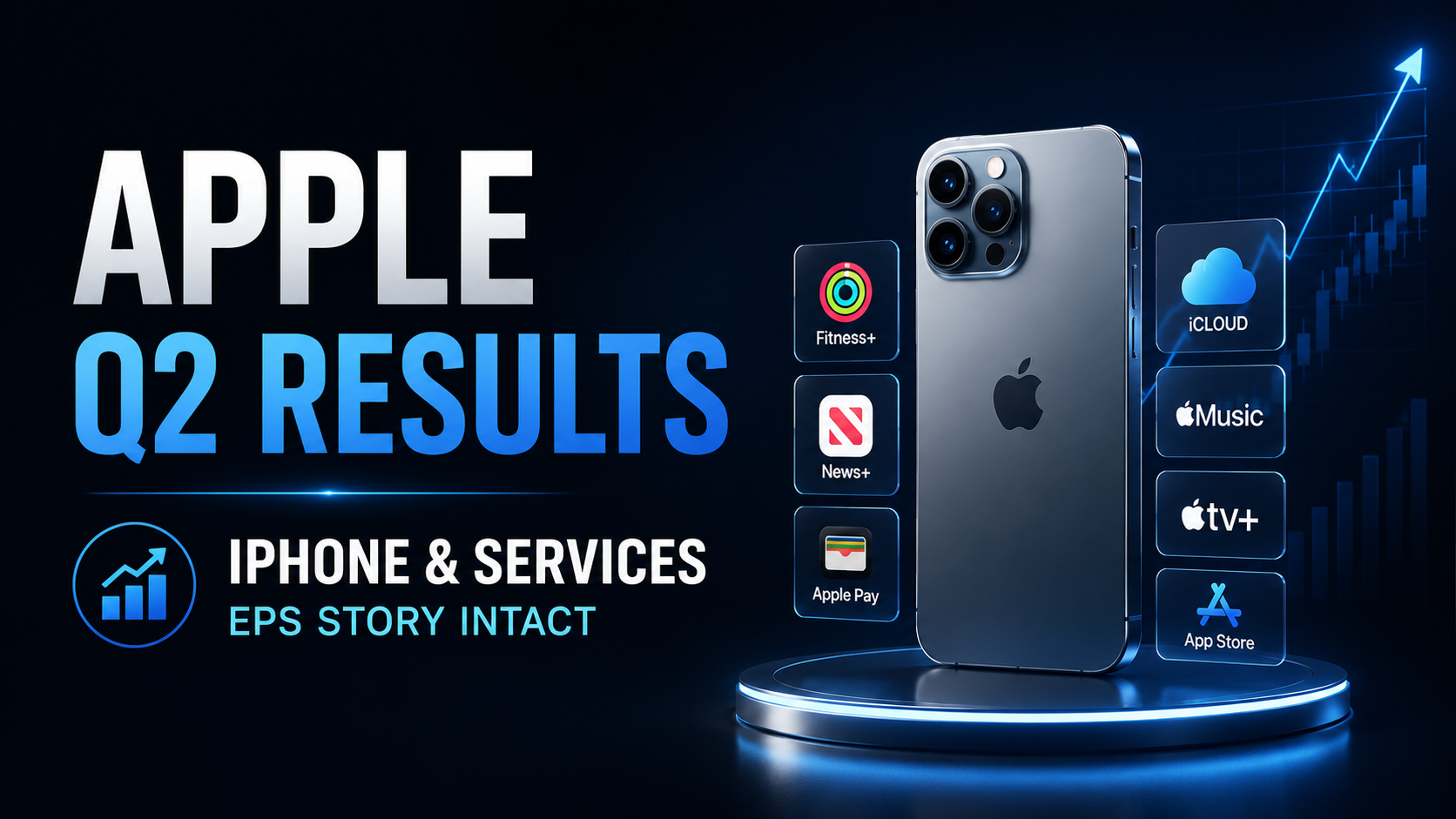
苹果 2026 财年第二季度财报回顾:iPhone 营收与服务业务增长维持 EPS 预期
苹果于 2026 年 4 月 30 日发布了 2026 财年第二季度财报,涵盖截至 2026 年 3 月 28 日的季度。总营收达到 1112 亿美元,同比增长 17%,摊薄后每股收益(EPS)增长 22% 至 2.01 美元。苹果表示,该季度创下了公司 3 月份季度的总营收、iPhone 营收和 EPS 纪录,同时服务业务营收也创下历史新高。
这不仅仅是一份常规的硬件周期财报。苹果第二季度的业绩证明,iPhone 需求、服务业务增长以及积极的资本回报计划仍在共同支撑着该公司强大的 EPS 增长故事。对于寻找下一个苹果财报或 AAPL 财报更新的投资者而言,未来的关键问题是,在市场等待更强劲的 AI 和产品周期催化剂之际,苹果能否维持其溢价估值。
2026/07/09


热门
目前热门备受市场关注的加密货币
加密货币价格
按交易量计算交易量最大的加密货币