

Amid the rapid growth of artificial intelligence (AI) and Web3 gaming in 2026, AKEDO ($AKE) has emerged as an ambitious project that combines multi-agent AI, an AI-native game creation platform, and aAmid the rapid growth of artificial intelligence (AI) and Web3 gaming in 2026, AKEDO ($AKE) has emerged as an ambitious project that combines multi-agent AI, an AI-native game creation platform, and a
What Is AKEDO ($AKE)? Exploring the AI-Powered "Vibe Coding" Platform for Game Creation

Amid the rapid growth of artificial intelligence (AI) and Web3 gaming in 2026, AKEDO ($AKE) has emerged as an ambitious project that combines multi-agent AI, an AI-native game creation platform, and a token launchpad. With AKEDO, users do not need programming skills to create games, publish their creations, and participate in the platform's creator economy.
This article provides a comprehensive overview of AKEDO, covering its concept, technology, tokenomics, roadmap, opportunities, and risks, helping investors gain an objective understanding before trading $AKE on exchanges such as MEXC.
Important note: $AKE is an extremely high-volatility token. Investors should conduct thorough analysis and apply strict risk management before trading.
Key Takeaways
- AKEDO combines AI agents, an AI-powered game creation platform, and a token launchpad to simplify Web3 game development.
- A concentrated token allocation and the long-term unlock schedule are critical factors investors should monitor closely.
- $AKE has experienced extremely high price volatility, surging several hundred percent within a short period while also carrying the risk of sharp corrections.
- Investors should prioritize risk management and closely monitor on-chain activity, holder distribution, and liquidity before trading $AKE.
1. What Is AKEDO? How Does It Work?
AKEDO is an AI-powered game and content creation platform that allows users to build games using natural language prompts. Instead of manually designing maps, characters, game mechanics, or storylines from scratch, users simply describe their ideas while the AI generates the content.
The project aims to create an ecosystem where players can also become creators. After building a game, users can publish it on the platform, promote it using $AKE, and monetize the content they create.
The core components of AKEDO include:
- AI-powered game creation through text prompts.
- A multi-agent AI system dedicated to game development.
- A library of game templates across multiple genres.
- A built-in game publishing and promotion system.
- A points and rewards system for players.
- A launch mechanism that enables every game or game collection to issue its own token.
- The $AKE token, which is used for platform fees, rewards, and participation in the platform's economic activities.
The workflow is relatively straightforward:
A user enters a prompt in natural language, for example:
"Create a 2D pixel-art platformer where a dog jumps over obstacles, featuring a score system and power-ups."
The AI agents then divide the workload among specialized roles. The World Builder generates maps and environments, the Rule Designer creates gameplay mechanics and balancing, the Storyteller writes the storyline, while additional agents handle graphics, sound effects, animations, and other production tasks.
Instead of taking months through traditional development, a playable game can be generated within minutes.
Creators can also launch a dedicated token collection for their games with a single click. Every new game token launched on the AKEDO platform is required to pair with AKE to provide its initial liquidity.
2. Key Features and Core Technology
Vibe Coding / Multi-Agent AI Framework
This is AKEDO's biggest differentiator. Instead of relying on a single large language model (LLM) such as GPT, AKEDO deploys a specialized multi-agent AI framework, where different AI agents collaborate to handle specific tasks. This approach enables significantly greater accuracy and complexity in game creation compared to traditional AI-powered development tools.
Integrated Launchpad
Creators can do more than just build games. They can seamlessly tokenize their projects, create liquidity pools, and distribute game tokens to the community through the platform's built-in launchpad.
Multiple Monetization Channels
Creators can generate revenue through several income streams, including platform fees, advertising revenue, AKE rewards, and earnings derived from their own game tokens.
Simplified Web3 Gaming Integration
Games can easily integrate NFTs, token rewards, and play-to-earn mechanics without requiring developers to build complex blockchain infrastructure from scratch.
Wallet-Based Game Personalization
AKEDO can leverage on-chain wallet data to personalize the gaming experience. Before gameplay begins, the platform is capable of analyzing a player's BNB Chain wallet, including digital asset holdings, transaction history, NFTs, and community participation, allowing games to deliver a more customized experience.
Compared with many AI projects that primarily focus on generating 2D or 3D content, AKEDO is heavily focused on creating fully playable games while integrating native tokenization. This provides tangible utility for the AKE token rather than relying solely on AI-driven market narratives.
3. Project Team
AKEDO is presented as a project built by professionals with experience in the gaming and technology industries, including backgrounds at companies such as Tencent, ByteDance, and NetEase. The core team is said to consist of individuals who have previously worked at major game development companies.
Andrew Rogozov serves as Initiator. He is Founder and CEO of The Open Platform (TOP) and former CEO of VK. Blake is CEO, with prior experience at Tencent Games, including global publishing of PUBG Mobile, and over five years in Web3. The team consists of veterans from Tencent Games, NetEase, and AAA titles, combining strong gaming backgrounds with Web3 and AI expertise.
4. $AKE Token Information
Tokenomics
The total supply of 100 billion AKE is allocated as follows:
- Community: 31.5%
- Investors: 25%
- Ecosystem & Growth: 17.5%
- Early Contributors: 15%
- Advisors: 5%
- Liquidity Provision (LP): 5%
- Community Airdrop: 1%
Within the Community allocation, AKEDO further distributes tokens among node operators, creators, and players.
The Investor allocation is subject to a 3-month cliff, followed by a 24-month linear vesting schedule. Meanwhile, Early Contributors and Advisors are locked for 6 months before being released gradually over 42 months.
This allocation structure indicates that a substantial portion of the supply is reserved for community incentives and ecosystem expansion. However, investors and early contributors also control a meaningful percentage of the total supply. As a result, the token unlock schedule remains one of the most important factors to monitor when evaluating the long-term investment outlook for AKE.
Token Utility
AKE serves multiple core functions within the AKEDO ecosystem. First and foremost, it acts as the primary payment token for users who create AI-generated content and publish games on the platform.
Its primary use cases include:
- Paying fees for AI-powered content generation.
- Paying game publishing fees.
- Promoting games across the platform.
- Staking to earn a share of protocol rewards.
- Receiving revenue sharing through AKE staking.
- Serving as the liquidity pair for newly launched ecosystem tokens.
- Rewarding both players and content creators.
According to AKEDO's fee model, 33% of protocol fees are retained as platform revenue, 33% are distributed to AKE stakers, and the remaining 33% are permanently burned. This design creates a direct connection between platform activity, token demand, and the circulating supply of AKE.
Roadmap
Based on the project's published roadmap:
- Q3 2025: Launch the game creation module on testnet, improve AI capabilities, and begin the beta campaign.
- Q4 2025: Integrate the Launchpad, launch the NFT marketplace, and host AI game showcase tournaments.
- Q1 2026: Deploy full DAO governance and release the Composable SDK for third-party developers.
- Q2 2026: Launch the mobile application and enable cross-chain bridging to additional Layer 2 networks.
As of July 2026, the project has already completed its testnet phase and initial Launchpad rollout. Successfully delivering the remaining milestones will be a critical factor in determining the project's long-term sustainability.
5. Current Market Analysis
$AKE has been listed on several reputable exchanges, including MEXC. The token has demonstrated extremely high price volatility, at one point rallying 70% to 300% within just one or two days, fueled by the AI narrative and meme-driven market momentum.
Its current market capitalization is approximately $18-19 million, while its fully diluted valuation (FDV) stands at around $81 million. Although AKEDO is an AI-focused project with a product and a publicly available roadmap, $AKE has exhibited price behavior similar to many previous pump-and-dump projects, with extremely sharp price swings.
Another factor investors should monitor closely is token concentration. The top 10 holders control nearly 80% of the total supply, a distribution pattern that closely resembles previous case studies such as $RAVE, $LAB, and $BEAT, where project teams controlled a significant portion of the supply and aggressively pushed prices on secondary exchanges.
The playbook is also fairly familiar. Many of these projects first appeared on Binance Alpha and Binance Futures without receiving a Binance Spot listing. Liquidity and circulating supply were instead distributed across other exchanges, creating conditions where project insiders could potentially exert greater influence over price movements.
For that reason, anyone considering trading $AKE should carefully evaluate the token's holder distribution, unlock schedule, liquidity conditions, and overall market structure before taking a position. Given its exceptionally high volatility, disciplined risk management is essential.
Conclusion
AKEDO presents a relatively straightforward product narrative by combining AI, gaming, and Web3 into a single ecosystem. Its text-to-game generation approach lowers the barrier to entry for mainstream users, while its multi-agent AI framework enables ideas to be transformed into playable games much more efficiently. The integrated publishing, promotion, and monetization system also positions AKEDO as more than just another AI content generation tool.
That said, the investment thesis for the $AKE token should be evaluated separately from the product itself. The token has exhibited characteristics of aggressive speculative price movements, and its highly concentrated holder distribution significantly increases market risk. Investors should therefore approach $AKE with caution, conduct thorough due diligence, and implement strict risk management before making any investment decisions.
Disclaimer: This content does not constitute investment, tax, legal, financial, or accounting advice. MEXC Blog provides this information for educational purposes only. Always do your own research, understand the risks, and invest responsibly.
市场机遇
Gensyn实时价格 (AI)
--
----
USD
Gensyn (AI) 实时价格图表
本页面分享的文章均源自公开平台,仅供参考。该内容不代表 MEXC 的立场或观点。所有版权归 Van Dat Phan 所有。如果您认为任何内容侵犯了第三方的权益,请联系 service@support.mexc.com 以便及时删除。 MEXC 不保证任何内容的准确性、完整性或及时性,且不对基于所提供信息而采取的任何行动负责。本内容不构成财务、法律或其他专业建议,亦不应被解释为 MEXC 的推荐或认可。如需专家见解和深入分析,请造访 MEXC 学院。
Gensyn 最新动态
查看更多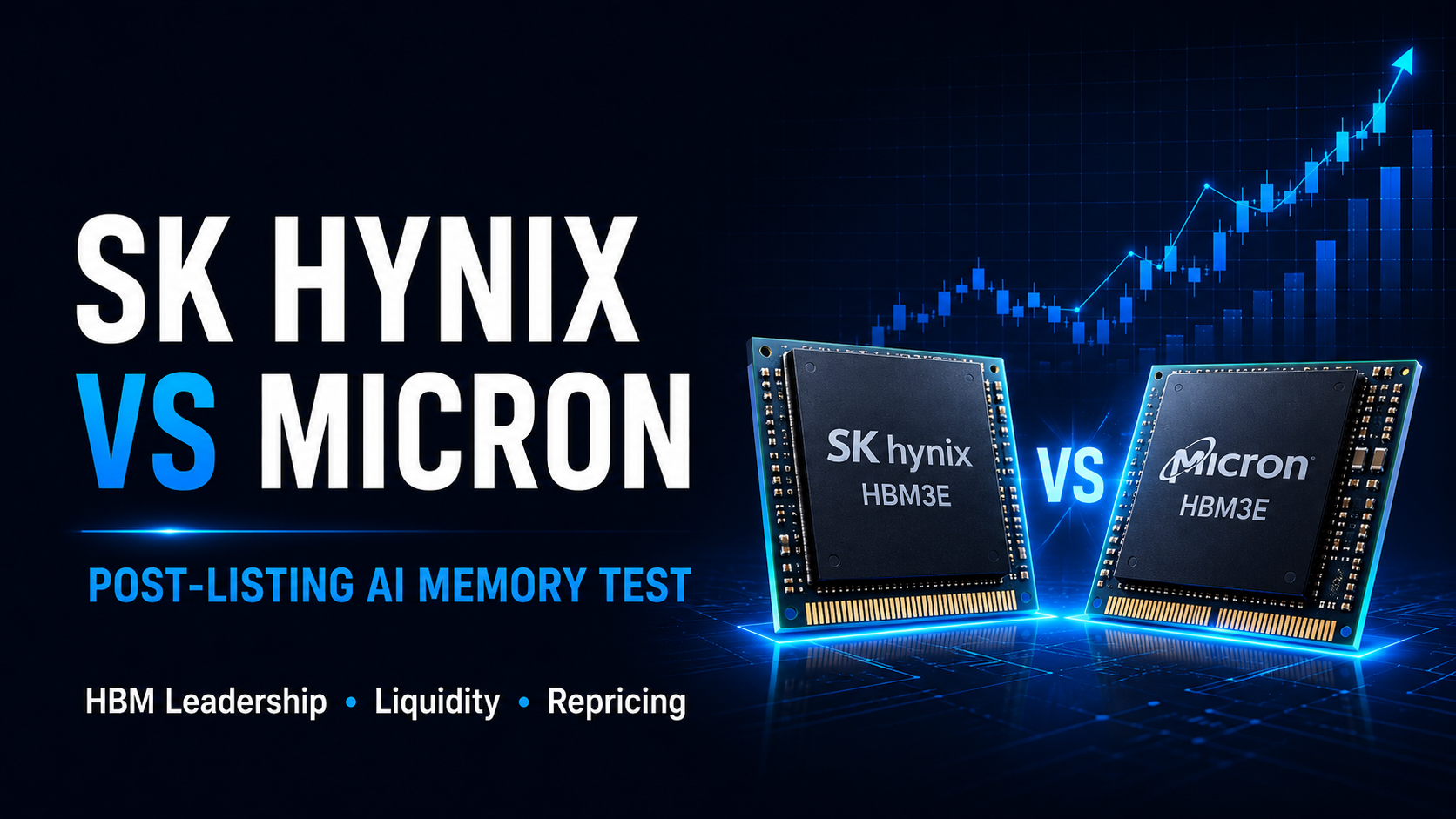
海力士SK Hynix与美光Micron:即将到来的SKHY上市将如何重估AI存储与HBM领导地位
SK Hynix 备受瞩目的纳斯达克上市(股票代码:SKHY)势必将重塑美国投资者评估 AI 存储股票的方式。多年来,Micron(MU)一直是美国上市的默认选择,供投资者交易 DRAM、NAND 以及 AI 驱动的数据中心需求。与此同时,SK Hynix 巩固了其在超宽带内存(HBM)领域的主导地位,但其主要在韩国上市,使得海外投资者的交易渠道不够直接。
随着 SKHY ADR 的推出,这一准入差距正在迅速缩小。这不仅仅是一个处于早期增长阶段的公司进入市场——SK Hynix 携强大的 HBM 叙事,是在一波巨大的 AI 上涨行情之后登场的。对于交易员来说,真正的问题不仅仅是哪家公司“更好”,而是要找出哪支股票具备更强的上涨结构:市场是会奖励 SK Hynix 的 HBM 统治力和新获得的流动性,还是会坚持选择拥有美国市场成熟准入和创纪录盈利表现的 Micron?
2026/07/08
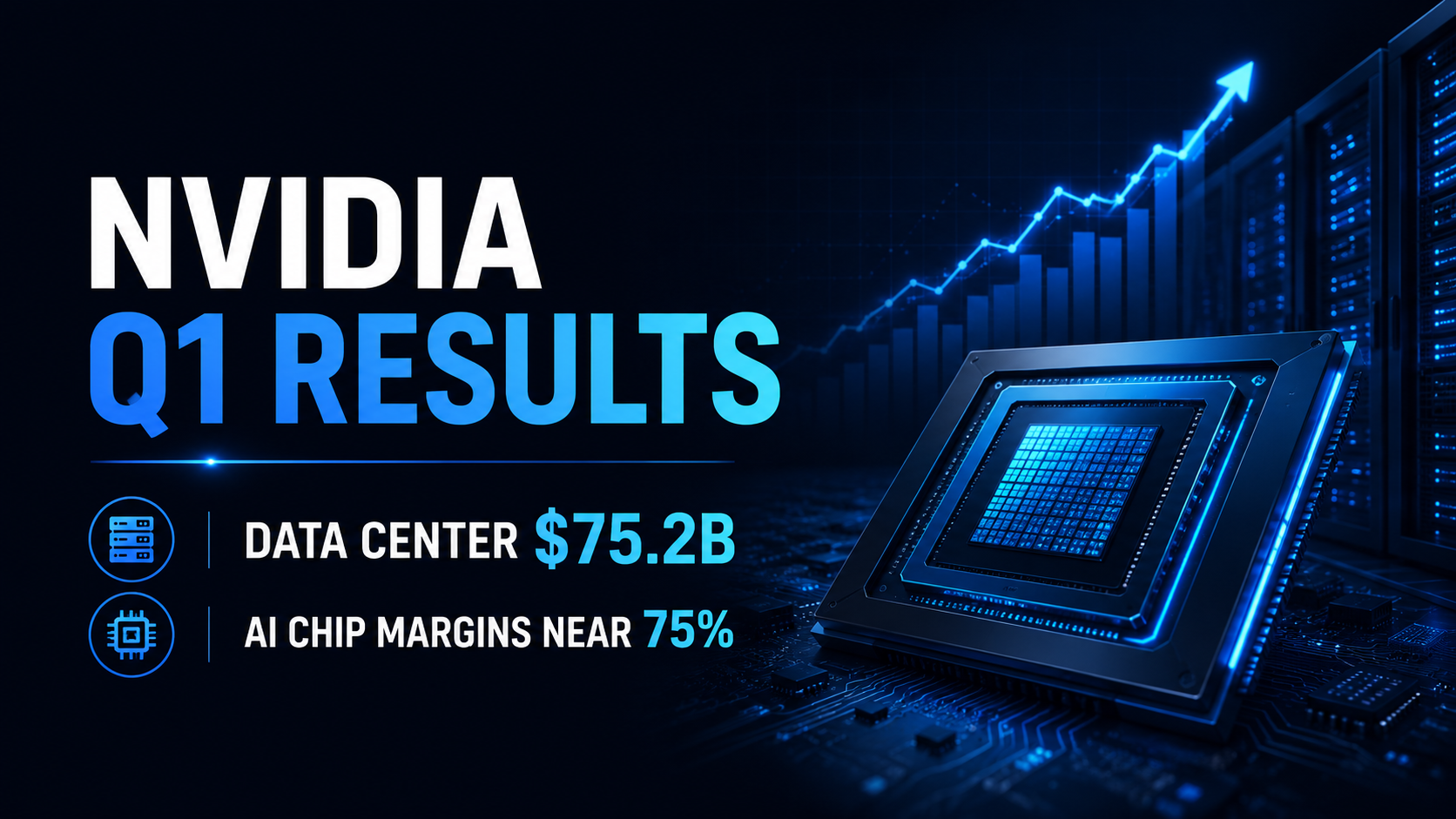
Nvidia FY2027 Q1 财报评析:数据中心营收达 752 亿美元,AI 芯片毛利率稳超 75%
为核心增长引擎的数据中心业务更是一马当先,斩获 752 亿美元营收,较去年同期暴增 92%。尽管面临产能大规模扩张的压力,Nvidia 的定价权依然稳如磐石,GAAP 和非 GAAP 毛利率分别保持在惊人的 74.9% 和 75.0%。
这不仅是一份强劲的财报,更向市场释放了一个清晰的信号:全球对 AI 的强劲需求正以极高的利润率加速转化为真金白银。对于密切关注这一赛道并寻找 Nvidia 最新财报动向的投资者而言,第一季度的强劲表现为接下来的第二季度设定了极高的基准,市场也将继续考验其 AI 基础设施在面对供应链扩产压力及地缘政治溢价时,能否继续保持如此恐怖的扩张步伐。
2026/07/09
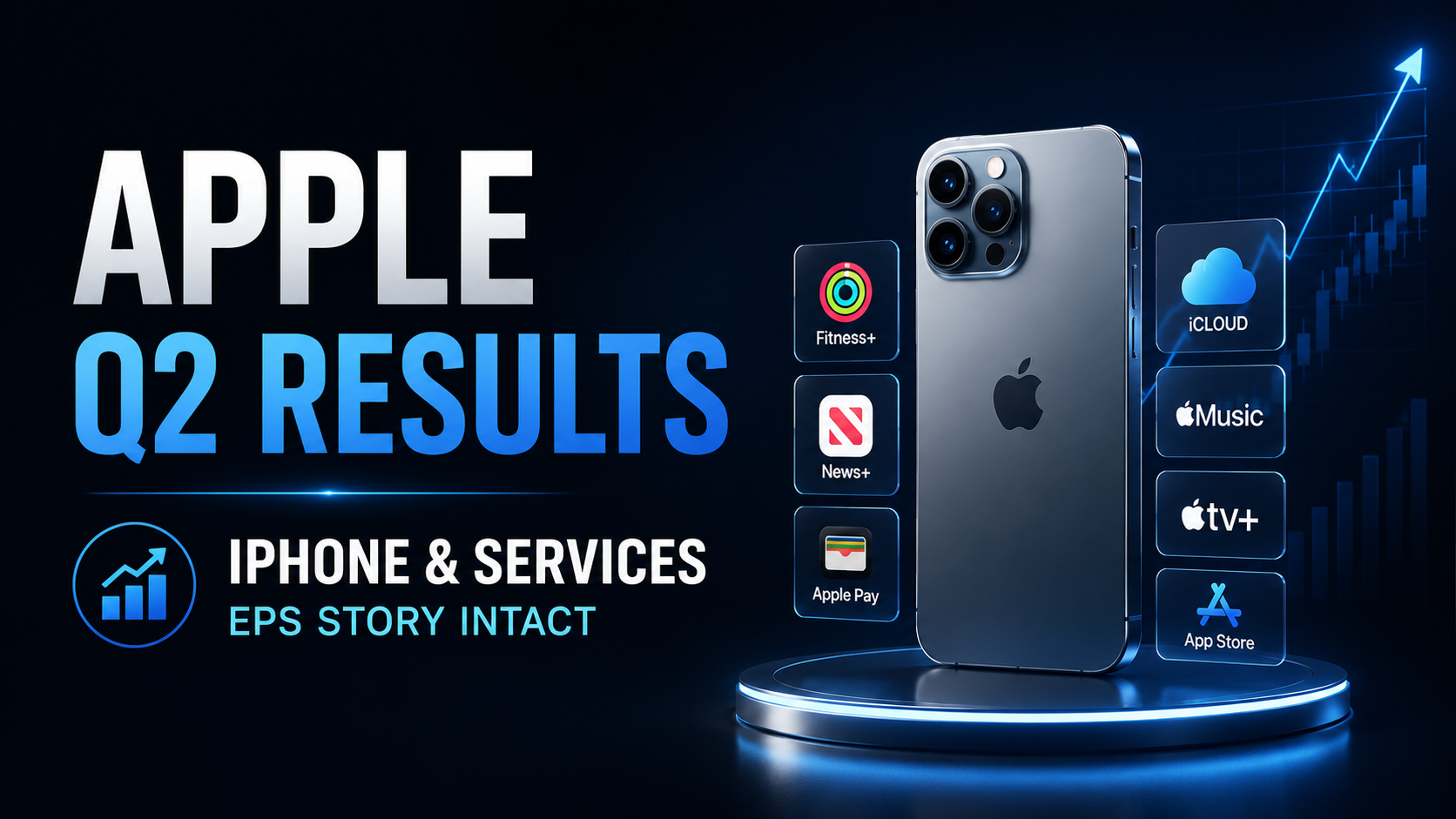
苹果 2026 财年第二季度财报回顾:iPhone 营收与服务业务增长维持 EPS 预期
苹果于 2026 年 4 月 30 日发布了 2026 财年第二季度财报,涵盖截至 2026 年 3 月 28 日的季度。总营收达到 1112 亿美元,同比增长 17%,摊薄后每股收益(EPS)增长 22% 至 2.01 美元。苹果表示,该季度创下了公司 3 月份季度的总营收、iPhone 营收和 EPS 纪录,同时服务业务营收也创下历史新高。
这不仅仅是一份常规的硬件周期财报。苹果第二季度的业绩证明,iPhone 需求、服务业务增长以及积极的资本回报计划仍在共同支撑着该公司强大的 EPS 增长故事。对于寻找下一个苹果财报或 AAPL 财报更新的投资者而言,未来的关键问题是,在市场等待更强劲的 AI 和产品周期催化剂之际,苹果能否维持其溢价估值。
2026/07/09


热门
目前热门备受市场关注的加密货币
加密货币价格
按交易量计算交易量最大的加密货币