

OpenSea postpones SEA token launch amid challenging conditions
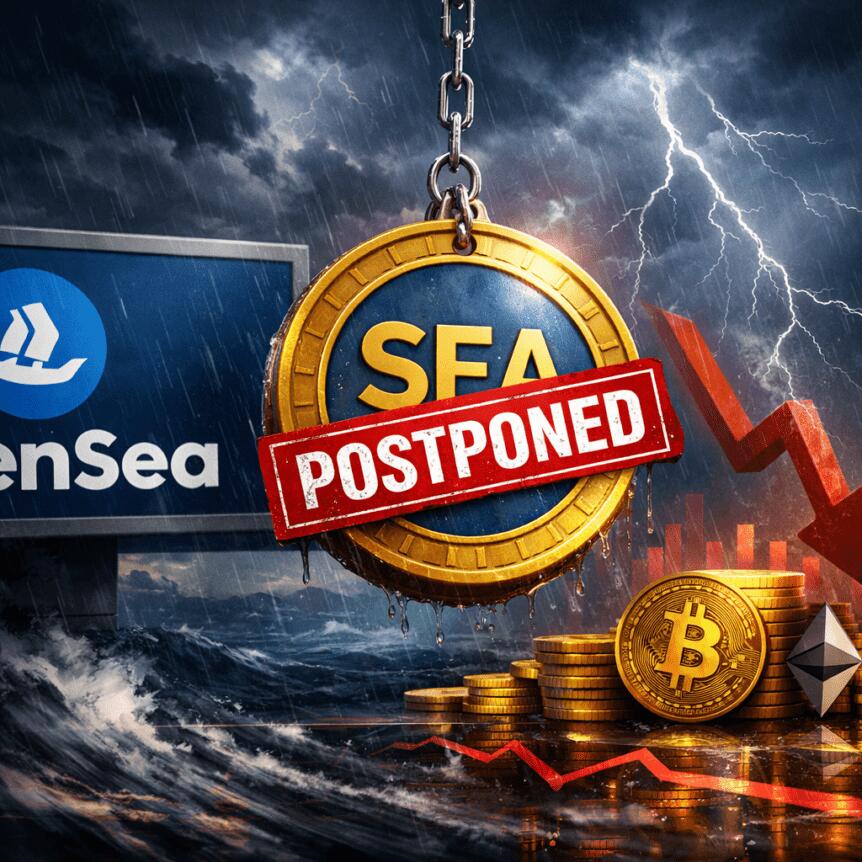
OpenSea has postponed the rollout of its native token, SEA, citing difficult market conditions and a readiness gap. The token, initially scheduled to launch on March 30, will be delayed as the company seeks to ensure the product is properly aligned with its multi-chain ambitions. CEO Devin Finzer emphasized on X that SEA would only go live once the project is fully prepared, signaling a cautious approach amid a broader crypto market pullback. The move reframes SEA’s role within OpenSea’s broader plan to transition from a solely NFT marketplace into a “trade everything” platform across tokens, culture, art, and ideas, a vision the company began outlining when SEA was first announced in October. The token was touted as a means to reduce trading fees, provide creator incentives, and enable governance on a platform that also contemplates NFTs and tokenized collectibles.
Key takeaways
- OpenSea has delayed the SEA launch beyond the March 30 target, with no new date provided, citing unfavorable market conditions and readiness concerns.
- The postponement preserves the plan to integrate SEA into a broader “trade everything” app across multiple chains, including features like perpetual futures, but signals a longer ramp‑up period.
- Waves 3–6 participants can opt for refunds of platform fees retained by OpenSea during those campaigns, though refunds would forfeit Treasure Chest rewards tied to those periods.
- OpenSea’s user activity and the NFT market overall remain in a downswing, with NFT market cap sliding from roughly $3.2 billion on Jan. 15 to about $1.62 billion after broader volatility and platform closures.
- Market data show tokenized activity briefly outweighed NFT trade in 2025–26, reflecting the company’s emphasis on token-centric rewards and cross‑chain liquidity as it pursues the next phase of growth.
Tickers mentioned: $SEA
Sentiment: Neutral
Market context: The delay sits amid a broader contraction in crypto markets and a softer NFT sector, where on-chain activity has cooled after a 2021–2022 boom and a multiyear consolidation phase. OpenSea’s move underscores the tension between ambitious product roadmaps and macro conditions that affect funding, risk appetite, and token launches.
Market context: The NFT market remains fragile, with trading volume and creator activity fluctuating as liquidity shifts and investors reassess risk. Data show a shift toward token-based activity in some periods, while several high‑profile NFT marketplaces reduced footprint in early 2026, illustrating a sector-wide recalibration.
Market context: As OpenSea weighs its long-term strategy, the industry watches how tokenized incentives, governance mechanics, and cross‑chain capabilities interact with evolving regulatory scrutiny and evolving consumer demand for digital assets.
Why it matters
The decision to push SEA’s launch back reflects a broader pattern: even well‑funded, market‑leading platforms are prioritizing readiness and user experience over aggressive timelines in a climate of heightened volatility. By delaying, OpenSea signals a willingness to constrain product rollout until the balance of factors—technology, security, governance design, and market demand—aligns more closely with its long‑term goals. The move also highlights a cautious approach to tokenization within a space where regulatory expectations and investor sentiment are still taking shape.
SEA’s original promise tied to a multifaceted roadmap: discounted trading fees for users, creator incentives, and a governance mechanism for NFT drops, tokens, and collections. The plan to build a “trade everything” app across multiple chains—announced in the same period—hinted at a broader ambition: to transform the platform from an NFT marketplace into a comprehensive digital‑asset hub. The delay thus risks a postponement of those governance and economic features, at least until OpenSea confirms the stability and security required for a multi‑chain experience.
At the same time, the company has signaled continued investment in core user outreach. Finzer has stressed that OpenSea is aiming for a high‑quality launch, describing the product as a long‑term project rather than a one‑off event. The roadmap includes building a new mobile app to support the vision, paired with an emphasis on a user experience that feels both “home” and non‑custodial. In a space where product missteps can trigger rapid user churn, the emphasis on a measured launch is a notable shift from momentum-driven token debuts to risk‑controlled deployment.
The macro backdrop also matters. Data from Dune Analytics show OpenSea’s token and NFT volume spiking in mid‑2023 and peaking at roughly $3.3 billion in October, followed by a notable pullback in November. The NFT market’s trajectory remained under pressure into 2026, with weekly and monthly metrics reflecting a sector recalibration rather than a broad revival. The broader market narrative—ranging from shared liquidity challenges to shifting risk sentiment and regulatory scrutiny—contributes to the caution around SEA’s timing.
Within the NFT ecosystem, the shift in activity is palpable. OpenSea has long led the market in terms of volume, but the space has seen several high‑profile platform closures in early 2026, including Rodeo and Nifty Gateway, underscoring the sector’s tightening environment. OpenSea’s pivot toward a multi‑chain “trade everything” framework leans into a longer‑horizon thesis: what began as an NFT marketplace could evolve into a broader, cross‑asset digital commerce platform, assuming regulatory clarity and consumer demand align with technical execution.
OpenSea’s leadership has framed the mobile app as a cornerstone of this transformation, saying the team is building toward a future where non‑custodial crypto is more approachable on handheld devices. While the SEA launch is on hold, the company’s public messaging underscores a commitment to quality over speed, signaling that any future rollout will be accompanied by a robust security and user‑experience framework rather than a rushed early deployment.
Finally, the shift also prompts a broader reflection on the market’s appetite for native tokens tied to large platforms. While liquidity and speculative interest can propel early token activity, sustained adoption hinges on tangible utility and governance credibility. OpenSea’s decision to defer may be interpreted as a recognition that playgrounds for experimentation in 2023–2024 must now mature into tangible, user‑facing products with enduring value in a more cautious macro environment.
What to watch next
- OpenSea announces a new target date for the SEA launch or confirms a continued postponement while advancing preparatory milestones.
- Updates on Waves refunds for Waves 3–6 participants and the treatment of Treasure Chest rewards for participants who opt in or out.
- Progress on the new OpenSea mobile app and its cross‑chain trading capabilities, including any verifiable milestones or beta releases.
- Further data on NFT market activity and tokenized trading volumes to gauge whether the market is stabilizing or continuing to contract.
Sources & verification
- OpenSea CEO Devin Finzer’s post on X explaining the postponement and market conditions: https://x.com/dfinzer/status/2033637755838992569
- OpenSea’s October announcement referencing SEA and the “trade everything” plan: https://x.com/dfinzer/status/1979200646763929835
- Dune Analytics data on OpenSea token and NFT volume: https://dune.com/rchen8/opensea
- CoinGecko NFT market stats showing global NFT market cap trends: https://www.coingecko.com/en/nft/global-stats
- Reports on NFT market dynamics and major platform closures: https://cointelegraph.com/news/rodeo-becomes-2nd-nft-platform-announce-closure-this-week
- Additional context on Nifty Gateway and Bybit NFT marketplace closures: https://cointelegraph.com/news/nifty-gateway-shutdown-nft-marketplace-closure-2026
- Related coverage on Bybit NFT marketplace closure: https://cointelegraph.com/news/bybit-shuts-down-its-nft-marketplace
OpenSea delays SEA launch as NFT market cools
The decision to push SEA’s debut back is framed by a confluence of macro softness and product readiness concerns. OpenSea’s leadership argues that the token’s utility—discounted trading fees, creator incentives, and governance—will only be realized when the underlying platform and its cross‑chain ambitions are ready to scale securely. In the interim, the company aims to deliver a mobile experience aligned with the broader “trade everything” mandate, a strategic shift that seeks to bring non‑custodial crypto closer to mainstream usage.
As the market digests this delay, observers will be watching whether SEA can maintain relevance by aligning incentives with user onboarding, ensuring governance processes are transparent, and delivering on cross‑chain functionality without compromising security. The NFT market’s trough period and the broader regulatory and liquidity environment will continue to shape how quickly OpenSea can convert a long‑term vision into tangible user value. The company’s execution in the coming quarters will be a test case for whether large platforms can balance ambitious product roadmaps with the realities of a more cautious market backdrop.
This article was originally published as OpenSea postpones SEA token launch amid challenging conditions on Crypto Breaking News – your trusted source for crypto news, Bitcoin news, and blockchain updates.
You May Also Like
The Evolution of AI+Crypto: DePIN solves computing power, Bittensor drives intelligence, AI Agents change interaction...

The 15th Five-Year Plan outlines the implementation of a national blockchain network construction project and active participation in international governance in areas such as digital currency.
