Author: OxTochi Compiled by Chopper, Foresight News I still remember my first cryptocurrency airdrop like it was yesterday. It was 2020, and I was still busy completing bounties on Bitcointalk. One morning, I was woken by the ping of a WhatsApp message from a friend. "Have you used Uniswap?" he asked. I replied "Yes," and he said, "Then you should have 400 UNI tokens to claim, which is now worth over $1,000." I immediately went to Uniswap's Twitter page to find the claim link and sold them immediately after claiming them. It's that simple, free money falling from the sky. No forms to fill out, no levels to grind in Discord, no "you need to contribute to get it" rules or anything like that. Looking back now, that moment defined what airdrops should be: a surprise “subsidy” for users of your favorite product who are using it, instead of the worthless garbage activities that they are today. The Golden Age of Airdrops Later, I received a 1-inch airdrop. At that time, any wallet eligible for UNI could receive 1 inch. But it was the dYdX airdrop that truly changed my understanding of airdrops. To participate, I had to cross-chain my ETH to the dYdX protocol. At the time, most Layer 2 projects were still in the whitepaper stage, and cross-chain fees were incredibly high. I made a few trades to generate some volume, but it wasn't a lot, and then I withdrew my assets. With just one day of trading, I ended up receiving a five-figure airdrop, which is still incredible when I think about it now. The total value of the airdrops I received was over $20,000 at its peak. To be honest, I sold half of them midway through. After all, it was "free money," so it was best to lock in the profits. The dYdX airdrop gave me my first decent capital, and I dove right into DeFi. During the "DeFi summer," I did liquidity mining on Juldswap, making around $250 a day. Honestly, I miss those days terribly. The decline of airdrops Of course, such good times can’t last forever. After dYdX, I participated in airdrops for Scroll, Arbitrum, Optimism, and zkSync. The zkSync airdrop was the beginning of my “bad airdrop experience.” However, I’ll never forget the Scroll airdrop. Anticipation for it was sky-high, and even co-founder Sandy’s famous “lower expectations” tweet couldn’t dampen enthusiasm. Expectations were constantly raised, only to be met with disappointment. The Scroll airdrop was ridiculously low, a joke. The mood in the crypto community plummeted from anticipation to despair. Honestly, this airdrop left a lasting impression on me, and I vowed immediately to never participate in Layer 2 airdrop mining again. If it was just Scroll this time, maybe I could accept it. But what really makes me uncomfortable is that I realize that such "low-quality airdrops" will become the norm in the future. Today's airdrop chaos Fast forward to today, and the airdrop scene is abysmal. What were once "surprise airdrops" have long since become "industrialized Sybil attack-style airdrop farming." You have to spend months, even years, interacting with various protocols: cross-chain, adding liquidity, burning gas fees, and building so-called "user loyalty." Ultimately, whether you get an airdrop depends entirely on luck, and even if you do, the amount is pitifully small. Even more outrageous, there's even a practice of "airdrop claiming channels are only open for 48 hours." I think Sunrise was the first to do this. Even if you finally get your money, you'll find the amount isn't worth the time and effort you put in, and often comes with an absurdly demanding unlocking schedule. For example, the 0G Labs airdrop unlocks quarterly over 48 months—that's four years! There’s so much shit like this happening now that when I see those “Alpha Airdrop” tweets, my first reaction is, “Oh, another cheap airdrop.” Game between project owners and users The truth is: in recent years, users' mindsets have become utilitarian, and there's no need to sugarcoat it. People now use products solely for the rewards; no one is willing to spend hours clicking and contributing to the community just for the sake of a so-called ecosystem. What about the project owners? They certainly want loyal users, but they're even more interested in "stellar data" to show VCs, like high user numbers and a large community. These figures are enough to inflate valuations when preparing their fundraising pitches. Thus, the battle between users and project owners becomes a game of "data manipulation" versus "data prevention." The result is: neither side is happy. Users feel they’ve been tricked, and the project owners face the challenge of user retention. What should an airdrop look like? If I were to redesign the airdrop, I'd probably go back to the Uniswap model: no pie-in-the-sky promises, no leaderboards, and just give loyal users a surprise bonus one day. This alone would reduce the phenomenon of "industrialized airdrop manipulation" and lower users' unrealistic expectations. Alternatively, one can learn from Sui’s “pre-sale airdrop” model and set a reasonable fully diluted valuation (FDV) to give early contributors and users the opportunity to buy tokens at preferential terms. Currently, the closest to this model are probably Cysic and Boundless. They use a "level system" to reward users with pre-sale discounts based on their contribution to various activities in the ecosystem. Or, just cancel the airdrop altogether and focus on building a truly usable product: something with real product-market fit and a solid revenue model, rather than copying and pasting the same thing 200 times. Honestly, this would be in the long-term interest of the crypto community. Conclusion The current state of airdrops is abysmal. It’s a disservice to the users who invest their time in airdrops, and it doesn’t help projects build real communities. The end result is a situation where everyone feels they’ve been taken advantage of. Perhaps canceling the airdrop and instead building a product that allows everyone to make money would be a better option?Author: OxTochi Compiled by Chopper, Foresight News I still remember my first cryptocurrency airdrop like it was yesterday. It was 2020, and I was still busy completing bounties on Bitcointalk. One morning, I was woken by the ping of a WhatsApp message from a friend. "Have you used Uniswap?" he asked. I replied "Yes," and he said, "Then you should have 400 UNI tokens to claim, which is now worth over $1,000." I immediately went to Uniswap's Twitter page to find the claim link and sold them immediately after claiming them. It's that simple, free money falling from the sky. No forms to fill out, no levels to grind in Discord, no "you need to contribute to get it" rules or anything like that. Looking back now, that moment defined what airdrops should be: a surprise “subsidy” for users of your favorite product who are using it, instead of the worthless garbage activities that they are today. The Golden Age of Airdrops Later, I received a 1-inch airdrop. At that time, any wallet eligible for UNI could receive 1 inch. But it was the dYdX airdrop that truly changed my understanding of airdrops. To participate, I had to cross-chain my ETH to the dYdX protocol. At the time, most Layer 2 projects were still in the whitepaper stage, and cross-chain fees were incredibly high. I made a few trades to generate some volume, but it wasn't a lot, and then I withdrew my assets. With just one day of trading, I ended up receiving a five-figure airdrop, which is still incredible when I think about it now. The total value of the airdrops I received was over $20,000 at its peak. To be honest, I sold half of them midway through. After all, it was "free money," so it was best to lock in the profits. The dYdX airdrop gave me my first decent capital, and I dove right into DeFi. During the "DeFi summer," I did liquidity mining on Juldswap, making around $250 a day. Honestly, I miss those days terribly. The decline of airdrops Of course, such good times can’t last forever. After dYdX, I participated in airdrops for Scroll, Arbitrum, Optimism, and zkSync. The zkSync airdrop was the beginning of my “bad airdrop experience.” However, I’ll never forget the Scroll airdrop. Anticipation for it was sky-high, and even co-founder Sandy’s famous “lower expectations” tweet couldn’t dampen enthusiasm. Expectations were constantly raised, only to be met with disappointment. The Scroll airdrop was ridiculously low, a joke. The mood in the crypto community plummeted from anticipation to despair. Honestly, this airdrop left a lasting impression on me, and I vowed immediately to never participate in Layer 2 airdrop mining again. If it was just Scroll this time, maybe I could accept it. But what really makes me uncomfortable is that I realize that such "low-quality airdrops" will become the norm in the future. Today's airdrop chaos Fast forward to today, and the airdrop scene is abysmal. What were once "surprise airdrops" have long since become "industrialized Sybil attack-style airdrop farming." You have to spend months, even years, interacting with various protocols: cross-chain, adding liquidity, burning gas fees, and building so-called "user loyalty." Ultimately, whether you get an airdrop depends entirely on luck, and even if you do, the amount is pitifully small. Even more outrageous, there's even a practice of "airdrop claiming channels are only open for 48 hours." I think Sunrise was the first to do this. Even if you finally get your money, you'll find the amount isn't worth the time and effort you put in, and often comes with an absurdly demanding unlocking schedule. For example, the 0G Labs airdrop unlocks quarterly over 48 months—that's four years! There’s so much shit like this happening now that when I see those “Alpha Airdrop” tweets, my first reaction is, “Oh, another cheap airdrop.” Game between project owners and users The truth is: in recent years, users' mindsets have become utilitarian, and there's no need to sugarcoat it. People now use products solely for the rewards; no one is willing to spend hours clicking and contributing to the community just for the sake of a so-called ecosystem. What about the project owners? They certainly want loyal users, but they're even more interested in "stellar data" to show VCs, like high user numbers and a large community. These figures are enough to inflate valuations when preparing their fundraising pitches. Thus, the battle between users and project owners becomes a game of "data manipulation" versus "data prevention." The result is: neither side is happy. Users feel they’ve been tricked, and the project owners face the challenge of user retention. What should an airdrop look like? If I were to redesign the airdrop, I'd probably go back to the Uniswap model: no pie-in-the-sky promises, no leaderboards, and just give loyal users a surprise bonus one day. This alone would reduce the phenomenon of "industrialized airdrop manipulation" and lower users' unrealistic expectations. Alternatively, one can learn from Sui’s “pre-sale airdrop” model and set a reasonable fully diluted valuation (FDV) to give early contributors and users the opportunity to buy tokens at preferential terms. Currently, the closest to this model are probably Cysic and Boundless. They use a "level system" to reward users with pre-sale discounts based on their contribution to various activities in the ecosystem. Or, just cancel the airdrop altogether and focus on building a truly usable product: something with real product-market fit and a solid revenue model, rather than copying and pasting the same thing 200 times. Honestly, this would be in the long-term interest of the crypto community. Conclusion The current state of airdrops is abysmal. It’s a disservice to the users who invest their time in airdrops, and it doesn’t help projects build real communities. The end result is a situation where everyone feels they’ve been taken advantage of. Perhaps canceling the airdrop and instead building a product that allows everyone to make money would be a better option?

After 3 months of grinding, I only received $10: Should we cancel the airdrop?

2025/09/02 07:00
5 min read

Author: OxTochi

Compiled by Chopper, Foresight News

I still remember my first cryptocurrency airdrop like it was yesterday. It was 2020, and I was still busy completing bounties on Bitcointalk. One morning, I was woken by the ping of a WhatsApp message from a friend.

"Have you used Uniswap?" he asked. I replied "Yes," and he said, "Then you should have 400 UNI tokens to claim, which is now worth over $1,000." I immediately went to Uniswap's Twitter page to find the claim link and sold them immediately after claiming them.

It's that simple, free money falling from the sky. No forms to fill out, no levels to grind in Discord, no "you need to contribute to get it" rules or anything like that.

Looking back now, that moment defined what airdrops should be: a surprise “subsidy” for users of your favorite product who are using it, instead of the worthless garbage activities that they are today.

The Golden Age of Airdrops

Later, I received a 1-inch airdrop. At that time, any wallet eligible for UNI could receive 1 inch. But it was the dYdX airdrop that truly changed my understanding of airdrops.

To participate, I had to cross-chain my ETH to the dYdX protocol. At the time, most Layer 2 projects were still in the whitepaper stage, and cross-chain fees were incredibly high. I made a few trades to generate some volume, but it wasn't a lot, and then I withdrew my assets. With just one day of trading, I ended up receiving a five-figure airdrop, which is still incredible when I think about it now.

The total value of the airdrops I received was over $20,000 at its peak. To be honest, I sold half of them midway through. After all, it was "free money," so it was best to lock in the profits.

The dYdX airdrop gave me my first decent capital, and I dove right into DeFi. During the "DeFi summer," I did liquidity mining on Juldswap, making around $250 a day. Honestly, I miss those days terribly.

The decline of airdrops

Of course, such good times can’t last forever. After dYdX, I participated in airdrops for Scroll, Arbitrum, Optimism, and zkSync. The zkSync airdrop was the beginning of my “bad airdrop experience.”

However, I’ll never forget the Scroll airdrop. Anticipation for it was sky-high, and even co-founder Sandy’s famous “lower expectations” tweet couldn’t dampen enthusiasm.
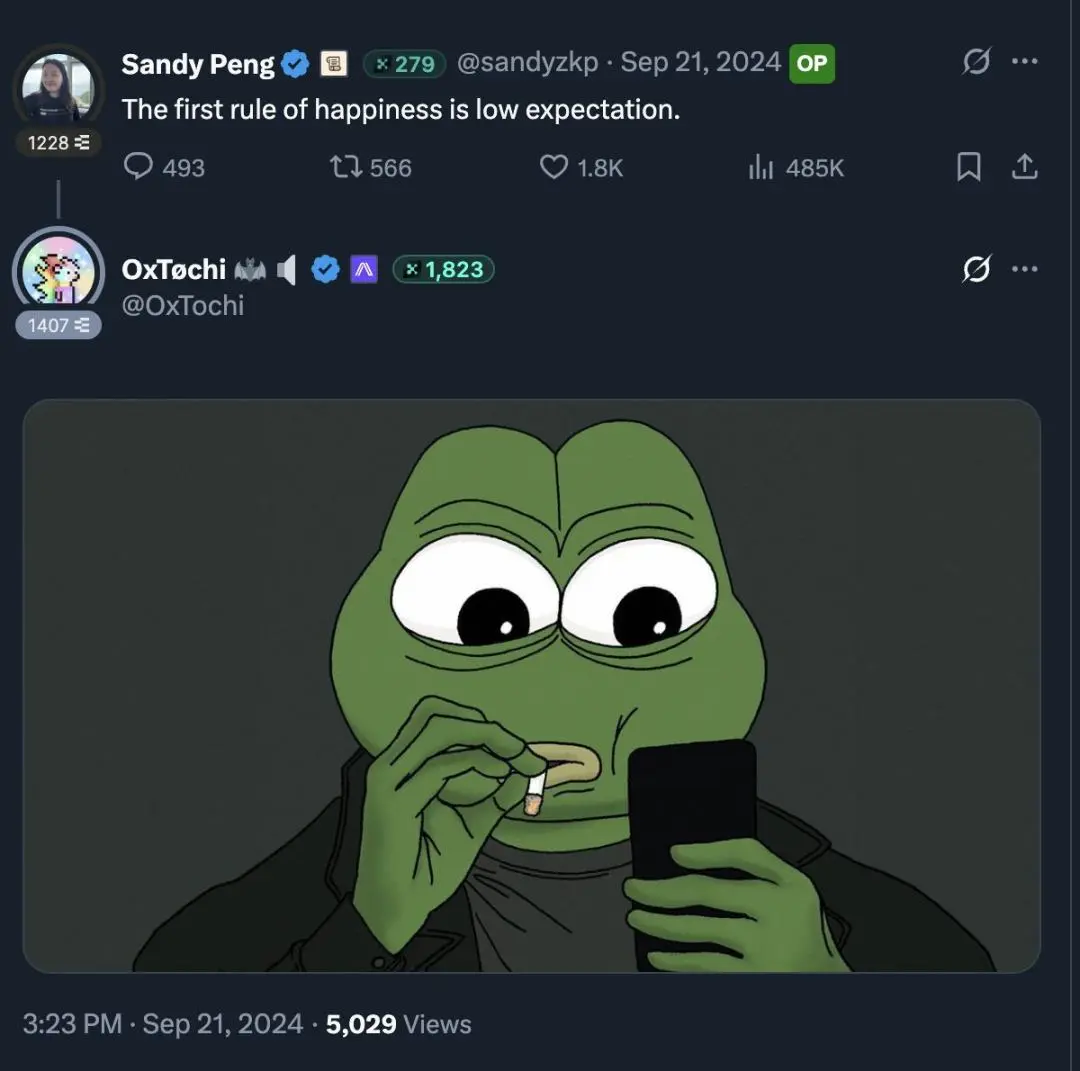
Expectations were constantly raised, only to be met with disappointment. The Scroll airdrop was ridiculously low, a joke. The mood in the crypto community plummeted from anticipation to despair. Honestly, this airdrop left a lasting impression on me, and I vowed immediately to never participate in Layer 2 airdrop mining again.

If it was just Scroll this time, maybe I could accept it. But what really makes me uncomfortable is that I realize that such "low-quality airdrops" will become the norm in the future.

Today's airdrop chaos

Fast forward to today, and the airdrop scene is abysmal. What were once "surprise airdrops" have long since become "industrialized Sybil attack-style airdrop farming."

You have to spend months, even years, interacting with various protocols: cross-chain, adding liquidity, burning gas fees, and building so-called "user loyalty." Ultimately, whether you get an airdrop depends entirely on luck, and even if you do, the amount is pitifully small. Even more outrageous, there's even a practice of "airdrop claiming channels are only open for 48 hours." I think Sunrise was the first to do this.

Even if you finally get your money, you'll find the amount isn't worth the time and effort you put in, and often comes with an absurdly demanding unlocking schedule. For example, the 0G Labs airdrop unlocks quarterly over 48 months—that's four years!

There’s so much shit like this happening now that when I see those “Alpha Airdrop” tweets, my first reaction is, “Oh, another cheap airdrop.”

Game between project owners and users

The truth is: in recent years, users' mindsets have become utilitarian, and there's no need to sugarcoat it. People now use products solely for the rewards; no one is willing to spend hours clicking and contributing to the community just for the sake of a so-called ecosystem.

What about the project owners? They certainly want loyal users, but they're even more interested in "stellar data" to show VCs, like high user numbers and a large community. These figures are enough to inflate valuations when preparing their fundraising pitches. Thus, the battle between users and project owners becomes a game of "data manipulation" versus "data prevention."

The result is: neither side is happy. Users feel they’ve been tricked, and the project owners face the challenge of user retention.

What should an airdrop look like?

If I were to redesign the airdrop, I'd probably go back to the Uniswap model: no pie-in-the-sky promises, no leaderboards, and just give loyal users a surprise bonus one day. This alone would reduce the phenomenon of "industrialized airdrop manipulation" and lower users' unrealistic expectations.

Alternatively, one can learn from Sui’s “pre-sale airdrop” model and set a reasonable fully diluted valuation (FDV) to give early contributors and users the opportunity to buy tokens at preferential terms.

Currently, the closest to this model are probably Cysic and Boundless. They use a "level system" to reward users with pre-sale discounts based on their contribution to various activities in the ecosystem.

Or, just cancel the airdrop altogether and focus on building a truly usable product: something with real product-market fit and a solid revenue model, rather than copying and pasting the same thing 200 times. Honestly, this would be in the long-term interest of the crypto community.

Conclusion

The current state of airdrops is abysmal. It’s a disservice to the users who invest their time in airdrops, and it doesn’t help projects build real communities.

The end result is a situation where everyone feels they’ve been taken advantage of. Perhaps canceling the airdrop and instead building a product that allows everyone to make money would be a better option?

Market Opportunity
DAR Open Network Logo
DAR Open Network Price(D)
$0.01023
$0.01023$0.01023
-8.49%
USD
DAR Open Network (D) Live Price Chart
Disclaimer: The articles reposted on this site are sourced from public platforms and are provided for informational purposes only. They do not necessarily reflect the views of MEXC. All rights remain with the original authors. If you believe any content infringes on third-party rights, please contact service@support.mexc.com for removal. MEXC makes no guarantees regarding the accuracy, completeness, or timeliness of the content and is not responsible for any actions taken based on the information provided. The content does not constitute financial, legal, or other professional advice, nor should it be considered a recommendation or endorsement by MEXC.

You May Also Like

“Vibes Should Match Substance”: Vitalik on Fake Ethereum Connections

“Vibes Should Match Substance”: Vitalik on Fake Ethereum Connections

Vitalik Buterin criticized L2s that use optimistic bridges without adding meaningful technical innovation. Ethereum’s base layer is scaling, reducing the need for
Share
LiveBitcoinNews2026/02/06 11:30
Why Bitcoin Crashed Below $69,000 — Causes & Outlook

Why Bitcoin Crashed Below $69,000 — Causes & Outlook

Cryptsy - Latest Cryptocurrency News and Predictions Cryptsy - Latest Cryptocurrency News and Predictions - Experts in Crypto Casinos Bitcoin crash explained:
Share
Cryptsy2026/02/06 11:20
CME Group to launch options on XRP and SOL futures

CME Group to launch options on XRP and SOL futures

The post CME Group to launch options on XRP and SOL futures appeared on BitcoinEthereumNews.com. CME Group will offer options based on the derivative markets on Solana (SOL) and XRP. The new markets will open on October 13, after regulatory approval.  CME Group will expand its crypto products with options on the futures markets of Solana (SOL) and XRP. The futures market will start on October 13, after regulatory review and approval.  The options will allow the trading of MicroSol, XRP, and MicroXRP futures, with expiry dates available every business day, monthly, and quarterly. The new products will be added to the existing BTC and ETH options markets. ‘The launch of these options contracts builds on the significant growth and increasing liquidity we have seen across our suite of Solana and XRP futures,’ said Giovanni Vicioso, CME Group Global Head of Cryptocurrency Products. The options contracts will have two main sizes, tracking the futures contracts. The new market will be suitable for sophisticated institutional traders, as well as active individual traders. The addition of options markets singles out XRP and SOL as liquid enough to offer the potential to bet on a market direction.  The options on futures arrive a few months after the launch of SOL futures. Both SOL and XRP had peak volumes in August, though XRP activity has slowed down in September. XRP and SOL options to tap both institutions and active traders Crypto options are one of the indicators of market attitudes, with XRP and SOL receiving a new way to gauge sentiment. The contracts will be supported by the Cumberland team.  ‘As one of the biggest liquidity providers in the ecosystem, the Cumberland team is excited to support CME Group’s continued expansion of crypto offerings,’ said Roman Makarov, Head of Cumberland Options Trading at DRW. ‘The launch of options on Solana and XRP futures is the latest example of the…
Share
BitcoinEthereumNews2025/09/18 00:56
