The post Japan Eyes 20% Crypto Tax, Bitcoin ETF, and Stablecoins by 2026: Full Details  appeared first on Coinpedia Fintech News Japan is pushing for sweeping financial reforms as part of its goal to become an “asset management nation.”  According to a report from Nikkei, the Financial Services Agency (FSA) is advancing proposals on tax reforms and reclassifying digital assets, potentially paving the way for cryptocurrency exchange-traded funds (ETFs). Japan Aims to Cut Crypto Taxes Japanese crypto investors currently face some of the toughest tax rules in the world. Profits from digital assets can be taxed as high as 55%, far higher than the flat 20% applied to stocks and bonds. The FSA is proposing to bring crypto under that same 20% bracket and let investors carry forward losses for three years. The move is meant to cut the burden on traders, boost market activity, and rebuild trust. Japan is moving to classify cryptocurrencies as financial products under the Financial Instruments and Exchange Act. This would align digital assets with stocks and bonds, enabling stricter oversight on insider trading and disclosure, and make way for a spot Bitcoin ETF.  The State of Crypto Adoption in Japan  While Japan’s crypto market is growing, domestic trading is set to double from $66.6 billion in 2022. But the retail adoption remains weak, with 88% of residents never owning Bitcoin. Heavy taxes and regulatory uncertainty have been the key barriers.  “In Japan, 88% have never owned bitcoin.”“In El Salvador, 28% have never owned bitcoin.”(New research by The @CornellBitcoin Club) pic.twitter.com/x0nla9MaHm— Documenting ₿itcoin (@DocumentingBTC) July 24, 2025 The FSA hopes that simplified tax rules, combined with regulated crypto ETFs, will finally encourage more people to participate. Also Read :   Philippines May Become First in Asia to Hold 10,000 BTC National Bitcoin Reserve   , Stablecoins and New Investment Products in Japan Building on these reforms, Japan is also preparing to expand digital finance products. The country Japan may soon approve its first yen-pegged stablecoin, possibly by fall 2025. SBI Holdings, Japan’s financial giant, also plans to launch RLUSD in Japan by early 2026, with SBI VC Trade as distributor. These moves signal Japan’s ambition to expand digital finance while keeping tighter regulations in place.  FSA’s Roadmap for 2026  Japan’s FSA will set up a new bureau in 2026 to oversee insurance, asset management, and digital finance. The reform follows insurance scandals and aims to restore trust, strengthen oversight, and support growth in emerging markets like crypto. Japan is also tightening its crypto rules by shifting oversight from payment laws to investment-style regulation. An FSA working group is reviewing stricter disclosure for fundraising tokens, clearer rules for Bitcoin, and tougher measures on fraud, taxation, and investor protection. The FSA’s bold reforms could turn Japan into the bridge between traditional markets and digital assets Never Miss a Beat in the Crypto World! Stay ahead with breaking news, expert analysis, and real-time updates on the latest trends in Bitcoin, altcoins, DeFi, NFTs, and more. Subscribe to News FAQs What crypto tax reforms is Japan proposing? Japan’s FSA proposes cutting crypto tax from up to 55% to a flat 20%, aligning it with stocks and allowing loss carry-forwards for three years. Will Japan launch a Bitcoin ETF? Reclassifying crypto as financial products could pave the way for spot Bitcoin ETFs in Japan. What is Japan’s 2026 FSA roadmap? A new bureau will oversee asset management, insurance, and digital finance reforms. The post Japan Eyes 20% Crypto Tax, Bitcoin ETF, and Stablecoins by 2026: Full Details  appeared first on Coinpedia Fintech News Japan is pushing for sweeping financial reforms as part of its goal to become an “asset management nation.”  According to a report from Nikkei, the Financial Services Agency (FSA) is advancing proposals on tax reforms and reclassifying digital assets, potentially paving the way for cryptocurrency exchange-traded funds (ETFs). Japan Aims to Cut Crypto Taxes Japanese crypto investors currently face some of the toughest tax rules in the world. Profits from digital assets can be taxed as high as 55%, far higher than the flat 20% applied to stocks and bonds. The FSA is proposing to bring crypto under that same 20% bracket and let investors carry forward losses for three years. The move is meant to cut the burden on traders, boost market activity, and rebuild trust. Japan is moving to classify cryptocurrencies as financial products under the Financial Instruments and Exchange Act. This would align digital assets with stocks and bonds, enabling stricter oversight on insider trading and disclosure, and make way for a spot Bitcoin ETF.  The State of Crypto Adoption in Japan  While Japan’s crypto market is growing, domestic trading is set to double from $66.6 billion in 2022. But the retail adoption remains weak, with 88% of residents never owning Bitcoin. Heavy taxes and regulatory uncertainty have been the key barriers.  “In Japan, 88% have never owned bitcoin.”“In El Salvador, 28% have never owned bitcoin.”(New research by The @CornellBitcoin Club) pic.twitter.com/x0nla9MaHm— Documenting ₿itcoin (@DocumentingBTC) July 24, 2025 The FSA hopes that simplified tax rules, combined with regulated crypto ETFs, will finally encourage more people to participate. Also Read :   Philippines May Become First in Asia to Hold 10,000 BTC National Bitcoin Reserve   , Stablecoins and New Investment Products in Japan Building on these reforms, Japan is also preparing to expand digital finance products. The country Japan may soon approve its first yen-pegged stablecoin, possibly by fall 2025. SBI Holdings, Japan’s financial giant, also plans to launch RLUSD in Japan by early 2026, with SBI VC Trade as distributor. These moves signal Japan’s ambition to expand digital finance while keeping tighter regulations in place.  FSA’s Roadmap for 2026  Japan’s FSA will set up a new bureau in 2026 to oversee insurance, asset management, and digital finance. The reform follows insurance scandals and aims to restore trust, strengthen oversight, and support growth in emerging markets like crypto. Japan is also tightening its crypto rules by shifting oversight from payment laws to investment-style regulation. An FSA working group is reviewing stricter disclosure for fundraising tokens, clearer rules for Bitcoin, and tougher measures on fraud, taxation, and investor protection. The FSA’s bold reforms could turn Japan into the bridge between traditional markets and digital assets Never Miss a Beat in the Crypto World! Stay ahead with breaking news, expert analysis, and real-time updates on the latest trends in Bitcoin, altcoins, DeFi, NFTs, and more. Subscribe to News FAQs What crypto tax reforms is Japan proposing? Japan’s FSA proposes cutting crypto tax from up to 55% to a flat 20%, aligning it with stocks and allowing loss carry-forwards for three years. Will Japan launch a Bitcoin ETF? Reclassifying crypto as financial products could pave the way for spot Bitcoin ETFs in Japan. What is Japan’s 2026 FSA roadmap? A new bureau will oversee asset management, insurance, and digital finance reforms.

Japan Eyes 20% Crypto Tax, Bitcoin ETF, and Stablecoins by 2026: Full Details
3 min read
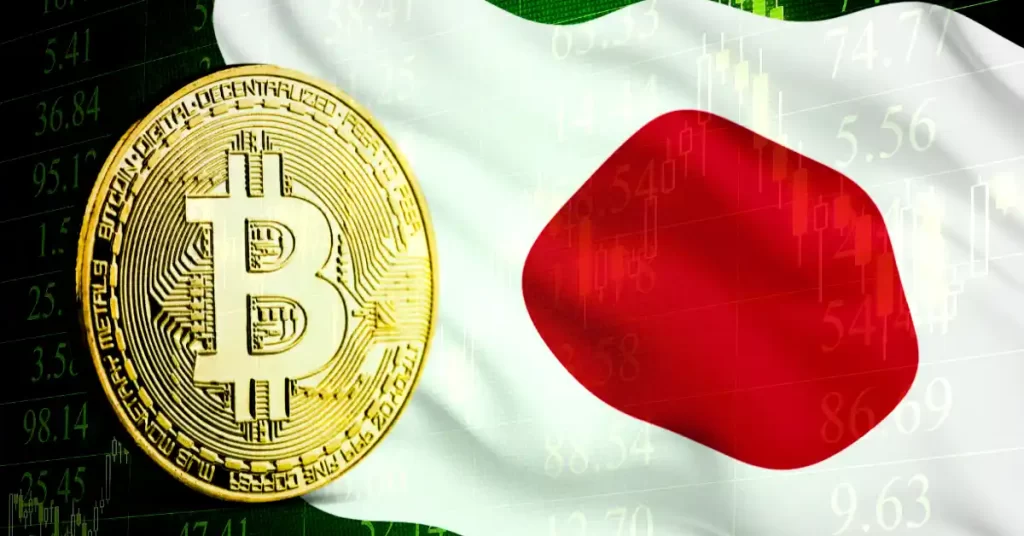
Bitcoin coin in front of a waving Japan flag, symbolizing rising Bitcoin interest amid Japan’s bond market crisis

The post Japan Eyes 20% Crypto Tax, Bitcoin ETF, and Stablecoins by 2026: Full Details  appeared first on Coinpedia Fintech News

Japan is pushing for sweeping financial reforms as part of its goal to become an “asset management nation.” 

According to a report from Nikkei, the Financial Services Agency (FSA) is advancing proposals on tax reforms and reclassifying digital assets, potentially paving the way for cryptocurrency exchange-traded funds (ETFs).

Japan Aims to Cut Crypto Taxes

Japanese crypto investors currently face some of the toughest tax rules in the world. Profits from digital assets can be taxed as high as 55%, far higher than the flat 20% applied to stocks and bonds.

The FSA is proposing to bring crypto under that same 20% bracket and let investors carry forward losses for three years. The move is meant to cut the burden on traders, boost market activity, and rebuild trust.

Japan is moving to classify cryptocurrencies as financial products under the Financial Instruments and Exchange Act. This would align digital assets with stocks and bonds, enabling stricter oversight on insider trading and disclosure, and make way for a spot Bitcoin ETF. 

The State of Crypto Adoption in Japan 

While Japan’s crypto market is growing, domestic trading is set to double from $66.6 billion in 2022. But the retail adoption remains weak, with 88% of residents never owning Bitcoin. Heavy taxes and regulatory uncertainty have been the key barriers. 

The FSA hopes that simplified tax rules, combined with regulated crypto ETFs, will finally encourage more people to participate.

  • Also Read :
  •   Philippines May Become First in Asia to Hold 10,000 BTC National Bitcoin Reserve
  •   ,

Stablecoins and New Investment Products in Japan

Building on these reforms, Japan is also preparing to expand digital finance products. The country Japan may soon approve its first yen-pegged stablecoin, possibly by fall 2025. SBI Holdings, Japan’s financial giant, also plans to launch RLUSD in Japan by early 2026, with SBI VC Trade as distributor.

These moves signal Japan’s ambition to expand digital finance while keeping tighter regulations in place. 

FSA’s Roadmap for 2026 

Japan’s FSA will set up a new bureau in 2026 to oversee insurance, asset management, and digital finance. The reform follows insurance scandals and aims to restore trust, strengthen oversight, and support growth in emerging markets like crypto.

Japan is also tightening its crypto rules by shifting oversight from payment laws to investment-style regulation. An FSA working group is reviewing stricter disclosure for fundraising tokens, clearer rules for Bitcoin, and tougher measures on fraud, taxation, and investor protection.

The FSA’s bold reforms could turn Japan into the bridge between traditional markets and digital assets

Never Miss a Beat in the Crypto World!

Stay ahead with breaking news, expert analysis, and real-time updates on the latest trends in Bitcoin, altcoins, DeFi, NFTs, and more.

bell icon Subscribe to News

FAQs

What crypto tax reforms is Japan proposing?

Japan’s FSA proposes cutting crypto tax from up to 55% to a flat 20%, aligning it with stocks and allowing loss carry-forwards for three years.

Will Japan launch a Bitcoin ETF?

Reclassifying crypto as financial products could pave the way for spot Bitcoin ETFs in Japan.

What is Japan’s 2026 FSA roadmap?

A new bureau will oversee asset management, insurance, and digital finance reforms.

Market Opportunity
RealLink Logo
RealLink Price(REAL)
$0.04898
$0.04898$0.04898
-2.83%
USD
RealLink (REAL) Live Price Chart
Disclaimer: The articles reposted on this site are sourced from public platforms and are provided for informational purposes only. They do not necessarily reflect the views of MEXC. All rights remain with the original authors. If you believe any content infringes on third-party rights, please contact service@support.mexc.com for removal. MEXC makes no guarantees regarding the accuracy, completeness, or timeliness of the content and is not responsible for any actions taken based on the information provided. The content does not constitute financial, legal, or other professional advice, nor should it be considered a recommendation or endorsement by MEXC.

You May Also Like

Verimatrix: Sale of Extended Threat Defense Assets (Mobile Application Protection) to Guardsquare

Verimatrix: Sale of Extended Threat Defense Assets (Mobile Application Protection) to Guardsquare

Completion of the sale of XTD assets (code and mobile application protection), including a portfolio of patents and a team of experts. The Group is refocusing on
Share
AI Journal2026/02/06 00:49
IP Hits $11.75, HYPE Climbs to $55, BlockDAG Surpasses Both with $407M Presale Surge!

IP Hits $11.75, HYPE Climbs to $55, BlockDAG Surpasses Both with $407M Presale Surge!

The post IP Hits $11.75, HYPE Climbs to $55, BlockDAG Surpasses Both with $407M Presale Surge! appeared on BitcoinEthereumNews.com. Crypto News 17 September 2025 | 18:00 Discover why BlockDAG’s upcoming Awakening Testnet launch makes it the best crypto to buy today as Story (IP) price jumps to $11.75 and Hyperliquid hits new highs. Recent crypto market numbers show strength but also some limits. The Story (IP) price jump has been sharp, fueled by big buybacks and speculation, yet critics point out that revenue still lags far behind its valuation. The Hyperliquid (HYPE) price looks solid around the mid-$50s after a new all-time high, but questions remain about sustainability once the hype around USDH proposals cools down. So the obvious question is: why chase coins that are either stretched thin or at risk of retracing when you could back a network that’s already proving itself on the ground? That’s where BlockDAG comes in. While other chains are stuck dealing with validator congestion or outages, BlockDAG’s upcoming Awakening Testnet will be stress-testing its EVM-compatible smart chain with real miners before listing. For anyone looking for the best crypto coin to buy, the choice between waiting on fixes or joining live progress feels like an easy one. BlockDAG: Smart Chain Running Before Launch Ethereum continues to wrestle with gas congestion, and Solana is still known for network freezes, yet BlockDAG is already showing a different picture. Its upcoming Awakening Testnet, set to launch on September 25, isn’t just a demo; it’s a live rollout where the chain’s base protocols are being stress-tested with miners connected globally. EVM compatibility is active, account abstraction is built in, and tools like updated vesting contracts and Stratum integration are already functional. Instead of waiting for fixes like other networks, BlockDAG is proving its infrastructure in real time. What makes this even more important is that the technology is operational before the coin even hits exchanges. That…
Share
BitcoinEthereumNews2025/09/18 00:32
BlackRock boosts AI and US equity exposure in $185 billion models

BlackRock boosts AI and US equity exposure in $185 billion models

The post BlackRock boosts AI and US equity exposure in $185 billion models appeared on BitcoinEthereumNews.com. BlackRock is steering $185 billion worth of model portfolios deeper into US stocks and artificial intelligence. The decision came this week as the asset manager adjusted its entire model suite, increasing its equity allocation and dumping exposure to international developed markets. The firm now sits 2% overweight on stocks, after money moved between several of its biggest exchange-traded funds. This wasn’t a slow shuffle. Billions flowed across multiple ETFs on Tuesday as BlackRock executed the realignment. The iShares S&P 100 ETF (OEF) alone brought in $3.4 billion, the largest single-day haul in its history. The iShares Core S&P 500 ETF (IVV) collected $2.3 billion, while the iShares US Equity Factor Rotation Active ETF (DYNF) added nearly $2 billion. The rebalancing triggered swift inflows and outflows that realigned investor exposure on the back of performance data and macroeconomic outlooks. BlackRock raises equities on strong US earnings The model updates come as BlackRock backs the rally in American stocks, fueled by strong earnings and optimism around rate cuts. In an investment letter obtained by Bloomberg, the firm said US companies have delivered 11% earnings growth since the third quarter of 2024. Meanwhile, earnings across other developed markets barely touched 2%. That gap helped push the decision to drop international holdings in favor of American ones. Michael Gates, lead portfolio manager for BlackRock’s Target Allocation ETF model portfolio suite, said the US market is the only one showing consistency in sales growth, profit delivery, and revisions in analyst forecasts. “The US equity market continues to stand alone in terms of earnings delivery, sales growth and sustainable trends in analyst estimates and revisions,” Michael wrote. He added that non-US developed markets lagged far behind, especially when it came to sales. This week’s changes reflect that position. The move was made ahead of the Federal…
Share
BitcoinEthereumNews2025/09/18 01:44