Collecting category indexes enable financial institutions, service providers, and art professionals to track performance across major art market segments for theCollecting category indexes enable financial institutions, service providers, and art professionals to track performance across major art market segments for the

ARTDAI Launches Seven New Art Market Indexes on Bloomberg and London Stock Exchange Group

2 min read

Collecting category indexes enable financial institutions, service providers, and art professionals to track performance across major art market segments for the first time.

NEW YORK, Feb. 3, 2026 /PRNewswire/ — ARTDAI announced the launch of seven collecting category indexes on Bloomberg Terminal and London Stock Exchange Group (LSEG), marking the first time institutional investors can track auction performance across major art market segments alongside traditional asset classes. The indexes model auction performance for distinct collecting categories based on how auction houses classify artists and works, and are fed by data from ARTDAI’s proprietary database of global auction records.

Available indexes include:

  • ARTKAAC – All Collecting Categories
  • ARTKAMP – American Art
  • ARTKBRP – British Art
  • ARTKIMP – Impressionist/Modern Art
  • ARTKLAP – Latin American Art
  • ARTKOMP – Old Masters
  • ARTKPWC – Post-War Contemporary Art

Beyond these seven publicly available indexes, ARTDAI maintains ~500 sub-category and artist-level indexes available exclusively on its platform through products like ArtQ. ARTDAI users leverage these indexes to compare growth rates across granular market segments (e.g., Women Surrealist Artists vs. Ultra-Contemporary) and benchmark performance against Gold, S&P 500, and other traditional asset classes.

“There are a lot of ‘Indexes’ out there in the art market. We are proud to be the only company approaching this product with the analytical rigor and accuracy demanded by our institutional partners,” said Alican Arcasoy, Co-CEO & CFO of ARTDAI.

Custom Index Construction

Beyond its standard indexes, ARTDAI constructs custom indexes for any market segment  – enabling clients to model certain art market styles and trends, or build indexes matching their specific collection composition.

“I’ve been in the art world for a long time, and many artists don’t fall cleanly into one category or another,” said Jamie LaFleur, Founder and Co-CEO. “We decided to give that flexibility of choice to our clients, so they can lead with their own expertise and market-view.”

About ARTDAI

ARTDAI provides art market data and workflow tools to advisors, appraisers, collectors, institutions, and marketplaces. By combining up-to-date market information with advanced analytics, ARTDAI provides its users with best-in-class research and mission-critical market insights. Founded in 2017, ARTDAI has offices in Newmarket and New York City.

Media Contact:
Kaleb Szabo
VP Growth, ARTDAI
kaleb.szabo@artd.ai

Cision View original content:https://www.prnewswire.com/news-releases/artdai-launches-seven-new-art-market-indexes-on-bloomberg-and-london-stock-exchange-group-302677784.html

SOURCE ARTDAI

Disclaimer: The articles reposted on this site are sourced from public platforms and are provided for informational purposes only. They do not necessarily reflect the views of MEXC. All rights remain with the original authors. If you believe any content infringes on third-party rights, please contact service@support.mexc.com for removal. MEXC makes no guarantees regarding the accuracy, completeness, or timeliness of the content and is not responsible for any actions taken based on the information provided. The content does not constitute financial, legal, or other professional advice, nor should it be considered a recommendation or endorsement by MEXC.

You May Also Like

Cashing In On University Patents Means Giving Up On Our Innovation Future
Cashing In On University Patents Means Giving Up On Our Innovation Future

The post Cashing In On University Patents Means Giving Up On Our Innovation Future appeared on BitcoinEthereumNews.com. “It’s a raid on American innovation that would deliver pennies to the Treasury while kneecapping the very engine of our economic and medical progress,” writes Pipes. Getty Images Washington is addicted to taxing success. Now, Commerce Secretary Howard Lutnick is floating a plan to skim half the patent earnings from inventions developed at universities with federal funding. It’s being sold as a way to shore up programs like Social Security. In reality, it’s a raid on American innovation that would deliver pennies to the Treasury while kneecapping the very engine of our economic and medical progress. Yes, taxpayer dollars support early-stage research. But the real payoff comes later—in the jobs created, cures discovered, and industries launched when universities and private industry turn those discoveries into real products. By comparison, the sums at stake in patent licensing are trivial. Universities collectively earn only about $3.6 billion annually in patent income—less than the federal government spends on Social Security in a single day. Even confiscating half would barely register against a $6 trillion federal budget. And yet the damage from such a policy would be anything but trivial. The true return on taxpayer investment isn’t in licensing checks sent to Washington, but in the downstream economic activity that federally supported research unleashes. Thanks to the bipartisan Bayh-Dole Act of 1980, universities and private industry have powerful incentives to translate early-stage discoveries into real-world products. Before Bayh-Dole, the government hoarded patents from federally funded research, and fewer than 5% were ever licensed. Once universities could own and license their own inventions, innovation exploded. The result has been one of the best returns on investment in government history. Since 1996, university research has added nearly $2 trillion to U.S. industrial output, supported 6.5 million jobs, and launched more than 19,000 startups. Those companies pay…
Share
BitcoinEthereumNews2025/09/18 03:26
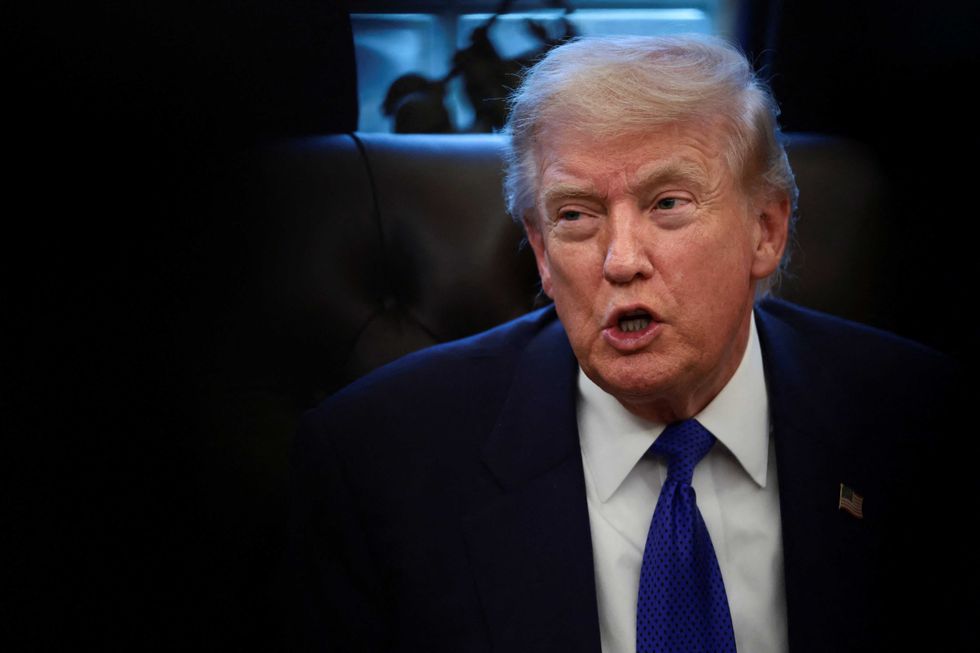
Trump foe devises plan to starve him of what he 'craves' most

Trump foe devises plan to starve him of what he 'craves' most

A longtime adversary of President Donald Trump has a plan for a key group to take away what Trump craves the most — attention. EX-CNN journalist Jim Acosta, who
Share
Rawstory2026/02/04 01:19
Why Bitcoin Is Struggling: 8 Factors Impacting Crypto Markets

Why Bitcoin Is Struggling: 8 Factors Impacting Crypto Markets

Failed blockchain adoption narratives and weak fee capture have undercut confidence in major crypto projects.
Share
CryptoPotato2026/02/04 01:05