

Stablecoins: The Quiet Revolution South Africa Can’t Ignore
Imagine walking into your local store and paying with a cryptocurrency that always equals one rand — no wild swings, no speculation, just self‑sovereign certainty. A digital token that settles faster than today’s banking rails and at a fraction of the cost.
That’s the promise of stablecoins — digital assets built for stability in a market known for chaos. They’re already reshaping how money moves by combining the reliability of traditional currency with the speed and efficiency of modern blockchain technology, powering everything from payments and remittances to protection against currency volatility.
They also act as the on‑ramp to bring fiat into the digital asset world, enabling tokenisation of real‑world assets. As markets shift to shorter settlement cycles, stablecoins become the connective tissue for instant, atomic settlement — reducing delays, counterparty risk, and capital requirements.
Globally, big players, such as the US, Europe, and Asia, have already moved to bring stablecoins under formal regulatory oversight. The direction is unmistakable: stablecoins have left the experimental phase and are rapidly becoming part of mainstream finance.
South Africa’s Position: Progress or Paralysis?
Closer to home, the story is far less dynamic. In fact, it borders on stagnation. The 2025 Budget Review, issued in February 2025, confidently promised a regulatory framework for stablecoins and cross‑border crypto transactions.
Yet, as we step into 2026, not a single draft, discussion paper, or regulatory proposal has seen the light of day. The silence is no longer a delay; it’s a failure of follow‑through that leaves industry participants, innovators, and consumers operating in a vacuum.
Meanwhile, the Intergovernmental Fintech Working Group (IFWG) released a diagnostic report in March 2025, which maps out South Africa’s stablecoin landscape. It found that all ZAR-backed stablecoins are predominantly issued by non-bank entities and backed by fiat currency held with commercial banks. While this is a safer model than the algorithmic designs that imploded globally, the absence of regulation leaves consumers exposed.
The Numbers and Risks
Before turning to South Africa, it’s important to recognise the scale of the global shift: in 2025, stablecoins processed roughly $33 trillion in transactions, surpassing Visa’s and Mastercard’s combined $24.84 trillion throughput. This is no fringe technology.
Yet, locally, the market remains small but growing, with ZAR‑backed stablecoins now exceeding R100 million in circulation. While the numbers may seem modest, the risks are not. The IFWG has already flagged serious gaps in transparency, governance, and consumer protection.
In some instances, reserves aren’t legally segregated, which means if an issuer enters liquidation or collapses, there is no insolvency protection for its token holders. In other words, your funds could simply disappear.
There’s no guarantee of redemption either, and disclosures remain largely piecemeal and reactive, offering little comfort to users. Compounding these issues is the absence of any regulation regarding rehypothecation or cross-collateralisation practices, which can amplify systemic risk.
This lack of transparency, combined with patchy governance and unregulated reserve asset management, creates a fragile ecosystem. If a stablecoin issuer fails, the impact could ripple beyond the crypto sector into traditional banking, underscoring why regulation is not optional – it’s urgent.
These risks don’t apply uniformly across the industry; many issuers already operate with strong controls and governance, but the identified gaps in the diagnostic highlight how vulnerable the market becomes when even one issuer falls short.
Why Regulation Matters
Stablecoins aren’t niche instruments; they’re financial infrastructure, and when infrastructure fails, the fallout doesn’t stay neatly contained. Without clear rules on reserves, segregation, redemption rights, or high‑risk practices, such as rehypothecation, a single issuer’s collapse can spill straight into the traditional banking system.
That’s why the world’s major markets have already moved to impose hard guardrails — daily reserve disclosures, liquidity requirements, independent attestations, and strict licensing regimes that treat issuers with the seriousness of systemically important institutions.
South Africa, meanwhile, is still stuck at the start line. While the US, EU, and major Asian hubs have implemented comprehensive frameworks to prevent the kind of disasters seen with Terra Luna or governance failures like FTX, we continue to wait for even a draft. These global standards exist because stablecoins now operate at a systemic scale, and without similar measures, South Africa risks widening an already dangerous regulatory gap.
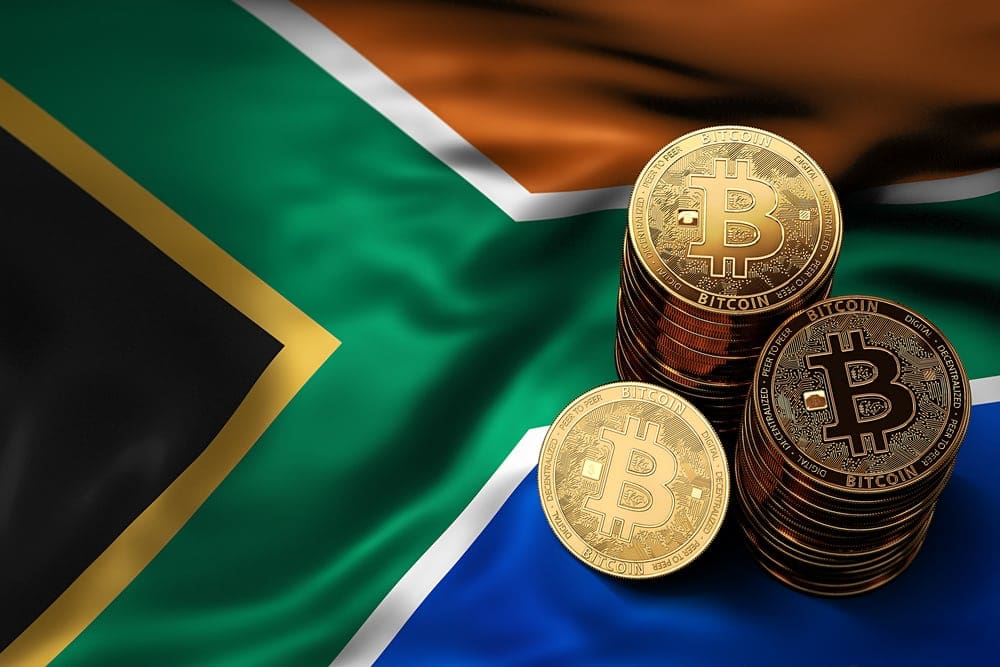 Stack of Bitcoin coins on Southern Africa flag. Wit Olszewski / Shutterstock.com
2026: The Year of Decision
So, what’s next? Whether regulators are ready or not, stablecoins are accelerating, and the world isn’t slowing down to wait for South Africa to catch up. A credible regulatory framework is no longer a “nice to have”; it’s the minimum entry ticket to participate in a global financial system that is already being rewired in real time.
At the same time, the rise of central bank digital currencies (CBDCs) doesn’t diminish the relevance of stablecoins. If anything, it sharpens the contrast. CBDCs represent state‑issued oversight; stablecoins represent market‑driven choice. And choice matters. Just like people choose their bank, their investment platform, or even their belief system, they will choose how they store and move value. For many, the privacy‑preserving, censorship‑resistant nature of stablecoins is precisely the point.
South Africa is standing at a genuine inflection point. We can choose to build the guardrails that enable safe innovation, or continue watching from the sidelines as global standards harden without us. Stablecoins are no longer theoretical instruments — they are reshaping global finance today. The real question for 2026 is simple: will South Africa help shape that future, or be shaped by it?
- Dr Wiehann Olivier, who is a Partner and head of FinTech, Digital Assets & Private Equity at Forvis Mazars in South Afric
You May Also Like

The Channel Factories We’ve Been Waiting For
Ethereum Price Prediction: ETH Targets $10,000 In 2026 But Layer Brett Could Reach $1 From $0.0058
