BitcoinWorld Crypto Liquidations Unleash $213M Storm: ETH & BTC Longs Decimated in 24-Hour Carnage The cryptocurrency market just endured a brutal 24-hour shakeoutBitcoinWorld Crypto Liquidations Unleash $213M Storm: ETH & BTC Longs Decimated in 24-Hour Carnage The cryptocurrency market just endured a brutal 24-hour shakeout

Crypto Liquidations Unleash $213M Storm: ETH & BTC Longs Decimated in 24-Hour Carnage
2025/12/13 11:15
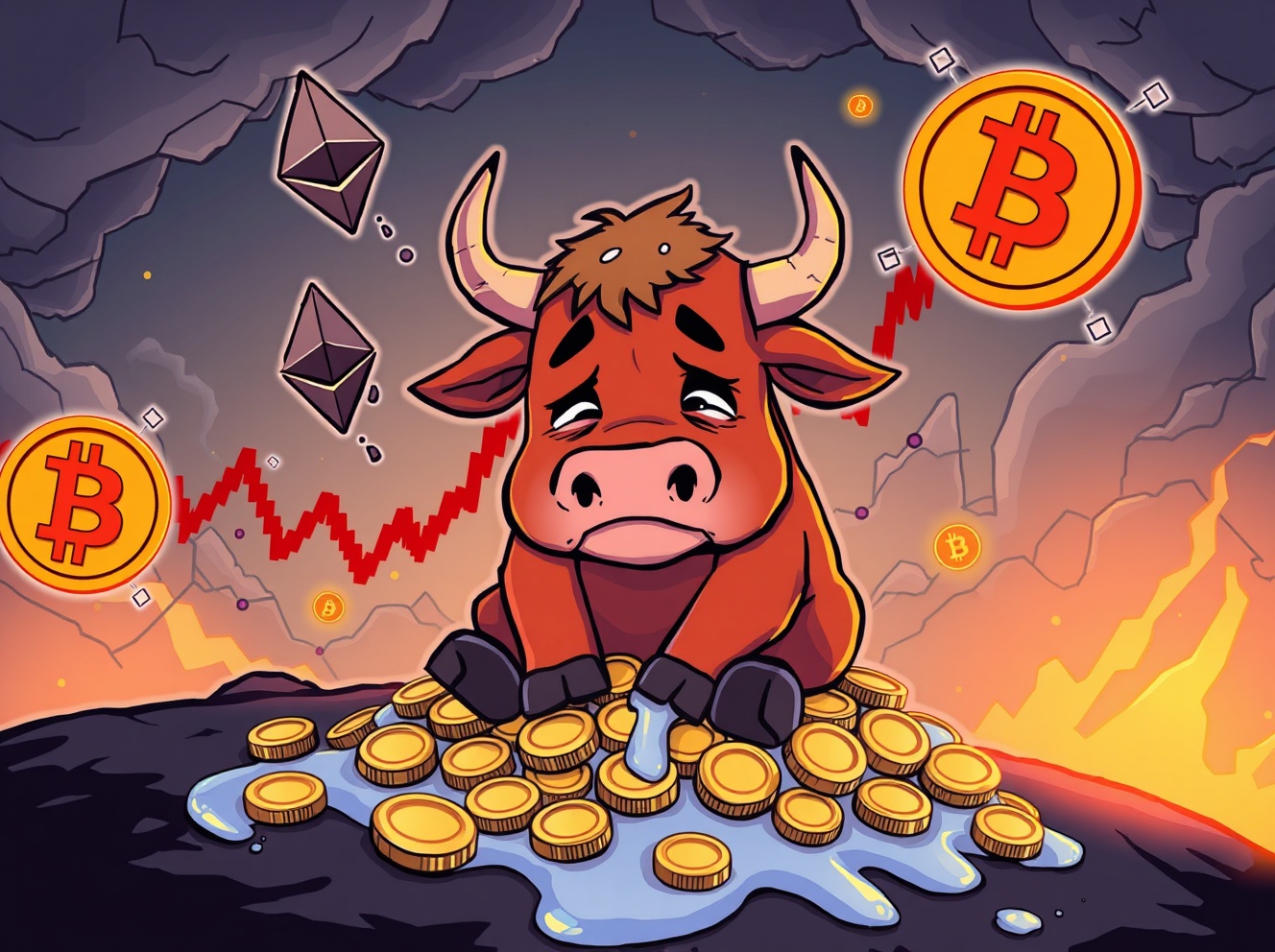
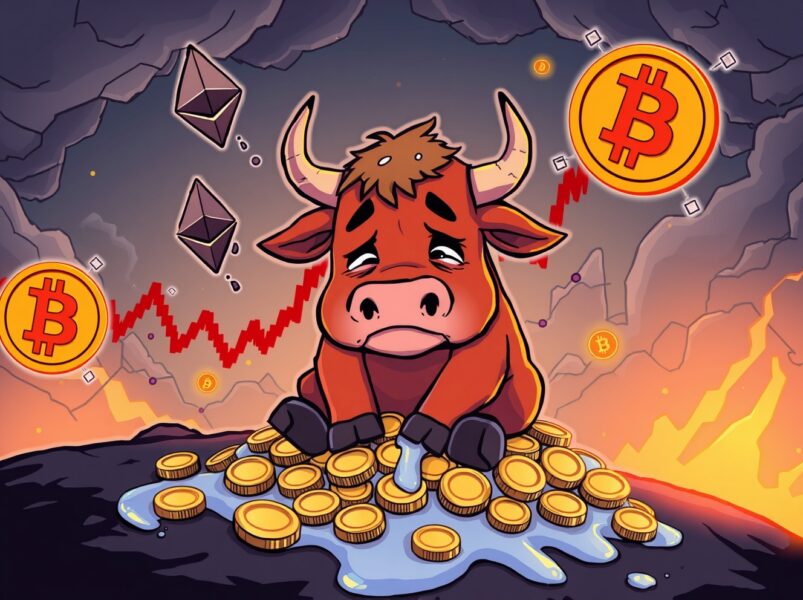
Cartoon illustration of a crypto market liquidation storm hitting Bitcoin and Ethereum bulls.

BitcoinWorld

Crypto Liquidations Unleash $213M Storm: ETH & BTC Longs Decimated in 24-Hour Carnage

The cryptocurrency market just endured a brutal 24-hour shakeout, with over $213 million in positions forcibly closed. This wave of crypto liquidations wasn’t a balanced affair—it was a targeted assault on traders betting on higher prices. If you’re active in futures trading or simply watching market volatility, understanding this event is crucial for navigating the turbulent waters ahead.

What Sparked This Frenzy of Crypto Liquidations?

Perpetual futures markets allow traders to use high leverage, amplifying both gains and losses. When prices move sharply against these leveraged positions, exchanges automatically close them to prevent further loss—a process known as liquidation. The past day saw a perfect storm of selling pressure trigger a cascade of these forced closures. The data reveals a clear narrative: the overwhelming majority of traders caught in this squeeze were optimistic, holding long positions.

Let’s break down the staggering numbers from the last 24 hours:

  • Ethereum (ETH): Led the carnage with $114 million liquidated. A shocking 92.93% of these were long positions.
  • Bitcoin (BTC): Followed with $73.77 million wiped out. Here, 90.55% were traders betting on a price rise.
  • Solana (SOL): Saw $25.24 million in liquidations, with longs making up 80.82% of the total.

Why Were Long Positions So Vulnerable?

This lopsided damage points to a sudden and significant price drop across major assets. When the market turns bearish swiftly, those using leverage to buy (go long) get hit first and hardest. Their positions fall in value faster than their collateral can cover, triggering automatic sell orders from the exchange. This selling can then fuel further price declines, potentially creating a negative feedback loop. Therefore, a high concentration of crypto liquidations in one direction is often a strong indicator of a sharp, sentiment-driven correction.

How Can Traders Navigate Future Liquidation Storms?

While market volatility is inevitable, there are actionable steps to manage risk. First, use leverage cautiously. Higher leverage means a smaller price move can wipe you out. Second, always employ stop-loss orders. These allow you to define your maximum loss in advance, rather than relying on an exchange’s liquidation engine. Third, monitor funding rates. Extremely high positive rates can signal overcrowded long trades, which often precede a flush-out. Understanding these mechanics is key to surviving periods of intense crypto liquidations.

The Bigger Picture: What Do Mass Liquidations Signal?

Events like this serve as a stark reminder of the market’s inherent risk. They can quickly wash out over-leveraged speculators and reset leverage levels across the board. Sometimes, this cleansing can even lay the foundation for a more stable price move afterward. However, for the traders involved, it’s a painful lesson in risk management. The scale of these crypto liquidations shows how quickly sentiment can shift and how important it is to trade with a plan, not just a prediction.

In summary, the $213 million liquidation event was a dramatic demonstration of market forces at work. It highlighted the dangers of excessive leverage during volatile swings and underscored the dominance of long positions in the recent market structure. For savvy participants, such events offer critical lessons on position sizing and the importance of defensive strategies to protect capital when the tide turns suddenly.

Frequently Asked Questions (FAQs)

What are crypto liquidations?

Crypto liquidations occur when an exchange automatically closes a trader’s leveraged position because it has lost too much value and can no longer cover the potential loss. This happens to protect the exchange from the trader going into debt.

Why were mostly long positions liquidated?

This indicates a sharp price drop. Long positions profit when prices rise. A sudden fall causes these leveraged buys to lose value rapidly, hitting their liquidation price faster than short positions (which profit from falls).

Do large liquidations mean the market will crash?

Not necessarily. While they signal high volatility and pain for leveraged traders, large-scale liquidations can sometimes reduce overall market leverage, potentially leading to a period of consolidation or even a rebound once the forced selling is over.

How can I avoid getting liquidated?

Use lower leverage, set prudent stop-loss orders manually, and ensure you have sufficient collateral (margin) in your account to withstand normal market fluctuations without hitting your liquidation price.

What is a long position?

A long position is a trade where you buy an asset expecting its price to increase. You profit if the market goes up. In futures trading, you can use leverage to amplify a long position’s potential gains and losses.

Where can I track liquidation data?

Several analytics websites like Coinglass provide real-time data on crypto liquidations across exchanges, broken down by cryptocurrency, long/short ratio, and time frames.

Found this breakdown of the recent crypto liquidations helpful? The market moves fast, and knowledge is your best defense. Share this article with fellow traders on X (Twitter) or Telegram to help them understand the risks and mechanics behind these dramatic market events.

To learn more about the latest cryptocurrency market trends, explore our article on key developments shaping Bitcoin and Ethereum price action.

This post Crypto Liquidations Unleash $213M Storm: ETH & BTC Longs Decimated in 24-Hour Carnage first appeared on BitcoinWorld.

Disclaimer: The articles reposted on this site are sourced from public platforms and are provided for informational purposes only. They do not necessarily reflect the views of MEXC. All rights remain with the original authors. If you believe any content infringes on third-party rights, please contact service@support.mexc.com for removal. MEXC makes no guarantees regarding the accuracy, completeness, or timeliness of the content and is not responsible for any actions taken based on the information provided. The content does not constitute financial, legal, or other professional advice, nor should it be considered a recommendation or endorsement by MEXC.

You May Also Like

Akash Network’s Strategic Move: A Crucial Burn for AKT’s Future

Akash Network’s Strategic Move: A Crucial Burn for AKT’s Future

BitcoinWorld Akash Network’s Strategic Move: A Crucial Burn for AKT’s Future In the dynamic world of decentralized computing, exciting developments are constantly shaping the future. Today, all eyes are on Akash Network, the innovative supercloud project, as it proposes a significant change to its tokenomics. This move aims to strengthen the value of its native token, AKT, and further solidify its position in the competitive blockchain space. The community is buzzing about a newly submitted governance proposal that could introduce a game-changing Burn Mint Equilibrium (BME) model. What is the Burn Mint Equilibrium (BME) for Akash Network? The core of this proposal revolves around a concept called Burn Mint Equilibrium, or BME. Essentially, this model is designed to create a balance in the token’s circulating supply by systematically removing a portion of tokens from existence. For Akash Network, this means burning an amount of AKT that is equivalent to the U.S. dollar value of fees paid by network users. Fee Conversion: When users pay for cloud services on the Akash Network, these fees are typically collected in various cryptocurrencies or stablecoins. AKT Equivalence: The proposal suggests converting the U.S. dollar value of these collected fees into an equivalent amount of AKT. Token Burn: This calculated amount of AKT would then be permanently removed from circulation, or ‘burned’. This mechanism creates a direct link between network utility and token supply reduction. As more users utilize the decentralized supercloud, more AKT will be burned, potentially impacting the token’s scarcity and value. Why is This Proposal Crucial for AKT Holders? For anyone holding AKT, or considering investing in the Akash Network ecosystem, this proposal carries significant weight. Token burning mechanisms are often viewed as a positive development because they can lead to increased scarcity. When supply decreases while demand remains constant or grows, the price per unit tends to increase. Here are some key benefits: Increased Scarcity: Burning tokens reduces the total circulating supply of AKT. This makes each remaining token potentially more valuable over time. Demand-Supply Dynamics: The BME model directly ties the burning of AKT to network usage. Higher adoption of the Akash Network supercloud translates into more fees, and thus more AKT burned. Long-Term Value Proposition: By creating a deflationary pressure, the proposal aims to enhance AKT’s long-term value, making it a more attractive asset for investors and long-term holders. This strategic move demonstrates a commitment from the Akash Network community to optimize its tokenomics for sustainable growth and value appreciation. How Does BME Impact the Decentralized Supercloud Mission? Beyond token value, the BME proposal aligns perfectly with the broader mission of the Akash Network. As a decentralized supercloud, Akash provides a marketplace for cloud computing resources, allowing users to deploy applications faster, more efficiently, and at a lower cost than traditional providers. The BME model reinforces this utility. Consider these impacts: Network Health: A stronger AKT token can incentivize more validators and providers to secure and contribute resources to the network, improving its overall health and resilience. Ecosystem Growth: Enhanced token value can attract more developers and projects to build on the Akash Network, fostering a vibrant and diverse ecosystem. User Incentive: While users pay fees, the potential appreciation of AKT could indirectly benefit those who hold the token, creating a circular economy within the supercloud. This proposal is not just about burning tokens; it’s about building a more robust, self-sustaining, and economically sound decentralized cloud infrastructure for the future. What Are the Next Steps for the Akash Network Community? As a governance proposal, the BME model will now undergo a period of community discussion and voting. This is a crucial phase where AKT holders and network participants can voice their opinions, debate the merits, and ultimately decide on the future direction of the project. Transparency and community engagement are hallmarks of decentralized projects like Akash Network. Challenges and Considerations: Implementation Complexity: Ensuring the burning mechanism is technically sound and transparent will be vital. Community Consensus: Achieving broad agreement within the diverse Akash Network community is key for successful adoption. The outcome of this vote will significantly shape the tokenomics and economic model of the Akash Network, influencing its trajectory in the rapidly evolving decentralized cloud landscape. The proposal to introduce a Burn Mint Equilibrium model represents a bold and strategic step for Akash Network. By directly linking network usage to token scarcity, the project aims to create a more resilient and valuable AKT token, ultimately strengthening its position as a leading decentralized supercloud provider. This move underscores the project’s commitment to innovative tokenomics and sustainable growth, promising an exciting future for both users and investors in the Akash Network ecosystem. It’s a clear signal that Akash is actively working to enhance its value proposition and maintain its competitive edge in the decentralized future. Frequently Asked Questions (FAQs) 1. What is the main goal of the Burn Mint Equilibrium (BME) proposal for Akash Network? The primary goal is to adjust the circulating supply of AKT tokens by burning a portion of network fees, thereby creating deflationary pressure and potentially enhancing the token’s long-term value and scarcity. 2. How will the amount of AKT to be burned be determined? The proposal suggests burning an amount of AKT equivalent to the U.S. dollar value of fees paid by users on the Akash Network for cloud services. 3. What are the potential benefits for AKT token holders? Token holders could benefit from increased scarcity of AKT, which may lead to higher demand and appreciation in value over time, especially as network usage grows. 4. How does this proposal relate to the overall mission of Akash Network? The BME model reinforces the Akash Network‘s mission by creating a stronger, more economically robust ecosystem. A healthier token incentivizes network participants, fostering growth and stability for the decentralized supercloud. 5. What is the next step for this governance proposal? The proposal will undergo a period of community discussion and voting by AKT token holders. The community’s decision will determine if the BME model is implemented on the Akash Network. If you found this article insightful, consider sharing it with your network! Your support helps us bring more valuable insights into the world of decentralized technology. Stay informed and help spread the word about the exciting developments happening within Akash Network. To learn more about the latest crypto market trends, explore our article on key developments shaping decentralized cloud solutions price action. This post Akash Network’s Strategic Move: A Crucial Burn for AKT’s Future first appeared on BitcoinWorld.
Share
Coinstats2025/09/22 21:35