

US Stocks Close Lower: What Sparked the Sudden Sell-Off?

BitcoinWorld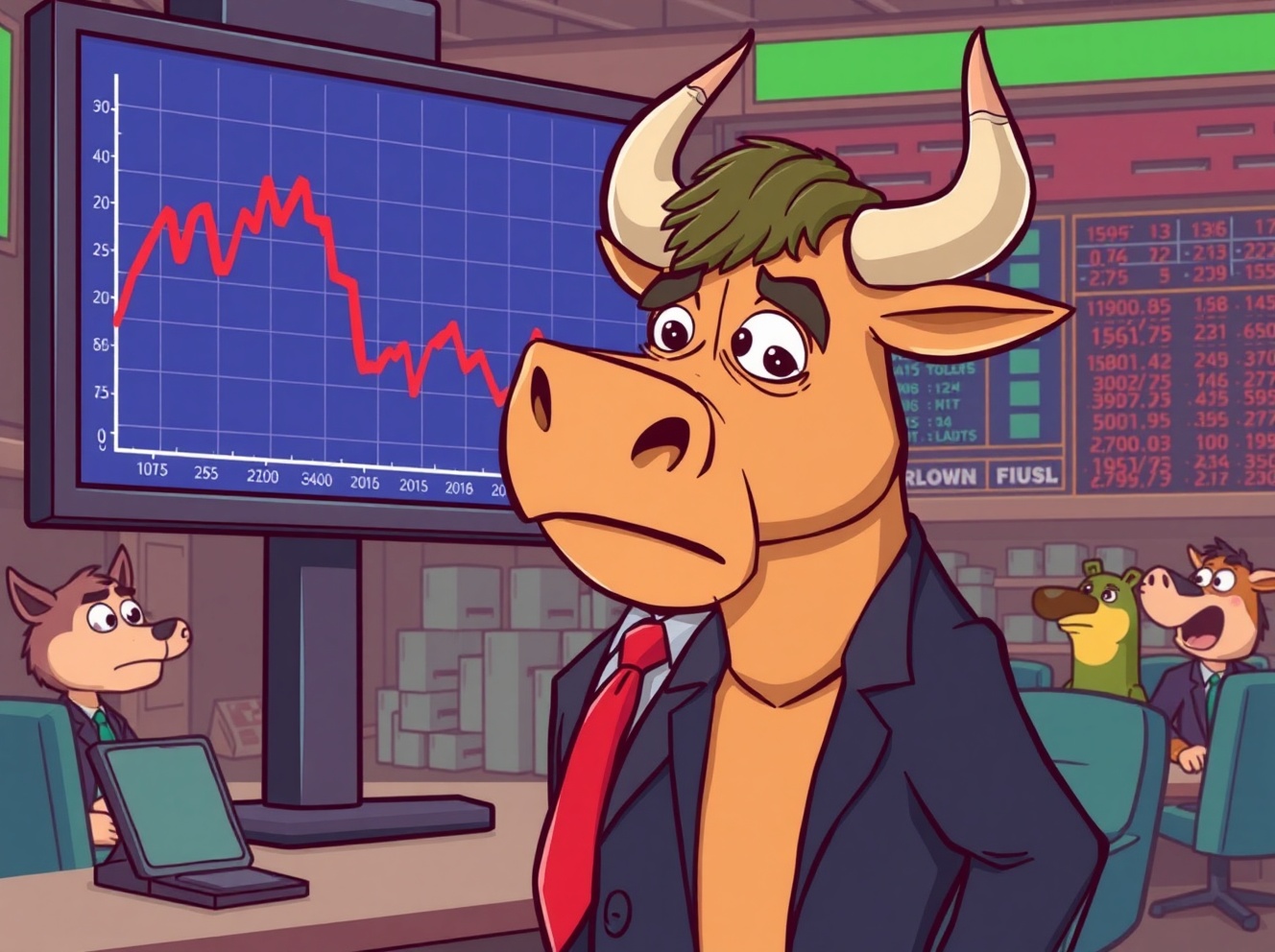
US Stocks Close Lower: What Sparked the Sudden Sell-Off?
If you watched the markets today, you saw a sea of red. The major US stock indices couldn’t hold their ground, closing the session in negative territory. For investors and traders, especially those with exposure to crypto assets which often correlate with broader risk sentiment, understanding why US stocks close lower is crucial. Let’s break down the numbers and the narrative behind today’s pullback.
Why Did US Stocks Close Lower Today?
The trading session ended with all three major benchmarks down. The Dow Jones Industrial Average fell 0.45%, the S&P 500 dropped 0.35%, and the tech-heavy Nasdaq Composite declined a more modest 0.14%. This wasn’t a market crash, but a broad-based retreat that suggests investors are hitting the pause button. The primary question on everyone’s mind is simple: what triggered this shift in sentiment?
Several factors likely contributed to the pressure. First, renewed concerns about the pace of interest rate cuts from the Federal Reserve can spook the market. Second, mixed earnings reports from key sectors create uncertainty. Finally, geopolitical tensions often lead to a ‘risk-off’ environment, where money flows out of stocks. When US stocks close lower, it’s rarely due to a single event, but a combination of these headwinds.
Breaking Down the Index Moves
Not all declines are created equal. The varied performance of the indices tells a deeper story about sector rotation and investor focus.
- The Dow’s Drop (0.45%): This 30-stock blue-chip index, heavy with industrial and financial companies, is often sensitive to economic growth fears. Its larger decline suggests worries about the traditional economy.
- The S&P 500’s Slide (0.35%): As the broadest benchmark, its move indicates a widespread, though not panicked, sell-off across large-cap America.
- The Nasdaq’s Relative Resilience (0.14%): The smaller decline here hints that mega-cap tech stocks, which have driven much of the recent rally, showed some defensive strength.
This pattern shows that while selling was broad, it wasn’t a uniform stampede. The fact that US stocks close lower across the board, however, is a clear signal of caution.
What Does This Mean for Your Portfolio?
A single down day is not a trend. However, it serves as a powerful reminder of market volatility. For long-term investors, days like these are normal fluctuations. For active traders, they present both risk and opportunity. The key is to avoid making emotional decisions.
Consider these actionable insights:
- Review Your Asset Allocation: Ensure your portfolio is diversified across different asset classes to weather downturns.
- Look for Quality: Market pullbacks can be a chance to invest in strong companies at better prices.
- Monitor Correlation: Remember, when traditional US stocks close lower, crypto markets can sometimes follow suit as investors reduce overall risk.
Therefore, staying informed and sticking to your strategy is more important than reacting to daily noise.
The Final Tally: A Day of Healthy Caution
In conclusion, the session where US stocks close lower reflects a market digesting complex information. It was a day of measured profit-taking and repositioning rather than outright fear. The underlying economic data and corporate earnings will determine if this is a brief stumble or the start of a deeper correction. For now, investors should view it as a reminder that markets don’t move in a straight line. Staying disciplined and focused on fundamentals is the best response to these inevitable down days.
Frequently Asked Questions (FAQs)
Q: Is it time to sell my stocks because they closed lower?
A> Not necessarily. A one-day decline is normal volatility. Base selling decisions on your long-term investment goals and the fundamentals of your holdings, not daily price movements.
Q: Do crypto prices always drop when US stocks close lower?
A> While not always, there is often a correlation. Both are considered ‘risk-on’ assets. When investors become risk-averse, they may sell both stocks and cryptocurrencies.
Q: Which sectors were hit the hardest today?
A> While specific data varies daily, on days of broad declines, cyclical sectors like industrials, financials, and materials often underperform more defensive sectors like utilities or consumer staples.
Q: Should I “buy the dip” when stocks close lower?
A> “Buying the dip” can be a strategy, but it requires research. Ensure you are investing in fundamentally sound companies or ETFs, and avoid trying to catch a falling knife without a clear plan.
Q: How can I stay updated on market movements?
A> Follow reputable financial news sources, monitor key economic calendars for data releases, and consider setting up alerts for your major holdings.
Found this breakdown of why US stocks close lower helpful? Market knowledge is power. Share this article on your social media to help your network navigate these volatile times with more insight!
To learn more about the latest financial market trends and their impact on digital assets, explore our article on key developments shaping cryptocurrency price action amid traditional market fluctuations.
This post US Stocks Close Lower: What Sparked the Sudden Sell-Off? first appeared on BitcoinWorld.
You May Also Like

You’re a Business, Man: How Blogging Builds Authority, Opportunity, and Income

Will XRP Price Increase In September 2025?
