BitcoinWorld Crypto Holdings Shakeup: MSCI’s Controversial Plan to Purge Bitcoin-Heavy Firms from Key Indexes A seismic shift may be coming for how major financial indexes treat cryptocurrency. In a move sending shockwaves through both traditional finance and digital asset circles, global index provider MSCI is reportedly considering a policy that could see companies with substantial crypto holdings booted from its influential benchmarks. This proposal strikes at the heart of […] This post Crypto Holdings Shakeup: MSCI’s Controversial Plan to Purge Bitcoin-Heavy Firms from Key Indexes first appeared on BitcoinWorld.BitcoinWorld Crypto Holdings Shakeup: MSCI’s Controversial Plan to Purge Bitcoin-Heavy Firms from Key Indexes A seismic shift may be coming for how major financial indexes treat cryptocurrency. In a move sending shockwaves through both traditional finance and digital asset circles, global index provider MSCI is reportedly considering a policy that could see companies with substantial crypto holdings booted from its influential benchmarks. This proposal strikes at the heart of […] This post Crypto Holdings Shakeup: MSCI’s Controversial Plan to Purge Bitcoin-Heavy Firms from Key Indexes first appeared on BitcoinWorld.

Crypto Holdings Shakeup: MSCI’s Controversial Plan to Purge Bitcoin-Heavy Firms from Key Indexes
2025/12/06 09:25
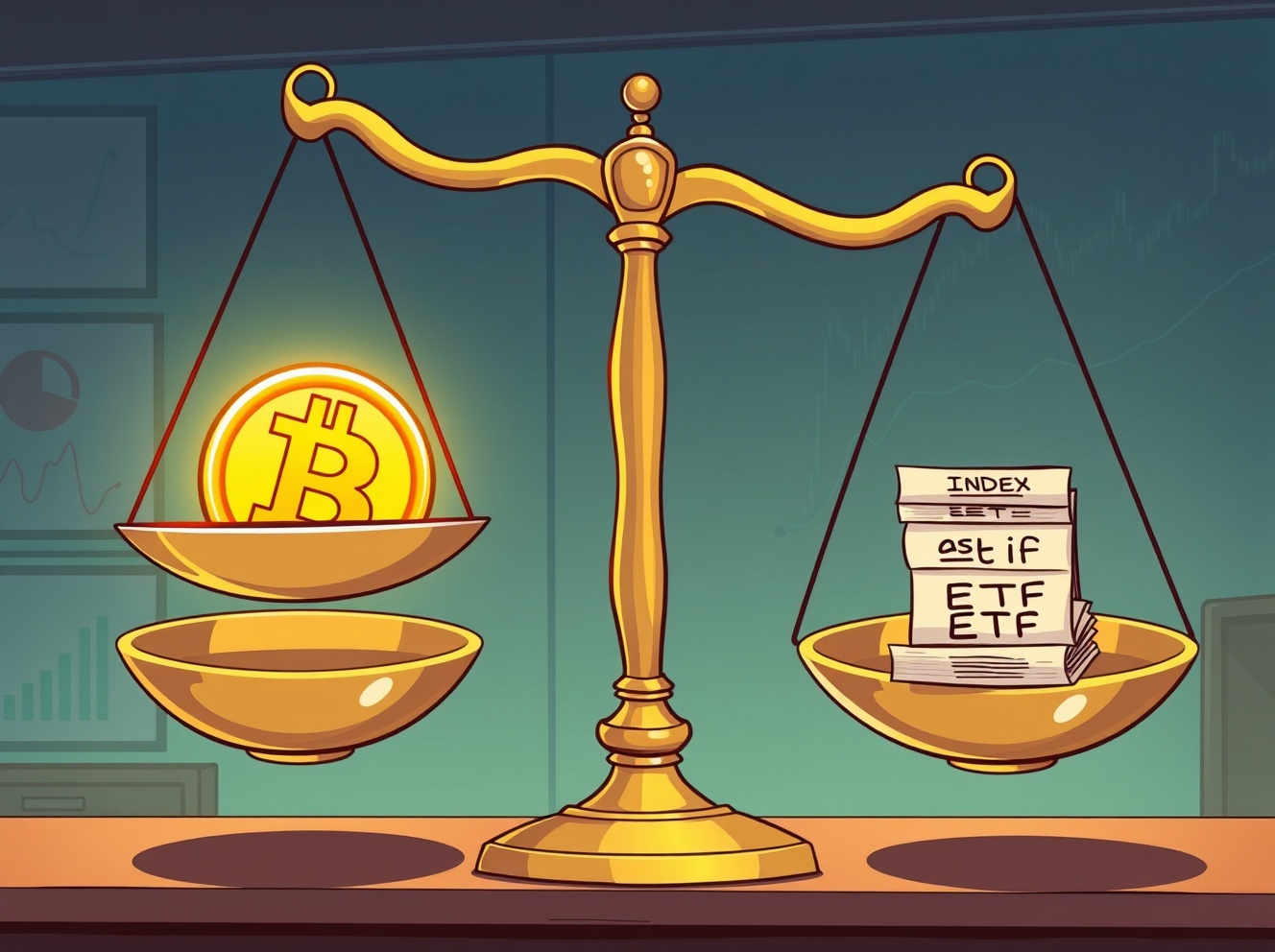
Cartoon illustration of a scale tipping under the weight of large crypto holdings versus traditional assets.

BitcoinWorld

Crypto Holdings Shakeup: MSCI’s Controversial Plan to Purge Bitcoin-Heavy Firms from Key Indexes

A seismic shift may be coming for how major financial indexes treat cryptocurrency. In a move sending shockwaves through both traditional finance and digital asset circles, global index provider MSCI is reportedly considering a policy that could see companies with substantial crypto holdings booted from its influential benchmarks. This proposal strikes at the heart of a growing trend: public companies using their balance sheets to bet big on Bitcoin and other digital assets.

What is MSCI Proposing for Companies with Major Crypto Holdings?

According to a report from The Block, MSCI is weighing a new rule that would exclude companies from its indexes if their digital asset holdings exceed 50% of their total assets. Index providers like MSCI create the benchmarks that guide trillions of dollars in institutional investment through funds like ETFs. Therefore, inclusion or exclusion from these indexes is a major deal for a company’s visibility and investor appeal.

This threshold is not arbitrary. It directly targets a specific class of firm that has emerged in recent years: the corporate Bitcoin whale. The most prominent example is MicroStrategy (MSTR), a business intelligence company that has transformed itself into a de facto Bitcoin investment vehicle. With over 650,000 BTC on its books, its crypto holdings far surpass the proposed 50% limit, making it a prime candidate for removal if the policy is enacted.

Why is This MSCI Crypto Policy So Controversial?

The reaction from the crypto-invested community was swift and pointed. Strive, a Nasdaq-listed asset manager that also holds Bitcoin, sent a strongly-worded letter to MSCI CEO Henry Fernandez. Their core argument challenges the very premise of the rule.

  • Undermining Market Neutrality: Strive contends that setting an arbitrary cap on crypto holdings violates the principle of market neutrality that index providers are supposed to uphold. An index should reflect the market, not judge a company’s strategy.
  • Picking Winners and Losers: The firm argues that evaluating a company’s financial strategy should be left to investors and market mechanisms, not an index committee. By setting this limit, MSCI would be making a value judgment on the legitimacy of holding digital assets.
  • A Slippery Slope: Critics ask: if 50% for crypto, what about other asset classes? Should companies be excluded for holding too much gold, real estate, or treasury bonds? The policy sets a concerning precedent for active management of index constituents.

What Are the Real-World Implications of Excluding Crypto Holdings?

If implemented, the fallout would extend beyond just a few companies getting a demerit. The consequences could reshape investment flows and corporate strategy.

First, companies like MicroStrategy could face immediate selling pressure from index funds and ETFs that track MSCI benchmarks. These funds are mandated to mirror the index, forcing them to sell any excluded stock. This creates a potential liquidity event unrelated to the company’s performance or Bitcoin’s price.

Second, it sends a chilling signal to other public companies considering adding Bitcoin to their treasury. The threat of index exclusion adds a new layer of reputational and financial risk. Why would a CFO risk their company’s place in a major index for a volatile asset class that the index provider seemingly disapproves of?

Finally, it highlights the growing tension between the innovative, disruptive world of cryptocurrency and the established, rules-based world of institutional finance. As crypto holdings move from the fringe to the mainstream, traditional systems are grappling with how to categorize and regulate them.

The Bottom Line: A Pivotal Moment for Institutional Crypto

MSCI’s consideration is more than a minor rule change; it’s a litmus test for digital assets in traditional finance. Will major institutions adapt their frameworks to accommodate this new asset class, or will they erect barriers to maintain the status quo? The debate over crypto holdings in corporate treasuries is now moving from boardrooms to index committee rooms.

The outcome will influence whether cryptocurrency remains a parallel investment universe or becomes fully integrated into the global financial system. For investors, the key takeaway is to watch this space closely. Index provider policies are a powerful, behind-the-scenes force that can significantly impact asset prices and market structure.

Frequently Asked Questions (FAQs)

Q: What is MSCI?
A: MSCI Inc. is a leading provider of critical decision support tools and services for the global investment community. They create and maintain stock market indexes that are used as benchmarks for trillions of dollars in investment funds.

Q: Which company is most at risk from this proposed MSCI rule?
A: MicroStrategy (MSTR) is the most prominent example. The company’s Bitcoin holdings represent a vast majority of its total assets, far exceeding the proposed 50% threshold, making it a likely candidate for exclusion.

Q: Why does index inclusion matter so much?
A: Inclusion in a major index like those from MSCI guarantees automatic buying from passive index funds and ETFs that track it. This provides consistent demand, liquidity, and prestige. Exclusion triggers forced selling from those same funds.

Q: Has MSCI made a final decision?
A> No. As of this reporting, MSCI is only “considering” the proposal. It has not been implemented as official policy. The strong pushback from firms like Strive may influence the final outcome.

Q: Does this affect Bitcoin ETFs like the spot Bitcoin ETF?
A> Not directly. This proposal concerns companies that hold Bitcoin on their balance sheet (like MicroStrategy), not funds that hold Bitcoin as their underlying asset (like a Bitcoin ETF). However, it reflects a broader institutional scrutiny of crypto exposure.

Found this analysis of MSCI’s potential crypto crackdown insightful? The conversation about institutional adoption is just getting started. Help others stay informed by sharing this article on your social media channels like Twitter or LinkedIn. Let’s keep the debate going!

To learn more about the latest institutional adoption trends, explore our article on key developments shaping Bitcoin integration into the traditional financial system.

This post Crypto Holdings Shakeup: MSCI’s Controversial Plan to Purge Bitcoin-Heavy Firms from Key Indexes first appeared on BitcoinWorld.

Disclaimer: The articles reposted on this site are sourced from public platforms and are provided for informational purposes only. They do not necessarily reflect the views of MEXC. All rights remain with the original authors. If you believe any content infringes on third-party rights, please contact service@support.mexc.com for removal. MEXC makes no guarantees regarding the accuracy, completeness, or timeliness of the content and is not responsible for any actions taken based on the information provided. The content does not constitute financial, legal, or other professional advice, nor should it be considered a recommendation or endorsement by MEXC.

You May Also Like

Akash Network’s Strategic Move: A Crucial Burn for AKT’s Future

Akash Network’s Strategic Move: A Crucial Burn for AKT’s Future

BitcoinWorld Akash Network’s Strategic Move: A Crucial Burn for AKT’s Future In the dynamic world of decentralized computing, exciting developments are constantly shaping the future. Today, all eyes are on Akash Network, the innovative supercloud project, as it proposes a significant change to its tokenomics. This move aims to strengthen the value of its native token, AKT, and further solidify its position in the competitive blockchain space. The community is buzzing about a newly submitted governance proposal that could introduce a game-changing Burn Mint Equilibrium (BME) model. What is the Burn Mint Equilibrium (BME) for Akash Network? The core of this proposal revolves around a concept called Burn Mint Equilibrium, or BME. Essentially, this model is designed to create a balance in the token’s circulating supply by systematically removing a portion of tokens from existence. For Akash Network, this means burning an amount of AKT that is equivalent to the U.S. dollar value of fees paid by network users. Fee Conversion: When users pay for cloud services on the Akash Network, these fees are typically collected in various cryptocurrencies or stablecoins. AKT Equivalence: The proposal suggests converting the U.S. dollar value of these collected fees into an equivalent amount of AKT. Token Burn: This calculated amount of AKT would then be permanently removed from circulation, or ‘burned’. This mechanism creates a direct link between network utility and token supply reduction. As more users utilize the decentralized supercloud, more AKT will be burned, potentially impacting the token’s scarcity and value. Why is This Proposal Crucial for AKT Holders? For anyone holding AKT, or considering investing in the Akash Network ecosystem, this proposal carries significant weight. Token burning mechanisms are often viewed as a positive development because they can lead to increased scarcity. When supply decreases while demand remains constant or grows, the price per unit tends to increase. Here are some key benefits: Increased Scarcity: Burning tokens reduces the total circulating supply of AKT. This makes each remaining token potentially more valuable over time. Demand-Supply Dynamics: The BME model directly ties the burning of AKT to network usage. Higher adoption of the Akash Network supercloud translates into more fees, and thus more AKT burned. Long-Term Value Proposition: By creating a deflationary pressure, the proposal aims to enhance AKT’s long-term value, making it a more attractive asset for investors and long-term holders. This strategic move demonstrates a commitment from the Akash Network community to optimize its tokenomics for sustainable growth and value appreciation. How Does BME Impact the Decentralized Supercloud Mission? Beyond token value, the BME proposal aligns perfectly with the broader mission of the Akash Network. As a decentralized supercloud, Akash provides a marketplace for cloud computing resources, allowing users to deploy applications faster, more efficiently, and at a lower cost than traditional providers. The BME model reinforces this utility. Consider these impacts: Network Health: A stronger AKT token can incentivize more validators and providers to secure and contribute resources to the network, improving its overall health and resilience. Ecosystem Growth: Enhanced token value can attract more developers and projects to build on the Akash Network, fostering a vibrant and diverse ecosystem. User Incentive: While users pay fees, the potential appreciation of AKT could indirectly benefit those who hold the token, creating a circular economy within the supercloud. This proposal is not just about burning tokens; it’s about building a more robust, self-sustaining, and economically sound decentralized cloud infrastructure for the future. What Are the Next Steps for the Akash Network Community? As a governance proposal, the BME model will now undergo a period of community discussion and voting. This is a crucial phase where AKT holders and network participants can voice their opinions, debate the merits, and ultimately decide on the future direction of the project. Transparency and community engagement are hallmarks of decentralized projects like Akash Network. Challenges and Considerations: Implementation Complexity: Ensuring the burning mechanism is technically sound and transparent will be vital. Community Consensus: Achieving broad agreement within the diverse Akash Network community is key for successful adoption. The outcome of this vote will significantly shape the tokenomics and economic model of the Akash Network, influencing its trajectory in the rapidly evolving decentralized cloud landscape. The proposal to introduce a Burn Mint Equilibrium model represents a bold and strategic step for Akash Network. By directly linking network usage to token scarcity, the project aims to create a more resilient and valuable AKT token, ultimately strengthening its position as a leading decentralized supercloud provider. This move underscores the project’s commitment to innovative tokenomics and sustainable growth, promising an exciting future for both users and investors in the Akash Network ecosystem. It’s a clear signal that Akash is actively working to enhance its value proposition and maintain its competitive edge in the decentralized future. Frequently Asked Questions (FAQs) 1. What is the main goal of the Burn Mint Equilibrium (BME) proposal for Akash Network? The primary goal is to adjust the circulating supply of AKT tokens by burning a portion of network fees, thereby creating deflationary pressure and potentially enhancing the token’s long-term value and scarcity. 2. How will the amount of AKT to be burned be determined? The proposal suggests burning an amount of AKT equivalent to the U.S. dollar value of fees paid by users on the Akash Network for cloud services. 3. What are the potential benefits for AKT token holders? Token holders could benefit from increased scarcity of AKT, which may lead to higher demand and appreciation in value over time, especially as network usage grows. 4. How does this proposal relate to the overall mission of Akash Network? The BME model reinforces the Akash Network‘s mission by creating a stronger, more economically robust ecosystem. A healthier token incentivizes network participants, fostering growth and stability for the decentralized supercloud. 5. What is the next step for this governance proposal? The proposal will undergo a period of community discussion and voting by AKT token holders. The community’s decision will determine if the BME model is implemented on the Akash Network. If you found this article insightful, consider sharing it with your network! Your support helps us bring more valuable insights into the world of decentralized technology. Stay informed and help spread the word about the exciting developments happening within Akash Network. To learn more about the latest crypto market trends, explore our article on key developments shaping decentralized cloud solutions price action. This post Akash Network’s Strategic Move: A Crucial Burn for AKT’s Future first appeared on BitcoinWorld.
Share
Coinstats2025/09/22 21:35