Spot Bitcoin exchange-traded funds in the United States have recently experienced a sharp drop in inflows as investor sentiment continues to take a hit amid escalating geopolitical concerns. According to data from SoSoValue, the 12 spot Bitcoin ETFs pulled in…Spot Bitcoin exchange-traded funds in the United States have recently experienced a sharp drop in inflows as investor sentiment continues to take a hit amid escalating geopolitical concerns. According to data from SoSoValue, the 12 spot Bitcoin ETFs pulled in…

Bitcoin ETF demand drops sharply as geopolitical jitters rattle investor sentiment

3 min read

Spot Bitcoin exchange-traded funds in the United States have recently experienced a sharp drop in inflows as investor sentiment continues to take a hit amid escalating geopolitical concerns.

According to data from SoSoValue, the 12 spot Bitcoin ETFs pulled in $1.02 billion over the past week, a significant drop of over 26% compared to the $1.39 billion these funds attracted the week before.

The week of June 16–20 started off strong. Bitcoin ETFs saw $412.2 million in inflows on Monday, followed by $216.48 million on Tuesday and $389.57 million on Wednesday. Thursday was a holiday in the U.S. due to Juneteenth, so markets were closed. But on Friday, inflows fell off a cliff, coming in at just $6.37 million, down about 98% from the average of the previous three trading days.

Most of Friday’s activity was concentrated in two major funds. BlackRock’s IBIT saw $46.91 million in inflows, but that was almost entirely offset by a massive $440.55 million outflow from Fidelity’s FBTC. The rest of the spot Bitcoin ETFs had no activity at all.

The significant drop in investor demand came as President Donald Trump set a two-week deadline to decide whether the U.S. would officially join Israel’s military campaign against Iran, an ally it’s long backed in the region. That uncertainty spooked markets and drove a broader pullback in risk-on assets like crypto.

While last week’s ETF flows reflected early caution, developments over the weekend added to the geopolitical strain and could further weigh on demand this week.

On June 22, American forces launched a coordinated airstrike on Iran, targeting three key nuclear sites. This marked a turning point in the crisis and intensified fears of a broader conflict.

In response, Iran vowed retaliation, warning of “everlasting” consequences and has even threatened to shut down the Strait of Hormuz, a critical passage for nearly 20% of the world’s oil supply. 

Oil traders are on high alert, with some analysts now projecting prices could spike to $120–$130 per barrel and potentially push U.S. inflation back toward 5%, a level not seen since March 2023, when the Fed was still actively raising rates.

Oil prices are often viewed as a barometer for global economic stability and can influence central bank policy decisions, which can impact investor demand for risk-on assets such as  Bitcoin.

As markets digested the news, investors started moving out of crypto and into traditional safe-haven assets like gold and defense-sector equities. 

Bitcoin felt the pressure, dropping over 2.8% to dip below $99,000 on June 22. Ethereum (ETH) took a bigger hit, tumbling around 9%, while other major altcoins, including Virtuals Protocol, Celestia, Aptos, and AB, were all down over 9% as well.

Despite the sell-off, Bitcoin (BTC) managed to rebound above $100,000 by press time. That recovery was fueled by a 75.8% spike in daily trading volume, which rose to $48.4 billion.

Meanwhile, derivatives activity surged as well, volume jumped 67% to $136 billion, according to data from Coinglass. This suggests some traders may have closed positions due to the uncertainty but are now testing the waters again.

Going forward, the trajectory of Bitcoin will likely be shaped by the pace of diplomatic resolution and the resilience of exchange-traded fund inflows against ongoing sell-side pressure, factors that have historically influenced its performance during periods of geopolitical crisis.

Disclaimer: The articles reposted on this site are sourced from public platforms and are provided for informational purposes only. They do not necessarily reflect the views of MEXC. All rights remain with the original authors. If you believe any content infringes on third-party rights, please contact service@support.mexc.com for removal. MEXC makes no guarantees regarding the accuracy, completeness, or timeliness of the content and is not responsible for any actions taken based on the information provided. The content does not constitute financial, legal, or other professional advice, nor should it be considered a recommendation or endorsement by MEXC.

You May Also Like

Three dormant wallets, suspected to belong to the same entity, purchased 5,970 ETH eight hours ago.

Three dormant wallets, suspected to belong to the same entity, purchased 5,970 ETH eight hours ago.

PANews reported on February 4 that, according to Lookonchain monitoring, three wallets that had been dormant for four years (likely controlled by the same entity
Share
PANews2026/02/04 11:36
BlackRock Increases U.S. Stock Exposure Amid AI Surge
BlackRock Increases U.S. Stock Exposure Amid AI Surge

The post BlackRock Increases U.S. Stock Exposure Amid AI Surge appeared on BitcoinEthereumNews.com. Key Points: BlackRock significantly increased U.S. stock exposure. AI sector driven gains boost S&P 500 to historic highs. Shift may set a precedent for other major asset managers. BlackRock, the largest asset manager, significantly increased U.S. stock and AI sector exposure, adjusting its $185 billion investment portfolios, according to a recent investment outlook report.. This strategic shift signals strong confidence in U.S. market growth, driven by AI and anticipated Federal Reserve moves, influencing significant fund flows into BlackRock’s ETFs. The reallocation increases U.S. stocks by 2% while reducing holdings in international developed markets. BlackRock’s move reflects confidence in the U.S. stock market’s trajectory, driven by robust earnings and the anticipation of Federal Reserve rate cuts. As a result, billions of dollars have flowed into BlackRock’s ETFs following the portfolio adjustment. “Our increased allocation to U.S. stocks, particularly in the AI sector, is a testament to our confidence in the growth potential of these technologies.” — Larry Fink, CEO, BlackRock The financial markets have responded favorably to this adjustment. The S&P 500 Index recently reached a historic high this year, supported by AI-driven investment enthusiasm. BlackRock’s decision aligns with widespread market speculation on the Federal Reserve’s next moves, further amplifying investor interest and confidence. AI Surge Propels S&P 500 to Historic Highs At no other time in history has the S&P 500 seen such dramatic gains driven by a single sector as the recent surge spurred by AI investments in 2023. Experts suggest that the strategic increase in U.S. stock exposure by BlackRock may set a precedent for other major asset managers. Historically, shifts of this magnitude have influenced broader market behaviors as others follow suit. Market analysts point to the favorable economic environment and technological advancements that are propelling the AI sector’s momentum. The continued growth of AI technologies is…
Share
BitcoinEthereumNews2025/09/18 02:49
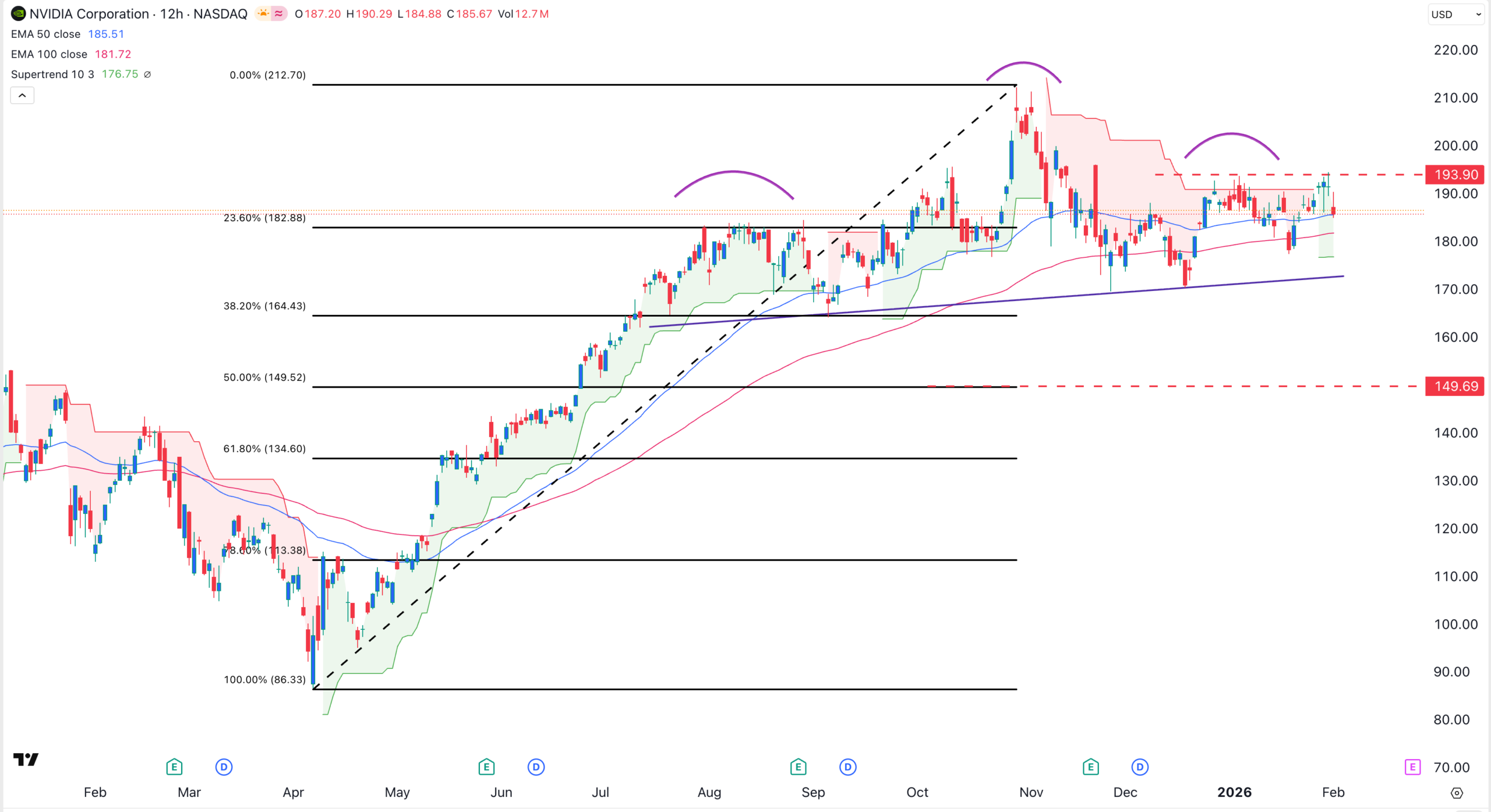
NVIDIA Stock Price Analysis as OpenAI Issues Concerns About its Chips

NVIDIA Stock Price Analysis as OpenAI Issues Concerns About its Chips

Key Insights NVIDIA stock started the week in the red. It crashed by over 2%. Meanwhile, the S&P 500, Dow Jones, and Nasdaq 100 moved close to their all-time highs
Share
Themarketperiodical2026/02/04 11:27
