The post What Makes Bitcoin Hyper a Contender for Next Crypto to Explode: Details Inside appeared on BitcoinEthereumNews.com. Crypto News Takeaways: Bitcoin Hyper ($HYPER) targets Bitcoin’s long-standing scalability issues by combining Bitcoin’s security layer with Solana’s high-speed performance, enabling thousands of transactions per second at near-zero fees. Through its Canonical Bridge and Solana Virtual Machine (SVM) integration, users can wrap native BTC, deploy smart contracts, and access DeFi functionality. The project’s presale has already surpassed $25M, signaling strong market confidence and whale investor participation ahead of its mainnet expansion and staking ecosystem launch. Bitcoin is a $2.2 trillion behemoth, dominating the crypto market – a segment that Bitcoin more or less created. It’s a phenomenon so pronounced, there’s a technical market indicator specifically to track it. Bitcoin’s influence over crypto has endured for over a decade. Yet for all its power, Bitcoin has one glaring flaw: it wasn’t built for speed. Where Ethereum, Solana, and Avalanche have evolved to support complex smart contracts, dApps, and DeFi ecosystems, Bitcoin’s architecture remains intentionally simple and slow. Like gold, Bitcoin functions as a store of value. And like gold, Bitcoin’s architecture is optimized for security, not performance. That lack of speed has developed into a major limiting factor over the decades. That’s why Bitcoin Hyper ($HYPER) has entered the scene: a revolutionary Layer-2 solution that merges Bitcoin’s trust layer with the high-throughput performance of the Solana Virtual Machine (SVM), unlocking real-world scalability, staking, and smart-contract utility without compromising the Bitcoin network’s integrity. Bitcoin’s Scalability Crisis Bitcoin’s original design was ingenious, but also deliberately limited. With a maximum of roughly 7 transactions per second (TPS), Bitcoin cannot handle the constantly growing volume of global crypto commerce. Slow transaction speeds: Compare Bitcoin’s roughly 7 TPS to Solana’s 3-5K TPS, or Visa’s 24K TPS, and the issue becomes stark. Speed bottlenecks make Bitcoin impractical for everyday use in micropayments and real-time settlements. High and… The post What Makes Bitcoin Hyper a Contender for Next Crypto to Explode: Details Inside appeared on BitcoinEthereumNews.com. Crypto News Takeaways: Bitcoin Hyper ($HYPER) targets Bitcoin’s long-standing scalability issues by combining Bitcoin’s security layer with Solana’s high-speed performance, enabling thousands of transactions per second at near-zero fees. Through its Canonical Bridge and Solana Virtual Machine (SVM) integration, users can wrap native BTC, deploy smart contracts, and access DeFi functionality. The project’s presale has already surpassed $25M, signaling strong market confidence and whale investor participation ahead of its mainnet expansion and staking ecosystem launch. Bitcoin is a $2.2 trillion behemoth, dominating the crypto market – a segment that Bitcoin more or less created. It’s a phenomenon so pronounced, there’s a technical market indicator specifically to track it. Bitcoin’s influence over crypto has endured for over a decade. Yet for all its power, Bitcoin has one glaring flaw: it wasn’t built for speed. Where Ethereum, Solana, and Avalanche have evolved to support complex smart contracts, dApps, and DeFi ecosystems, Bitcoin’s architecture remains intentionally simple and slow. Like gold, Bitcoin functions as a store of value. And like gold, Bitcoin’s architecture is optimized for security, not performance. That lack of speed has developed into a major limiting factor over the decades. That’s why Bitcoin Hyper ($HYPER) has entered the scene: a revolutionary Layer-2 solution that merges Bitcoin’s trust layer with the high-throughput performance of the Solana Virtual Machine (SVM), unlocking real-world scalability, staking, and smart-contract utility without compromising the Bitcoin network’s integrity. Bitcoin’s Scalability Crisis Bitcoin’s original design was ingenious, but also deliberately limited. With a maximum of roughly 7 transactions per second (TPS), Bitcoin cannot handle the constantly growing volume of global crypto commerce. Slow transaction speeds: Compare Bitcoin’s roughly 7 TPS to Solana’s 3-5K TPS, or Visa’s 24K TPS, and the issue becomes stark. Speed bottlenecks make Bitcoin impractical for everyday use in micropayments and real-time settlements. High and…

What Makes Bitcoin Hyper a Contender for Next Crypto to Explode: Details Inside

Crypto News

Takeaways:

  • Bitcoin Hyper ($HYPER) targets Bitcoin’s long-standing scalability issues by combining Bitcoin’s security layer with Solana’s high-speed performance, enabling thousands of transactions per second at near-zero fees.
  • Through its Canonical Bridge and Solana Virtual Machine (SVM) integration, users can wrap native BTC, deploy smart contracts, and access DeFi functionality.
  • The project’s presale has already surpassed $25M, signaling strong market confidence and whale investor participation ahead of its mainnet expansion and staking ecosystem launch.

Bitcoin is a $2.2 trillion behemoth, dominating the crypto market – a segment that Bitcoin more or less created. It’s a phenomenon so pronounced, there’s a technical market indicator specifically to track it.

Bitcoin’s influence over crypto has endured for over a decade. Yet for all its power, Bitcoin has one glaring flaw: it wasn’t built for speed.

Where Ethereum, Solana, and Avalanche have evolved to support complex smart contracts, dApps, and DeFi ecosystems, Bitcoin’s architecture remains intentionally simple and slow. Like gold, Bitcoin functions as a store of value. And like gold, Bitcoin’s architecture is optimized for security, not performance.

That lack of speed has developed into a major limiting factor over the decades.

That’s why Bitcoin Hyper ($HYPER) has entered the scene: a revolutionary Layer-2 solution that merges Bitcoin’s trust layer with the high-throughput performance of the Solana Virtual Machine (SVM), unlocking real-world scalability, staking, and smart-contract utility without compromising the Bitcoin network’s integrity.

Bitcoin’s Scalability Crisis

Bitcoin’s original design was ingenious, but also deliberately limited. With a maximum of roughly 7 transactions per second (TPS), Bitcoin cannot handle the constantly growing volume of global crypto commerce.

  1. Slow transaction speeds: Compare Bitcoin’s roughly 7 TPS to Solana’s 3-5K TPS, or Visa’s 24K TPS, and the issue becomes stark. Speed bottlenecks make Bitcoin impractical for everyday use in micropayments and real-time settlements.
  2. High and volatile fees: During bull markets, transaction fees can soar, pricing out retail users and stifling network utility.
  3. No native DeFi or smart contracts: Bitcoin remains fundamentally a store of value, not a programmable network.

Bitcoin is powerful, but inflexible, and even static. Its foundation is rock solid, but without scalable infrastructure, it risks losing relevance in a multi-chain market.

Bitcoin Hyper’s Canonical Bridge + Solana Virtual Machine (SVM)

Enter Bitcoin Hyper ($HYPER), a next-generation Layer-2 protocol that aims to transform Bitcoin from a passive store of value into a fully interactive, yield-generating, DeFi-ready ecosystem.

Canonical Bridge: The Gateway Between Bitcoin and Hyper

The Bitcoin Canonical Bridge is the core of Bitcoin Hyper’s architecture. It allows users to wrap native Bitcoin into wrapped $BTC on the Layer-2 chain, enabling it to be used for staking, DeFi, and high-speed transactions without leaving the Hyper ecosystem.

This bridge utilizes zero-knowledge proofs (ZK-proofs) to securely and efficiently verify $BTC transfers.

In practical terms, users can lock $BTC on-chain, instantly mint wrapped $BTC, and transact or deploy it across smart contracts on Bitcoin Hyper – all in seconds.

Solana Virtual Machine (SVM) Integration

The Canonical Bridge is built on the Solana Virtual Machine, making Bitcoin Hyper an SVM-powered Layer-2 chain that inherits Solana’s unmatched throughput and efficiency.

This integration gives Bitcoin the scalability it never had, with the ability to process thousands of TPS and near-zero fees. The result is a network that feels like Solana – fast, lightweight, and scalable – but is backed by Bitcoin’s liquidity, brand, and immutability.

Smart Contracts & DeFi on Bitcoin

Bitcoin holders will be able to deploy smart contracts, earn staking rewards, and participate in DeFi protocols natively tied to Bitcoin’s liquidity. This expands Bitcoin’s utility exponentially, transforming digital gold into digital capital for the always-growing DeFi economy.

In addition to the benefits mentioned above, other pluses of Bitcoin Hyper include:

  • Staking rewards
  • One-click bridging
  • Instant confirmations
  • Web3 wallet compatibility (with Solana)
Bitcoin Hyper is being designed as an everyday utility layer enabling payments, trading, and dApp usage that feel natural to Bitcoin holders.

Bitcoin’s Financial Opportunities as Hyper’s Outlook Improves

Bitcoin Hyper isn’t emerging in a vacuum. Its presale has already surpassed $25M, making it one of the most successful presales of 2025.

Bitcoin recently crossed $115k, before repositioning lower. Currently at $111K, the opportunity is here for investors to buy the dip – or explore Bitcoin-adjacent opportunities. Bitcoin Hyper sits squarely in that sweet spot.

Tokenomics and Ecosystem Growth

  • Token Name: Bitcoin Hyper ($HYPER)
  • Use Cases: Staking, governance, transaction fees, DeFi, and liquidity incentives
  • Utility: Bitcoin Hyper’s Layer-2 economy
  • Supply Model: Fixed cap

As more $BTC is bridged to the Layer 2, demand for $HYPER increases, creating a growth loop. Allocations for the Treasury (25% of $HYPER tokens) and Development (30%) maintain stability on the Hyper Layer 2 while providing room for the ecosystem to grow further.

Why Bitcoin Hyper Could Help Bitcoin Rise Higher

Bitcoin is already the largest, most trusted cryptocurrency in the world. How much higher could it go?

By itself, $BTC’s growth will always be tied to the ‘store-of-value’ use case; but by giving it new functionality, Hyper could super-charge Bitcoin’s push to $200K and beyond.

The combination of Bitcoin Hyper’s scalability and Bitcoin’s reliability is one reason why the presale has consistently attracted major purchases from whale investors. Those include:

That much attention flowing into Bitcoin Hyper underscores the main point: $HYPER isn’t competing with Bitcoin; it’s amplifying it.

Visit the official Bitcoin Hyper ($HYPER) presale page to join in.

A New Chapter for the King of Crypto

Bitcoin reigns supreme as the digital standard for trust and value. However, the next evolution of crypto isn’t just about storing value, but also about deploying it. Bitcoin Hyper provides the missing bridge between Bitcoin’s untapped liquidity and the high-speed, low-cost world of modern blockchain economies.


This publication is sponsored. Coindoo does not endorse or assume responsibility for the content, accuracy, quality, advertising, products, or any other materials on this page. Readers are encouraged to conduct their own research before engaging in any cryptocurrency-related actions. Coindoo will not be liable, directly or indirectly, for any damages or losses resulting from the use of or reliance on any content, goods, or services mentioned. Always do your own research.

Author

Kosta joined the team in 2021 and quickly established himself with his thirst for knowledge, incredible dedication, and analytical thinking. He not only covers a wide range of current topics, but also writes excellent reviews, PR articles, and educational materials. His articles are also quoted by other news agencies.

Next article

Source: https://coindoo.com/what-makes-bitcoin-hyper-a-contender-for-the-next-crypto-to-explode/

Market Opportunity
Hyperlane Logo
Hyperlane Price(HYPER)
$0.10132
$0.10132$0.10132
+0.42%
USD
Hyperlane (HYPER) Live Price Chart
Disclaimer: The articles reposted on this site are sourced from public platforms and are provided for informational purposes only. They do not necessarily reflect the views of MEXC. All rights remain with the original authors. If you believe any content infringes on third-party rights, please contact service@support.mexc.com for removal. MEXC makes no guarantees regarding the accuracy, completeness, or timeliness of the content and is not responsible for any actions taken based on the information provided. The content does not constitute financial, legal, or other professional advice, nor should it be considered a recommendation or endorsement by MEXC.

You May Also Like

Cashing In On University Patents Means Giving Up On Our Innovation Future

Cashing In On University Patents Means Giving Up On Our Innovation Future

The post Cashing In On University Patents Means Giving Up On Our Innovation Future appeared on BitcoinEthereumNews.com. “It’s a raid on American innovation that would deliver pennies to the Treasury while kneecapping the very engine of our economic and medical progress,” writes Pipes. Getty Images Washington is addicted to taxing success. Now, Commerce Secretary Howard Lutnick is floating a plan to skim half the patent earnings from inventions developed at universities with federal funding. It’s being sold as a way to shore up programs like Social Security. In reality, it’s a raid on American innovation that would deliver pennies to the Treasury while kneecapping the very engine of our economic and medical progress. Yes, taxpayer dollars support early-stage research. But the real payoff comes later—in the jobs created, cures discovered, and industries launched when universities and private industry turn those discoveries into real products. By comparison, the sums at stake in patent licensing are trivial. Universities collectively earn only about $3.6 billion annually in patent income—less than the federal government spends on Social Security in a single day. Even confiscating half would barely register against a $6 trillion federal budget. And yet the damage from such a policy would be anything but trivial. The true return on taxpayer investment isn’t in licensing checks sent to Washington, but in the downstream economic activity that federally supported research unleashes. Thanks to the bipartisan Bayh-Dole Act of 1980, universities and private industry have powerful incentives to translate early-stage discoveries into real-world products. Before Bayh-Dole, the government hoarded patents from federally funded research, and fewer than 5% were ever licensed. Once universities could own and license their own inventions, innovation exploded. The result has been one of the best returns on investment in government history. Since 1996, university research has added nearly $2 trillion to U.S. industrial output, supported 6.5 million jobs, and launched more than 19,000 startups. Those companies pay…
Share
BitcoinEthereumNews2025/09/18 03:26
China Blocks Nvidia’s RTX Pro 6000D as Local Chips Rise

China Blocks Nvidia’s RTX Pro 6000D as Local Chips Rise

The post China Blocks Nvidia’s RTX Pro 6000D as Local Chips Rise appeared on BitcoinEthereumNews.com. China Blocks Nvidia’s RTX Pro 6000D as Local Chips Rise China’s internet regulator has ordered the country’s biggest technology firms, including Alibaba and ByteDance, to stop purchasing Nvidia’s RTX Pro 6000D GPUs. According to the Financial Times, the move shuts down the last major channel for mass supplies of American chips to the Chinese market. Why Beijing Halted Nvidia Purchases Chinese companies had planned to buy tens of thousands of RTX Pro 6000D accelerators and had already begun testing them in servers. But regulators intervened, halting the purchases and signaling stricter controls than earlier measures placed on Nvidia’s H20 chip. Image: Nvidia An audit compared Huawei and Cambricon processors, along with chips developed by Alibaba and Baidu, against Nvidia’s export-approved products. Regulators concluded that Chinese chips had reached performance levels comparable to the restricted U.S. models. This assessment pushed authorities to advise firms to rely more heavily on domestic processors, further tightening Nvidia’s already limited position in China. China’s Drive Toward Tech Independence The decision highlights Beijing’s focus on import substitution — developing self-sufficient chip production to reduce reliance on U.S. supplies. “The signal is now clear: all attention is focused on building a domestic ecosystem,” said a representative of a leading Chinese tech company. Nvidia had unveiled the RTX Pro 6000D in July 2025 during CEO Jensen Huang’s visit to Beijing, in an attempt to keep a foothold in China after Washington restricted exports of its most advanced chips. But momentum is shifting. Industry sources told the Financial Times that Chinese manufacturers plan to triple AI chip production next year to meet growing demand. They believe “domestic supply will now be sufficient without Nvidia.” What It Means for the Future With Huawei, Cambricon, Alibaba, and Baidu stepping up, China is positioning itself for long-term technological independence. Nvidia, meanwhile, faces…
Share
BitcoinEthereumNews2025/09/18 01:37
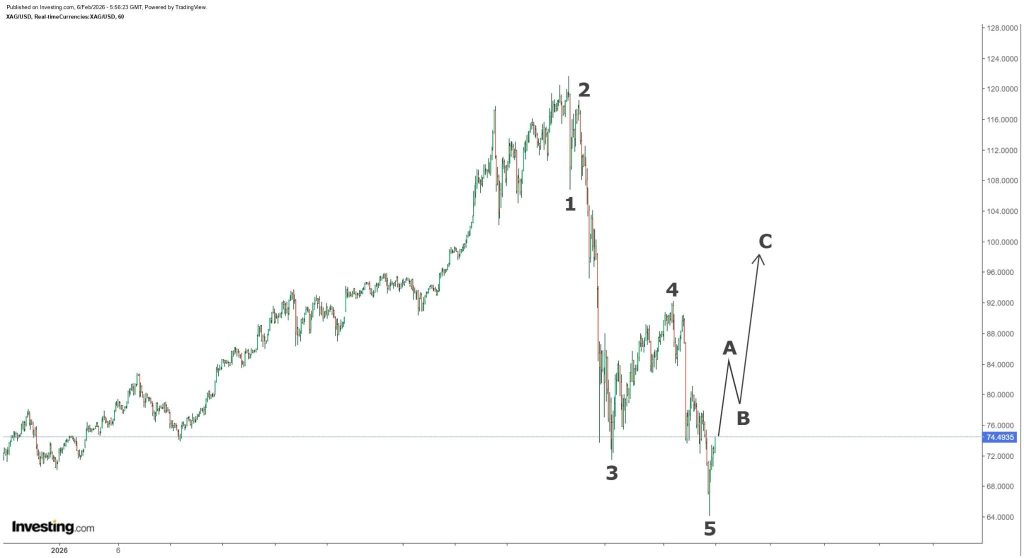
Silver Price Crash Is Over “For Real This Time,” Analyst Predicts a Surge Back Above $90

Silver Price Crash Is Over “For Real This Time,” Analyst Predicts a Surge Back Above $90

Silver has been taking a beating lately, and the Silver price hasn’t exactly been acting like a safe haven. After running up into the highs, the whole move reversed
Share
Captainaltcoin2026/02/07 03:15