The post Why $8.2B prediction markets’ major league sports backing is huge blow to legacy betting appeared on BitcoinEthereumNews.com. The National Hockey League (NHL) has reached licensing agreements with prediction market platforms Kalshi and Polymarket, making it the first major US professional sports league to permit the use of its trademarks by prediction markets, or “licensed betting markets.” As The Wall Street Journal reported on Oct. 22, the multiyear deals grant both platforms rights to use the NHL logo, terms such as “NHL” and “Stanley Cup,” and individual team names. The intellectual property package is the same that the league extends to sportsbook operators such as DraftKings, FanDuel, and BetMGM. The agreements formalize the push of prediction markets into sports betting, an incursion that has drawn legal challenges from state regulators and outcry from gambling-industry groups. Kalshi and Polymarket offer event contracts on games that function similarly to traditional sports bets, but operate under the oversight of the Commodity Futures Trading Commission (CFTC) rather than state gaming commissions. As a federally licensed exchange, Kalshi offers sports event contracts in all 50 states, including jurisdictions that restrict betting on standard sportsbooks. Meanwhile, Polymarket is in the late stages of a US comeback. Keith Wachtel, president of NHL business, stated: “Prediction markets are here to stay. Partnering with Kalshi and Polymarket could expand the league’s fan base to the tech-savvy users of prediction markets, Wachtel added, while noting that sportsbooks remain “important partners” of the NHL.” Volume surge and market share The partnership arrives as prediction markets record multibillion-dollar quarterly volumes. Kalshi and Polymarket are the largest platforms, accounting for 46.6% and 52.1% of the market, respectively, as of last week. According to a Dune dashboard by user dunedata, Kalshi’s volume increased from $1.9 billion in the second quarter to $4.5 billion in the third quarter. In comparison, Polymarket’s volume rose from $3.2 billion to $3.7 billion during the same period.… The post Why $8.2B prediction markets’ major league sports backing is huge blow to legacy betting appeared on BitcoinEthereumNews.com. The National Hockey League (NHL) has reached licensing agreements with prediction market platforms Kalshi and Polymarket, making it the first major US professional sports league to permit the use of its trademarks by prediction markets, or “licensed betting markets.” As The Wall Street Journal reported on Oct. 22, the multiyear deals grant both platforms rights to use the NHL logo, terms such as “NHL” and “Stanley Cup,” and individual team names. The intellectual property package is the same that the league extends to sportsbook operators such as DraftKings, FanDuel, and BetMGM. The agreements formalize the push of prediction markets into sports betting, an incursion that has drawn legal challenges from state regulators and outcry from gambling-industry groups. Kalshi and Polymarket offer event contracts on games that function similarly to traditional sports bets, but operate under the oversight of the Commodity Futures Trading Commission (CFTC) rather than state gaming commissions. As a federally licensed exchange, Kalshi offers sports event contracts in all 50 states, including jurisdictions that restrict betting on standard sportsbooks. Meanwhile, Polymarket is in the late stages of a US comeback. Keith Wachtel, president of NHL business, stated: “Prediction markets are here to stay. Partnering with Kalshi and Polymarket could expand the league’s fan base to the tech-savvy users of prediction markets, Wachtel added, while noting that sportsbooks remain “important partners” of the NHL.” Volume surge and market share The partnership arrives as prediction markets record multibillion-dollar quarterly volumes. Kalshi and Polymarket are the largest platforms, accounting for 46.6% and 52.1% of the market, respectively, as of last week. According to a Dune dashboard by user dunedata, Kalshi’s volume increased from $1.9 billion in the second quarter to $4.5 billion in the third quarter. In comparison, Polymarket’s volume rose from $3.2 billion to $3.7 billion during the same period.…

Why $8.2B prediction markets’ major league sports backing is huge blow to legacy betting

3 min read

The National Hockey League (NHL) has reached licensing agreements with prediction market platforms Kalshi and Polymarket, making it the first major US professional sports league to permit the use of its trademarks by prediction markets, or “licensed betting markets.”

As The Wall Street Journal reported on Oct. 22, the multiyear deals grant both platforms rights to use the NHL logo, terms such as “NHL” and “Stanley Cup,” and individual team names.

The intellectual property package is the same that the league extends to sportsbook operators such as DraftKings, FanDuel, and BetMGM.

The agreements formalize the push of prediction markets into sports betting, an incursion that has drawn legal challenges from state regulators and outcry from gambling-industry groups.

Kalshi and Polymarket offer event contracts on games that function similarly to traditional sports bets, but operate under the oversight of the Commodity Futures Trading Commission (CFTC) rather than state gaming commissions.

As a federally licensed exchange, Kalshi offers sports event contracts in all 50 states, including jurisdictions that restrict betting on standard sportsbooks. Meanwhile, Polymarket is in the late stages of a US comeback.

Keith Wachtel, president of NHL business, stated:

Volume surge and market share

The partnership arrives as prediction markets record multibillion-dollar quarterly volumes. Kalshi and Polymarket are the largest platforms, accounting for 46.6% and 52.1% of the market, respectively, as of last week.

According to a Dune dashboard by user dunedata, Kalshi’s volume increased from $1.9 billion in the second quarter to $4.5 billion in the third quarter. In comparison, Polymarket’s volume rose from $3.2 billion to $3.7 billion during the same period.

Combined volumes for the previous quarter amount to $8.2 billion, representing a 61% increase over the second quarter’s results.

Kalshi has enjoyed record volumes since Sept. 29, when it launched a product similar to same-game parlays, and brokerage Robinhood Markets announced surging volumes in sports contracts.

Since that date, DraftKings shares have dropped 27%, while shares of FanDuel parent Flutter Entertainment have fallen 14%.

A parlay combines two or more wagers, such as betting on outcomes of separate games, into a single bet.

Before the NHL deal, Kalshi avoided using trademarked terms such as “NFL” or “Super Bowl” on its platform, instead referring to “Pro football champion” and identifying teams by their cities.

The NHL and other leagues have historically protected their intellectual property from unauthorized use.

The licensing agreements remove that constraint, allowing Kalshi and Polymarket to market sports contracts using official league branding.

Meanwhile, established sportsbooks have adapted accordingly. DraftKings acquired Railbird Technologies, which owns a CFTC-licensed exchange, as part of a strategy to enter prediction markets.

In August, FanDuel partnered with the CME Group, an exchange operator, to develop a trading platform similar to Kalshi’s.

Polymarket received a $2 billion investment commitment from the parent company of the New York Stock Exchange earlier this month, supporting the startup’s plans to relaunch in the US in the coming months.

Polymarket stopped serving Americans in a 2022 settlement with the CFTC but acquired a small CFTC-regulated exchange in July.

The exchange, now known as Polymarket US, plans to list contracts on sports and elections, according to regulatory filings.

The previous quarter’s growth and the recent partnership demonstrate that prediction rails have captured material market share from traditional operators, with sports IP accelerating adoption among retail users who previously accessed betting exclusively through more established names.

Mentioned in this article

Source: https://cryptoslate.com/8-2b-prediction-markets-just-got-major-league-sports-backing-do-sportsbooks-lose-share-next/


Market Opportunity
Major Logo
Major Price(MAJOR)
$0.08464
$0.08464$0.08464
-3.20%
USD
Major (MAJOR) Live Price Chart
Disclaimer: The articles reposted on this site are sourced from public platforms and are provided for informational purposes only. They do not necessarily reflect the views of MEXC. All rights remain with the original authors. If you believe any content infringes on third-party rights, please contact service@support.mexc.com for removal. MEXC makes no guarantees regarding the accuracy, completeness, or timeliness of the content and is not responsible for any actions taken based on the information provided. The content does not constitute financial, legal, or other professional advice, nor should it be considered a recommendation or endorsement by MEXC.

You May Also Like

Three dormant wallets, suspected to belong to the same entity, purchased 5,970 ETH eight hours ago.

Three dormant wallets, suspected to belong to the same entity, purchased 5,970 ETH eight hours ago.

PANews reported on February 4 that, according to Lookonchain monitoring, three wallets that had been dormant for four years (likely controlled by the same entity
Share
PANews2026/02/04 11:36
BlackRock Increases U.S. Stock Exposure Amid AI Surge

BlackRock Increases U.S. Stock Exposure Amid AI Surge

The post BlackRock Increases U.S. Stock Exposure Amid AI Surge appeared on BitcoinEthereumNews.com. Key Points: BlackRock significantly increased U.S. stock exposure. AI sector driven gains boost S&P 500 to historic highs. Shift may set a precedent for other major asset managers. BlackRock, the largest asset manager, significantly increased U.S. stock and AI sector exposure, adjusting its $185 billion investment portfolios, according to a recent investment outlook report.. This strategic shift signals strong confidence in U.S. market growth, driven by AI and anticipated Federal Reserve moves, influencing significant fund flows into BlackRock’s ETFs. The reallocation increases U.S. stocks by 2% while reducing holdings in international developed markets. BlackRock’s move reflects confidence in the U.S. stock market’s trajectory, driven by robust earnings and the anticipation of Federal Reserve rate cuts. As a result, billions of dollars have flowed into BlackRock’s ETFs following the portfolio adjustment. “Our increased allocation to U.S. stocks, particularly in the AI sector, is a testament to our confidence in the growth potential of these technologies.” — Larry Fink, CEO, BlackRock The financial markets have responded favorably to this adjustment. The S&P 500 Index recently reached a historic high this year, supported by AI-driven investment enthusiasm. BlackRock’s decision aligns with widespread market speculation on the Federal Reserve’s next moves, further amplifying investor interest and confidence. AI Surge Propels S&P 500 to Historic Highs At no other time in history has the S&P 500 seen such dramatic gains driven by a single sector as the recent surge spurred by AI investments in 2023. Experts suggest that the strategic increase in U.S. stock exposure by BlackRock may set a precedent for other major asset managers. Historically, shifts of this magnitude have influenced broader market behaviors as others follow suit. Market analysts point to the favorable economic environment and technological advancements that are propelling the AI sector’s momentum. The continued growth of AI technologies is…
Share
BitcoinEthereumNews2025/09/18 02:49
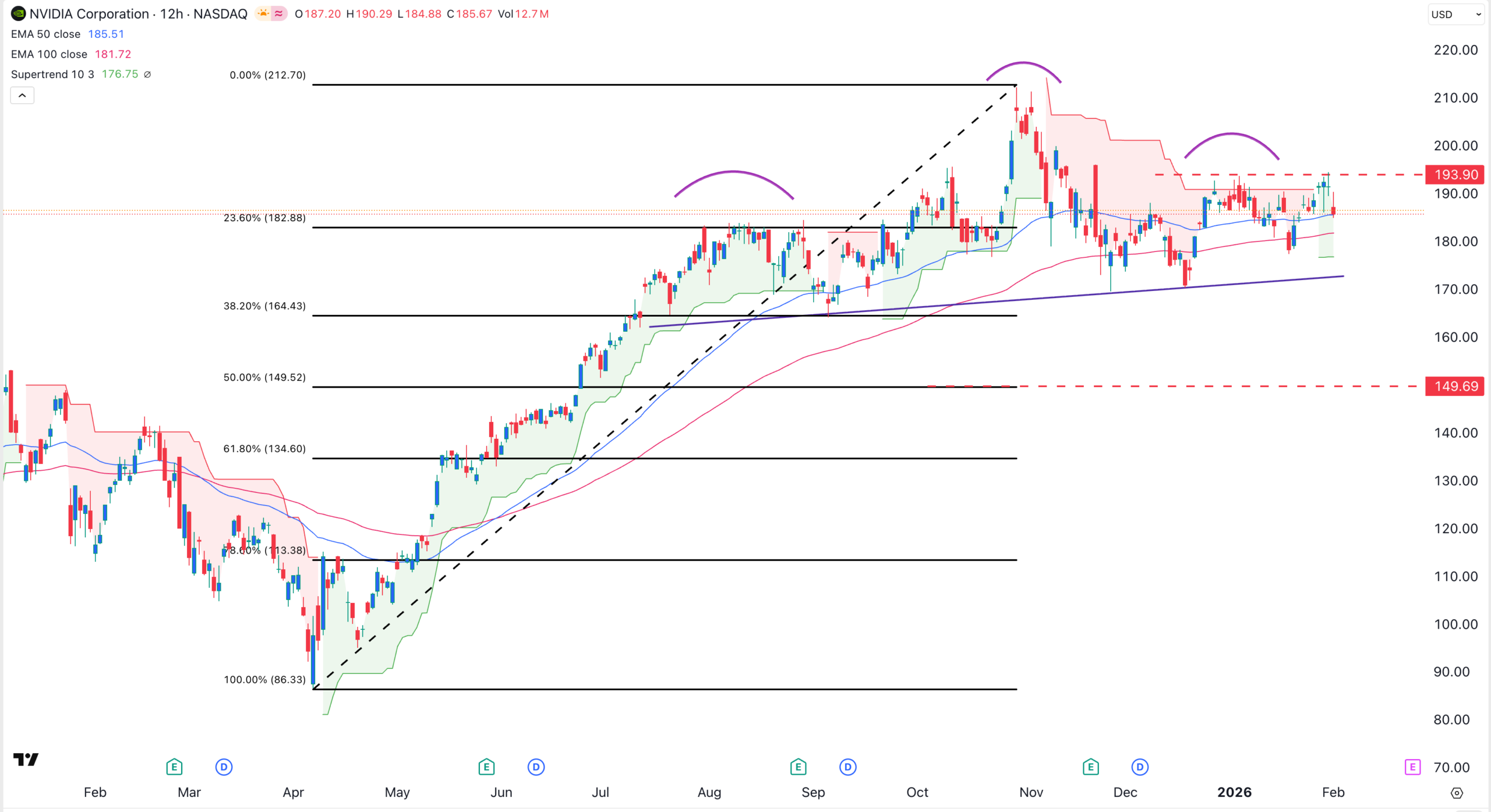
NVIDIA Stock Price Analysis as OpenAI Issues Concerns About its Chips

NVIDIA Stock Price Analysis as OpenAI Issues Concerns About its Chips

Key Insights NVIDIA stock started the week in the red. It crashed by over 2%. Meanwhile, the S&P 500, Dow Jones, and Nasdaq 100 moved close to their all-time highs
Share
Themarketperiodical2026/02/04 11:27