Circle CEO in Turkey: As Bitcoinsistemi.com, We Asked About Investment Plans, the Future of the Market, and the Things People Are Most Curious About
At Bitcoinsistemi.com, we met with Circle CEO Jeremy Allaire at Circle’s Istanbul event and asked him one of the most frequently asked questions in the cryptocurrency market.
We at Bitcoinsistemi.com Asked Whether a Bull Market Will Occur Again.
We at Bitcoinsistemi.com personally asked Allaire, who visited Turkey, whether a bull run will be seen again in the cryptocurrency market and what the sector will look like in the coming period.
Circle CEO Jeremy Allaire stated that he has witnessed many cycles in the cryptocurrency market to date, and that each cycle has seen a significant influx of capital into the sector. According to Allaire, this capital supports not only market speculation but also real investments in the entrepreneurs building crypto technology.
Allaire stated that each market cycle creates a new surge in talent and capacity within the sector, recalling that the crypto market was long viewed solely as a speculative area. According to Allaire, in the past, many people considered crypto assets as something lacking real fundamental value.
However, Allaire said that as a technology expert, he sees the current situation differently. According to the Circle CEO, the maturation of blockchain infrastructure is moving the sector from a speculative phase to a mainstream scaling phase.
Related News: JPMorgan Reveals Major Risk in Bitcoin! Analyst Warns of a Decline!
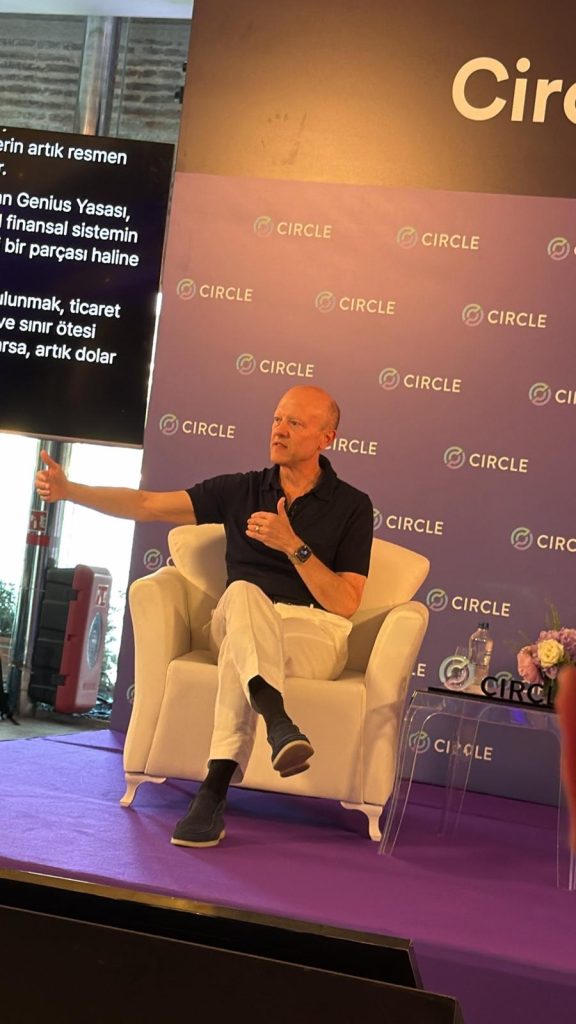 Jeremy Allaire, sorulan sorulara samimi cevaplar verdi.
Circle CEO Believes the Cryptocurrency Sector is in One of its Most Optimistic Periods in History
Allaire stated that a significant number of major governments around the world are now developing laws and regulations on how this technology can be used in economic and financial systems. He also argued that many large institutions, from Amazon to Meta, from major global banks to the world’s largest capital market companies, are developing products based on blockchain technology.
Jeremy Allaire stated that these institutions are using stablecoins, developing tokenized assets, leveraging smart contracts, and building new financial products. Allaire also added that the world’s leading neo-banks and payment platforms are beginning to integrate these technologies into their products.
According to Allaire, all these developments point to one of the most optimistic periods in the history of the crypto sector. He notes that the technological infrastructure, regulatory environment, and products that can provide real benefits to the user are all developing simultaneously, indicating that digital asset investments are entering a period based on greater adoption.
“The Market Is Now Fueled by Real Use Cases, Not Speculative Transactions”
Circle’s CEO stated that the adoption of stablecoins, the growth of the infrastructure platforms on which these services are built, and the migration of traditional financial services to blockchain networks will be the main growth areas in the coming period.
Allaire noted that funds, stocks, commodities, and other financial assets are increasingly being incorporated into these systems. According to the CEO, market growth is now fueled not only by speculative transactions but also by real-world use cases.
However, Jeremy Allaire also acknowledged that interest in the purely speculative side of the crypto market has somewhat decreased. According to the Circle CEO, investors who are in the market solely for speculation purposes sometimes shift their interests to other areas. Allaire said that today some investors are speculating in different areas such as AI stocks, AI infrastructure, or prediction markets related to global economic and political developments.
However, Allaire added that, from a technological perspective, the crypto sector is in one of its strongest periods to date. According to the Circle CEO, the sector has the potential to transform from a technology used by approximately half a billion people today into an infrastructure that a large portion of the world will use in their daily lives in the coming years.
Allaire Answers Question About Turkish Lira Stablecoin
Jeremy Allaire also expressed a positive view on the possibility of seeing a regulated Turkish Lira stablecoin in Turkey. Allaire noted that the stablecoin market is no longer solely focused on the US dollar, and that stablecoin projects based on local currencies in different countries are becoming increasingly common.
Circle’s CEO stated, “Stablecoins are being launched in many markets, from Japan to South Korea, Hong Kong to Europe. Therefore, we would be happy to see a regulated Turkish Lira stablecoin.”
Circle CEO Jeremy Allaire also touched upon the company’s new infrastructure products at the event. Allaire stated that Circle is not only a company that issues stablecoins, but also one that develops a next-generation blockchain infrastructure that can be used in the global financial system.
He stated that the company is working on a new blockchain network called Arc, which he said was designed specifically with the needs of financial institutions in mind. According to the Circle CEO, Arc aims to provide an infrastructure that can be used in areas such as stablecoins, tokenized assets, payment processing, securities clearing, and on-chain management of real-world assets.
Allaire stated that Arc is nearing its mainnet launch and that the network is designed to be supported not only by Circle but also by leading financial companies worldwide. According to the CEO, one of the network’s most important features is that it offers developers an open and neutral infrastructure.
Allaire also highlighted the use of USDC across different blockchain networks. He stated that the ability to seamlessly transfer USDC from one network to another while it is being processed on one network is of great importance in terms of liquidity. In this context, he noted that Circle’s cross-chain transfer protocol, CCTP, plays a significant role in inter-chain USDC transfers.
Allaire also highlighted the relationship between AI agents and blockchain infrastructure. According to the Circle CEO, software-based agents will play a significant role in a large portion of economic transactions in the future. Therefore, there will be a need for internet-based financial infrastructures that can make payments, transfer value, execute contracts, and conduct transactions.
Circle’s CEO stated that the company is offering new tools for developers and that software-based economic systems will become more powerful with stablecoins and blockchain networks. According to Allaire, in the next phase of the internet, processes such as money, payments, contracts, and asset transfers will become a natural part of software.
Allaire stated that efforts to regulate stablecoins in the US have been ongoing for many years, and that Circle has played an active role in these processes. The CEO also said that regulatory frameworks such as MiCA are important for the sector in Europe.
Regarding his assessment of Turkey, Allaire stated that they were pleased to be in contact with regulatory bodies and industry stakeholders in the country. He said that both user interest and the financial technology ecosystem were strong in Turkey.
Circle’s CEO stated that they are closely monitoring the development of stablecoin regulations in Turkey and are ready to share information with local regulators and apply their global expertise.
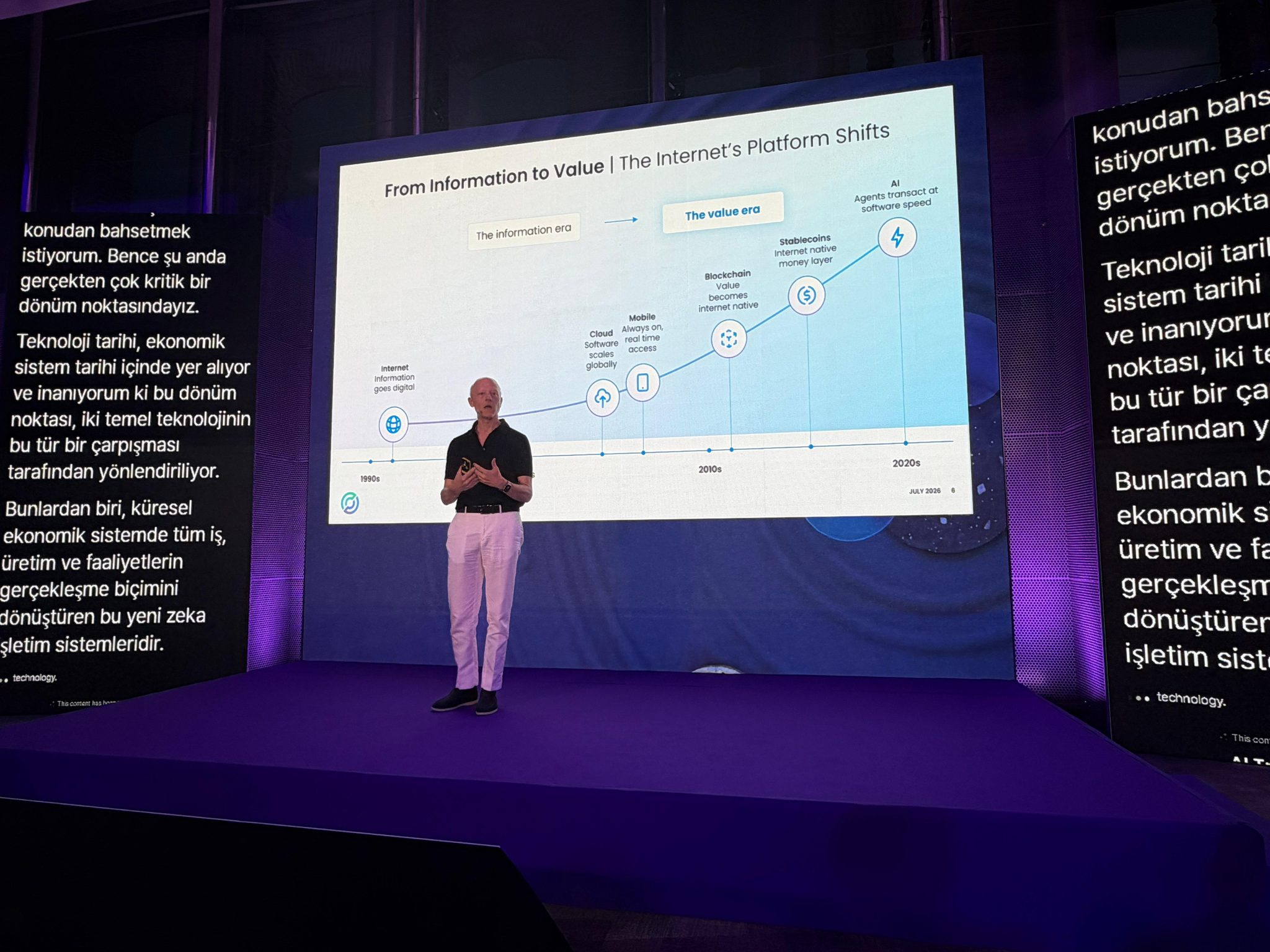 Allaire, etkinlik sırasında basın mensuplarının sorularını da yanıtladı.
Circle CEO Answers Questions from Other Members of the Press
The details of the questions asked by other press members and industry representatives during the question and answer session included the following:
OKX TR Chairman Mehmet Çamır: Regulations regarding digital dollars and stablecoins are being discussed in Turkey. What rules are necessary for the free circulation of digital assets? What would you recommend to regulators in Turkey?
Allaire said that central banks, payment authorities, and e-money regulators need to create common frameworks so that digital dollars and stablecoins can circulate freely in different economies.
Circle’s CEO stated that each country is working on integrating its own currency into blockchain networks, noting that this process will not be easy but requires collaboration with local partners and regulators.
According to Allaire, stablecoin companies need to comply with regulations in areas such as taxation, enforcement, anti-money laundering, and combating financial crimes. However, he stated that regulations should not hinder innovation, but rather protect users while enabling companies to operate.
Allaire added that such standards should be created by independent bodies, industry stakeholders, and regulators, not by a single company.
Question: Will we see a regulated Turkish Lira stablecoin in Turkey? How would Circle view such a development?
Allaire stated that stablecoins based on local currencies are gaining increasing importance. He noted that stablecoin projects have been implemented in markets such as Japan, South Korea, Hong Kong, and Europe, and expressed his belief that a similar development would be positive for Turkey.
Circle’s CEO stated, “Stablecoins are being launched in many markets, from Japan to South Korea, Hong Kong to Europe. Therefore, we would be happy to see a regulated Turkish Lira stablecoin.”
Allaire also stated that they are ready to share information with regulatory bodies in Turkey and to share their experience in different markets.
Question: Competition is increasing in the stablecoin market. How will Circle differentiate itself in this competitive environment?
Allaire stated that the stablecoin market is based on a model with strong network effects. According to him, the success of a stablecoin depends not only on its issuance but also on how many exchanges, banks, payment companies, financial institutions, developers, and blockchain networks support it.
Circle’s CEO stated that one of USDC’s key advantages is its liquidity. Allaire explained that USDC can operate on many different blockchains, and Circle’s cross-chain transfer infrastructure facilitates this liquidity across different networks.
According to Allaire, strong reserve structures, regulatory compliance, ample liquidity, reliable infrastructure, a developer ecosystem, and user experience are critical for long-term success in the stablecoin market.
Question: Why does USDC run on so many different blockchains? What does this mean for users and developers?
Allaire stated that USDC is not tied to a single blockchain, but is designed as a digital dollar infrastructure that can be used across different networks.
Circle’s CEO stated that the ability for users and developers to seamlessly move USDC from one network to another is crucial for liquidity. Allaire said that Circle’s cross-chain transfer protocol, CCTP, plays a vital role in this regard.
According to Allaire, this structure transforms USDC from being merely a stablecoin into a fundamental financial infrastructure that facilitates liquidity and value transfer between different blockchain networks.
Question: What is the biggest obstacle for individual users to adopt blockchain and stablecoin-based products?
Allaire stated that one of the biggest challenges in the widespread adoption of blockchain technology is the long-term user experience.
According to Circle’s CEO, in the past, the infrastructure wasn’t mature enough, making it difficult to develop fast, easy, and reliable products for users. However, Allaire stated that this problem has recently begun to be resolved.
Allaire, noting that applications like WhatsApp offer people fast and easy digital experiences, said that stablecoin and blockchain products should also achieve similar ease of use. According to him, for mass adoption, the technology should remain in the background, and the user should only experience a fast and seamless experience.
Question: The crypto sector has experienced major crises in the past, like the one involving FTX. How will trust in the sector be rebuilt after these crises?
Allaire acknowledged that the crypto sector has faced numerous challenges, failures, and trust issues in the past. However, according to the Circle CEO, these periods have helped the sector develop more robust infrastructures and stronger regulations.
Allaire, noting that Circle has been operating for over 13 years, said the company has weathered numerous market crises. Despite this, Allaire stated, Circle has maintained its long-term vision and believes that internet-based financial systems will play an even larger role in the future.
*This is not investment advice.
Continue Reading: Circle CEO in Turkey: As Bitcoinsistemi.com, We Asked About Investment Plans, the Future of the Market, and the Things People Are Most Curious About


You May Also Like
Justice Department has 'gone off the rails' for Trump's 'pretzel logic': analysis

Securitize Tokenizes $295M of Its Own Stock on Solana and Avalanche After NYSE Debut