

SBI Just Launched Japan's First Trust Bank-Backed Stablecoin as Competition With USDT Heats Up
Key highlights:
- Japan’s SBI Group and Startale have teamed up to launch the JPYSC stablecoin.
- The stablecoin, built for institutional use, is the first to be issued by a trust bank in Japan.
- Japan is racing to reduce the dominance of dollar-backed stablecoins in the country.
SBI Group and Startale Group have announced the launch of JPYSC, a yen-denominated stablecoin to challenge the dominance of dollar stablecoins. While yen-denominated stablecoins are not new to Japan, JPYSC is the first of its kind to be issued by a trust bank, signaling robust regulatory compliance.
JPYSC to change the Japanese stablecoin landscape
The stablecoin, jointly launched by SBI Group and Startale Group, will operate at the intersection of traditional finance and on-chain finance. SBI is one of Japan’s largest financial conglomerates, while Startale has emerged as the country’s leading infrastructure firm with deep involvement in tokenization.
According to an announcement, the new JPYSC stablecoin is issued by SBI Shinsei Trust Bank, making it the first-of-its-kind in the Japanese market. Adopting a trust-bank infrastructure provides consumers with statutory claims on reserves, offering legal protections beyond conventional yen-based stablecoins.
Continuing its pioneering streak, JPYSC is also the first stablecoin to earn a designation as a Type III electronic payment instrument under Japan’s amended Payment Services Act.
Parties are already teeing up JPYSC for institutional adoption, pointing to its low transaction costs and support for large-value transactions. Right off the bat, JPYSC use cases will involve institutional lending, cross-border remittances, OTC trading, and real-world asset settlement.
Furthermore, Startale Group founder Sota Watanabe identified on-chain payment for AI agents and tokenized assets as potential use cases for the stablecoin.
Despite its institutional-facing offerings, the stablecoin will be accessible to retail users upon full rollout. Adopting a phased approach, only SBI VC Trade accounts will have access to the new stablecoin, with plans underway for a broader launch after regulatory and tax policies become clearer.
Japan races to build alternatives to dollar stablecoins
JPYSC’s launch comes amid rising competition against dollar-backed stablecoins like Tether (USDT) and USD Coin (USDC) in Japan. After Japan approved its first yen-backed stablecoin, large financial institutions are now moving aggressively to establish a regulated domestic payment infrastructure on-chain.Industry observers are betting that there is a rising appetite for local-currency stablecoins to reduce dependence on dollar-denominated settlement systems. However, Japanese stablecoin issuers face an uphill climb given the first-mover advantage and aggressive expansion of dollar-backed stablecoins.Asia is a key battleground for stablecoin dominance, with the region leading utility metrics in retail. Led by Southeast Asia, the region holds 63% of the global stablecoin payment volume, larger than the combined volumes of Europe and North America.
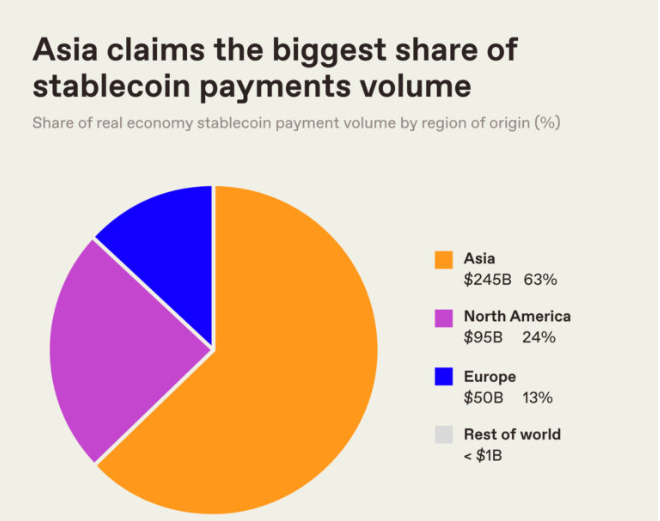
Source: a16z
Meanwhile, Japan first enacted a stablecoin legislation in 2023, giving the country a major head start against the US. Last week, the East Asian country unveiled a new digital asset regulation, cutting tax to 20% while angling to approve ETFs.


You May Also Like

This Whale Just Opened a $30.9 Million XRP Long Position. What’s Coming?

Trump Cancels Housing Bill Signing Over CBDC Ban Provision, Demands Voting Legislation First
Next Crypto to Explode as Morgan Stanley’s SOL ETF Stuns at 0.14%, While Pepeto Targets 100x Before the Binance Listing Opens



