

Cardano Whales Buy the Dip as Leios Testnet Goes Live Despite ADA's Ongoing Downtrend
Key highlights:
- Cardano has launched the Leios public testnet, one of the network's most significant scalability upgrades to date
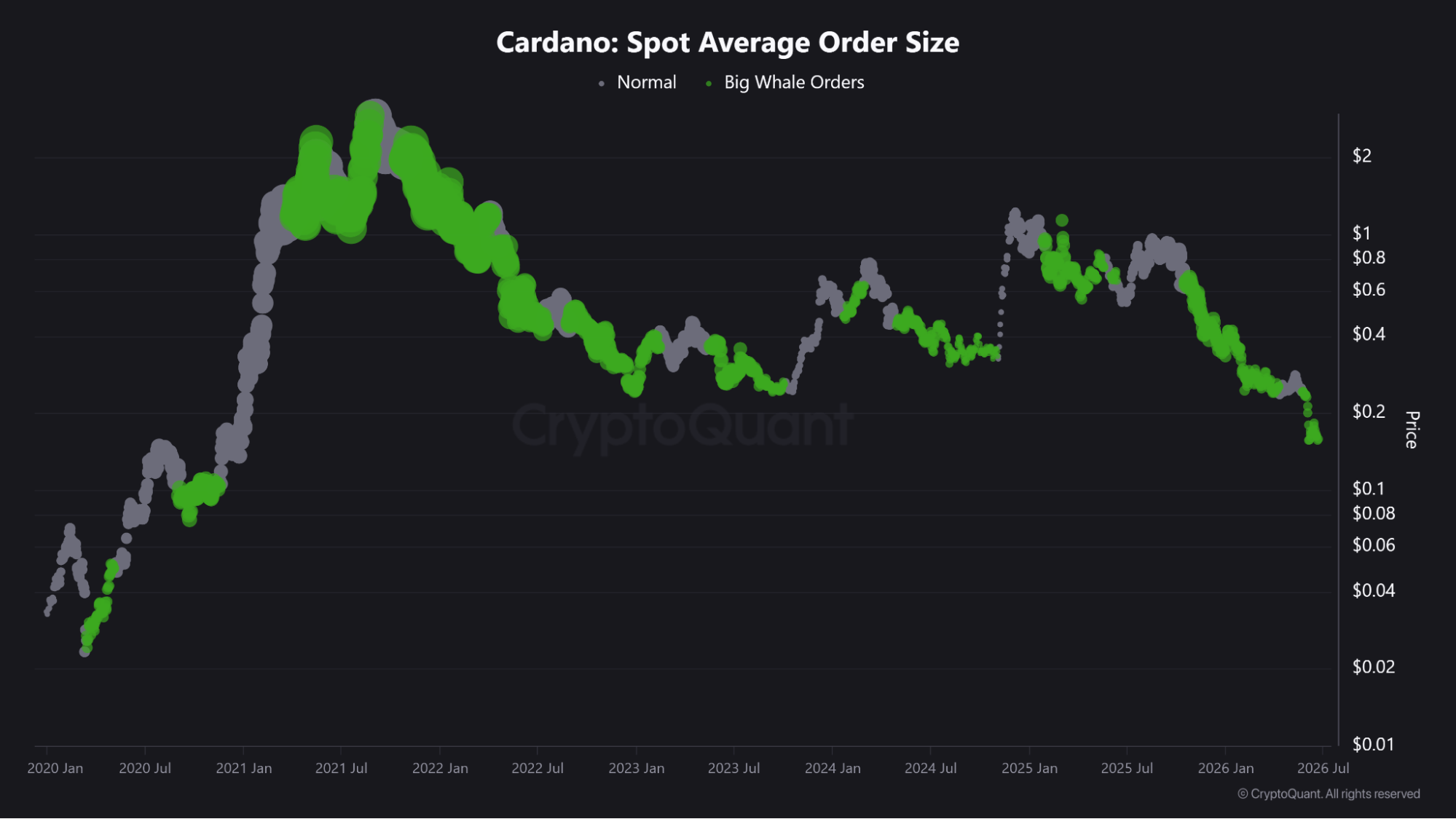
- Whale wallets have started accumulating ADA following the announcement despite the token remaining in a broader bearish trend
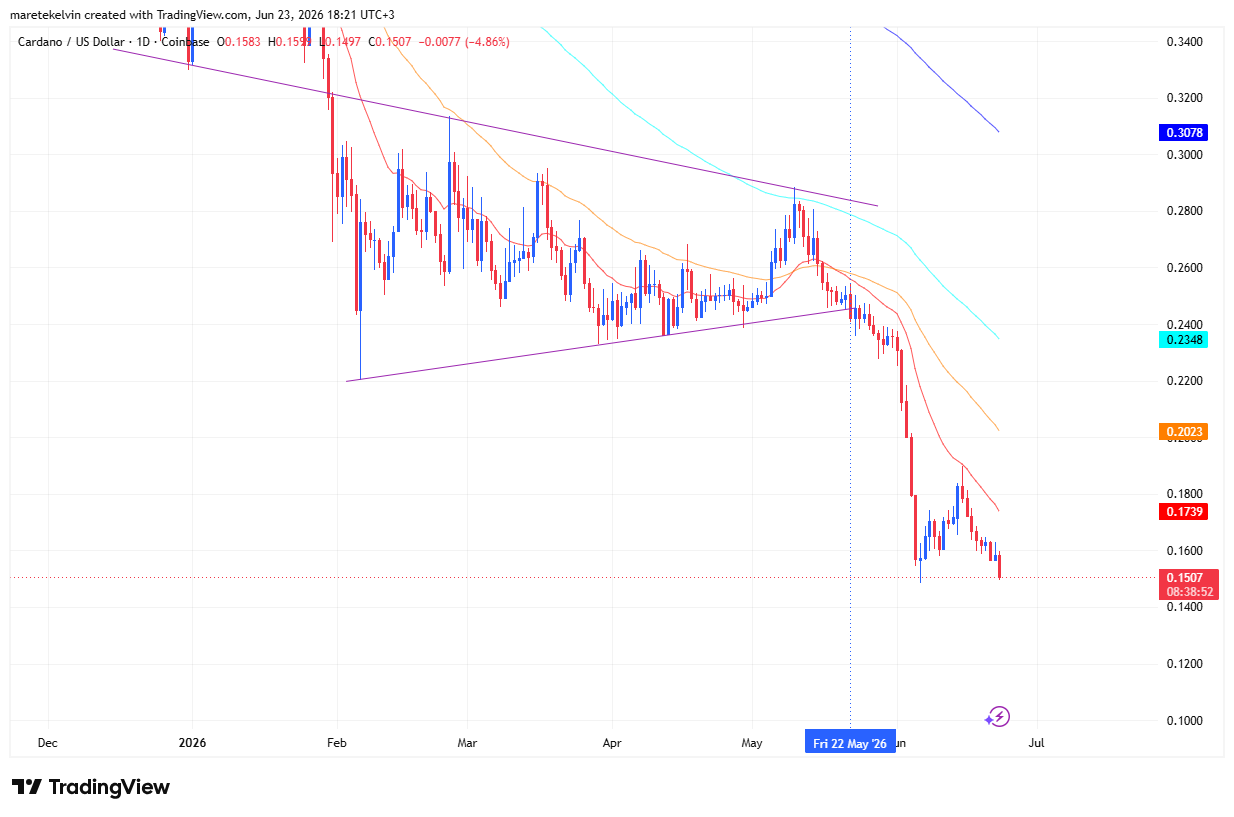
- ADA continues trading below key resistance levels after breaking down from a pennant pattern in late May
Cardano takes a major step toward scaling with Leios
Cardano has officially launched the Leios public testnet, marking a major milestone in the blockchain's effort to improve transaction throughput and network efficiency.
The announcement was made by the Cardano Foundation, which confirmed that the public testnet is now live following collaboration with IOG and Intersect MBO.
According to the foundation, Leios represents a significant evolution of Cardano's architecture and is designed to dramatically increase transaction processing capacity while maintaining decentralization.
The launch gives developers and validators an opportunity to test the new infrastructure in a live environment before any potential mainnet deployment.
ADA remains under pressure despite the bullish developments
While the Leios launch is one of the biggest ecosystem developments in months, ADA's price action has yet to fully reflect the positive news.
The token has remained under selling pressure since breaking down from a pennant consolidation pattern on May 22, a move that shifted market structure firmly in favor of the bears.
Since the breakdown, ADA has consistently traded below key resistance levels, with sellers maintaining control of the broader trend.
The disconnect between fundamentals and price performance highlights the cautious sentiment currently dominating the altcoin market.
However, some investors appear to be viewing the weakness as an opportunity rather than a warning sign.
Whales are accumulating despite the downtrend
On-chain data suggests larger market participants are beginning to position themselves ahead of a potential recovery.
Recent transaction activity indicates that whale wallets have increased accumulation following the Leios announcement. The buying activity stands out because it is occurring while ADA remains in a broader corrective structure.
Historically, whale accumulation during periods of market weakness has often been viewed as a sign that sophisticated investors are looking beyond short-term price action and focusing on longer-term catalysts.
The timing is particularly notable given that Leios is widely regarded as one of Cardano's most ambitious scaling initiatives.
If whale demand continues increasing while retail sentiment remains subdued, the accumulation trend could eventually provide a foundation for a broader recovery.
Can Leios become the catalyst ADA needs?
The launch of the public testnet provides Cardano with a fresh narrative at a time when investors have been increasingly focused on network utility and scalability.
Competing ecosystems such as Solana and Sui have attracted significant attention by emphasizing speed and throughput. Leios is Cardano's attempt to close that gap while preserving the network's research-driven development philosophy.
For traders, the immediate focus remains technical.
ADA will need to reclaim key resistance levels before a sustained trend reversal can be confirmed. Until then, the broader market structure remains bearish despite improving fundamentals.
Still, the combination of a major infrastructure upgrade and growing whale accumulation suggests some market participants are positioning for a different outcome.
If Leios delivers on its promise and adoption follows, today's accumulation activity could prove to be an early signal that larger investors are anticipating stronger performance from Cardano in the months ahead.


You May Also Like

Mining Profits Dry Up Across Bitcoin, DOGE, LTC, and BCH

SPX6900 Price Prediction: Murad Eyes Major SPX Movement as MemeToro $MT Proves AI Coins Are the Smarter Bet

Famous Tech Investor Tom Lee: Yesterday’s SMH & SOXX Sell-Off Has Historically Led to an 88% Win Rate the Next Month



