

Bitcoin News: Saylor Defends Strategy as STRC Crash Sparks Fraud Claims
Key Insights:
- Saylor said Strategy’s Bitcoin and cash reserves exceed its outstanding debt by about $48 billion.
- STRC fell below its $100 par value, sparking criticism and fraud claims from Peter Schiff.
- Strategy may need to sell $3B-$4B in Bitcoin to ease capital pressure.
Strategy co-founder Michael Saylor has defended the company’s Bitcoin-backed capital plan after STRC fell sharply below its $100 par value. The drop triggered fresh criticism from traders, analysts, and long-time Bitcoin skeptics. Saylor said Strategy still holds enough Bitcoin and cash to stand far above its outstanding debt. His comments came as debate grew over its financing model and preferred shares.
Bitcoin News: Saylor Says Strategy’s Bitcoin Reserves Still Exceed Its Debt
Bitcoin news around Strategy intensified after Saylor said the company’s Bitcoin and cash reserves exceed its outstanding debt by about $48 billion. He said Strategy has raised more than $60 billion in additional capital since 2022. The company used those funds to expand its Bitcoin holdings. Saylor framed the current position as stronger than the company’s balance sheet during the 2022 bear market.
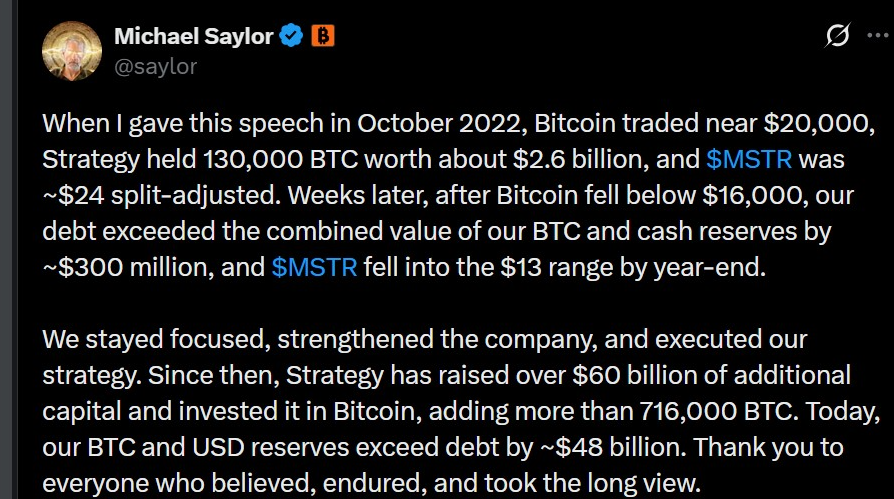 Bitcoin News | Source: X
He pointed to that earlier period to explain how Strategy handled deep market stress. The company held about 130,000 Bitcoin worth nearly $2.6 billion while Bitcoin traded near $20,000. When Bitcoin fell below $16,000, Strategy’s debt briefly exceeded its Bitcoin and cash reserves by about $300 million. Saylor said the company stayed focused and continued to execute its Bitcoin strategy.
STRC Drop Draws Fresh Market Scrutiny
STRC’s fall below its $100 par value placed Strategy’s capital structure under closer review. The preferred stock drew attention because investors linked it to Strategy’s wider Bitcoin treasury plan. The price decline raised questions about dividend support, investor demand, and the company’s access to capital.
Peter Schiff added to the debate by questioning Strategy’s promotion of STRC shares. He suggested investors could pursue legal action against Strategy and Saylor. Schiff also argued that Saylor may have breached securities marketing rules through his public comments about the offering. Strategy has not accepted those claims in the material provided.
Analysts Discuss Possible Bitcoin Sales
Arca Chief Investment Officer Jeff Dorman offered one possible route for easing pressure on STRC holders. He said Strategy may need to sell between $3 billion and $4 billion worth of Bitcoin if pressure builds across its capital structure. Dorman assigned a 25% probability to that outcome. His base case gave a 70% probability to Strategy selling small amounts of MSTR stock instead.
That approach would allow Strategy to keep most of its Bitcoin holdings. However, it could place more pressure on common shareholders through dilution. Bitcoin news around the company now centers on whether equity sales can continue without forcing treasury sales. Market watchers have focused on how long Strategy can fund preferred obligations while Bitcoin remains volatile.
Bitcoin Supporters Reject Terra Comparisons
Some Bitcoin supporters pushed back against comparisons between STRC and failed crypto structures. David Gokhshtein argued that Bitcoin’s market value does not depend on one person or one company. He also rejected attempts to compare Strategy with Terra, whose collapse damaged confidence across the crypto market. His response came after analyst Ali Martinez suggested structural similarities between STRC and LUNA.
Samson Mow also defended STRC and described it as a strong financial instrument. He said the structure only faces a clear problem if investors believe Bitcoin will not gain value over time. Critics focus on funding stress, while supporters focus on Strategy’s long-term Bitcoin position.
Liquidity Questions Remain in Focus
Liquidity has become another key issue for investors following the STRC decline. Market maker QCP estimated that Strategy’s available resources could cover preferred dividend obligations for around seven and a half months. Bitcoin news now includes closer checks on cash access, equity demand, and debt coverage.
QCP said Strategy may need alternative funding if existing channels become less attractive. Bitcoin sales remain one possible option under that scenario, though Saylor continues to defend the company’s balance sheet.
The post Bitcoin News: Saylor Defends Strategy as STRC Crash Sparks Fraud Claims appeared first on The Market Periodical.


You May Also Like

Bitcoin Pullback Bets Build as Saylor Signals Possible MSTR Accumulation
Jeanine Pirro's wild threat over Reflecting Pool sparks mockery: 'Going to get hilarious'

HYPE ETF Defies Market Gravity as BTC and ETH See Net Outflows



