

ZachXBT Exposes Suspicious $120M Tron Transfer as Tether Freezes $72M USDT After Monero Surge
According to renowned on-chain investigator ZachXBT, a suspicious 120.2 million USDT transfer on the Tron network has sparked widespread attention in the crypto community. The movement, which occurred on June 11, quickly evolved into heavy buying activity in the privacy-focused coin Monero (XMR). This triggered a sharp short-term price surge in XMR and prompted a fast response from Tether, the issuer of USDT.
ZachXBT shared the detailed findings in his Telegram Investigations channel, where he carefully tracked the flow of funds in real time. The investigator noted that this type of rapid distribution across multiple platforms and chains is often associated with attempts to obscure the origin of funds. His analysis quickly gained traction as prominent crypto accounts began sharing the wallet movements.
On June 11, the Tron address TA6YHgB2xh5Hhfmc7WoLQaWmqq7Vv4zCoQ received the 120.2 million USDT deposit.
- More than 12 million USDT sent to KuCoin deposit addresses
- Around 8 million USDT sent to multiple instant exchanges
- Over 8 million USDT routed through Near Intents to Bitcoin and Ethereum networks
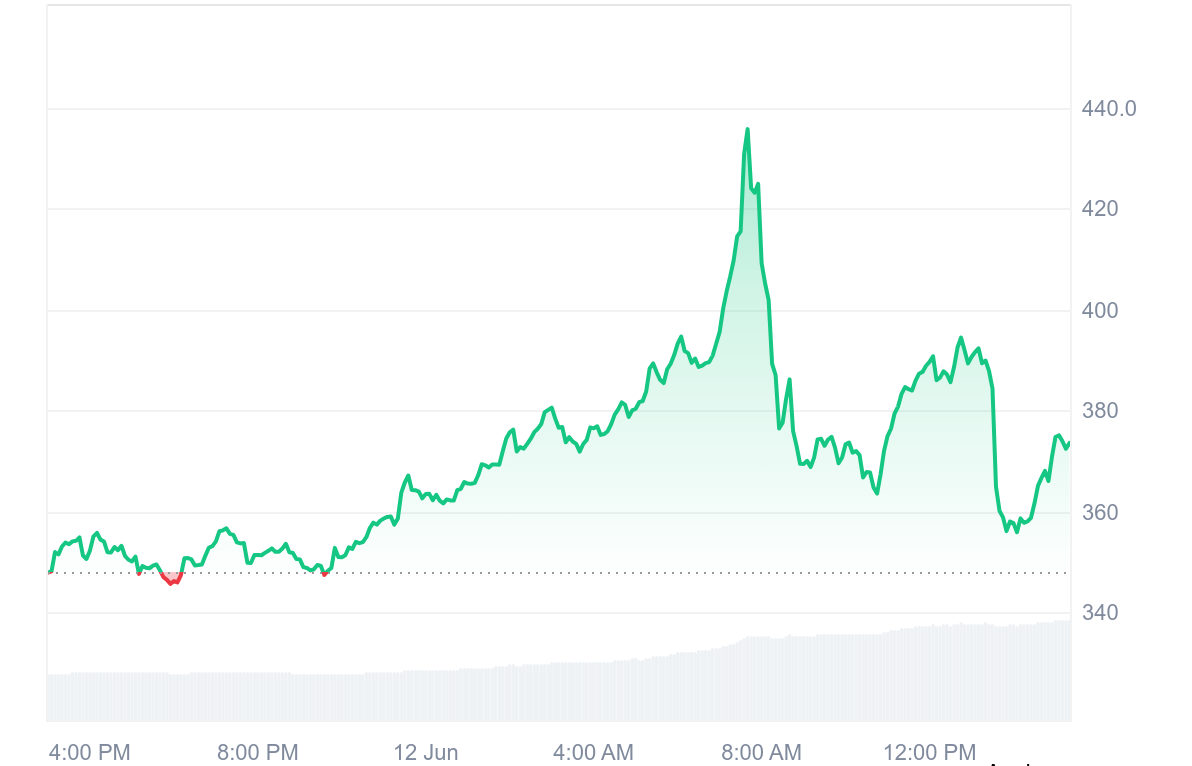 Monero Price Chart
As of June 12, 2026, Monero (XMR) is trading at approximately $392 – $394 USD, reflecting a strong 14-16% gain over the last 24 hours, according to CoinMarketCap. The surge was largely driven by the incident highlighted by ZachXBT, where the same entity that received the 120.2 million USDT on Tron aggressively bought Monero, pushing the price sharply from around $330 to as high as $420 – a rapid 27% gain – within a short time frame. This heavy buying created significant volatility in the relatively low-liquidity privacy coin before a partial retracement. Monero currently holds a market capitalization of $7.36B – $7.39B (Rank #12), with 24-hour trading volume surging to $274M – $278M. It has a circulating supply of 18.76 million XMR, with today’s 24-hour range between $343 and $438. The coin’s all-time high stands at $798.91 (January 14, 2026). Top exchanges by volume include KuCoin (leading in XMR/USDT liquidity), followed by MEXC, HTX, Bitfinex, and Kraken.
Tether responded quickly by blacklisting a directly linked address TBzrPEsStbZAUx2SBhD4oHz8UW3FX9Ak9W.The company froze approximately 72 million USDT around 07:37 UTC on June 12. On-chain reports indicate that the remaining roughly 48 million USDT continued to move toward major platforms, including Binance, HTX, and services such as FixedFloat.
This incident follows Tether’s history of large-scale freezes on the Tron network in coordination with law enforcement. In earlier 2026 cases, Tether had frozen hundreds of millions in USDT linked to suspected illicit activity. Tether operates a dedicated financial crime unit and works with over 340 law enforcement agencies worldwide to combat misuse of its stablecoin.Recently, Tether blacklisted 371 addresses and froze over $515 million USDT within just 30 days, highlighting the scale of its enforcement efforts.
The sequence of a large stablecoin inflow, rapid distribution across exchanges and bridges, and heavy conversion into a privacy coin like Monero has increased discussions about potential money laundering risks. It also highlights the ongoing tension between the need for regulatory compliance and the demand for privacy in cryptocurrency transactions.
ZachXBT’s involvement in tracking this transaction once again underscores his growing role in uncovering suspicious on-chain activity. Earlier, the blockchain investigator reported a separate case where $12.6 million in Zama cUSDC was frozen after Circle blacklisted an Ethereum address linked to questionable fund movements.
As of this publication, Tether and the involved exchanges have not released detailed official statements on this specific case beyond the blacklist and freeze action. On-chain analysts and the crypto community continue to monitor the associated wallets for any further developments.


You May Also Like

Franklin Templeton CEO Dismisses 50bps Rate Cut Ahead FOMC

Santiment: Peace Talk Optimism Surges as Stocks Rally, Crypto Yet to Catch Up

Square Financial Services Introduces 3.50% APY High Yield Savings for Square Sellers, More Than 8 Times the National Average



