

Rocket Startup Impulse Raises $500 Million to Hire Engineers, Not AI
BitcoinWorld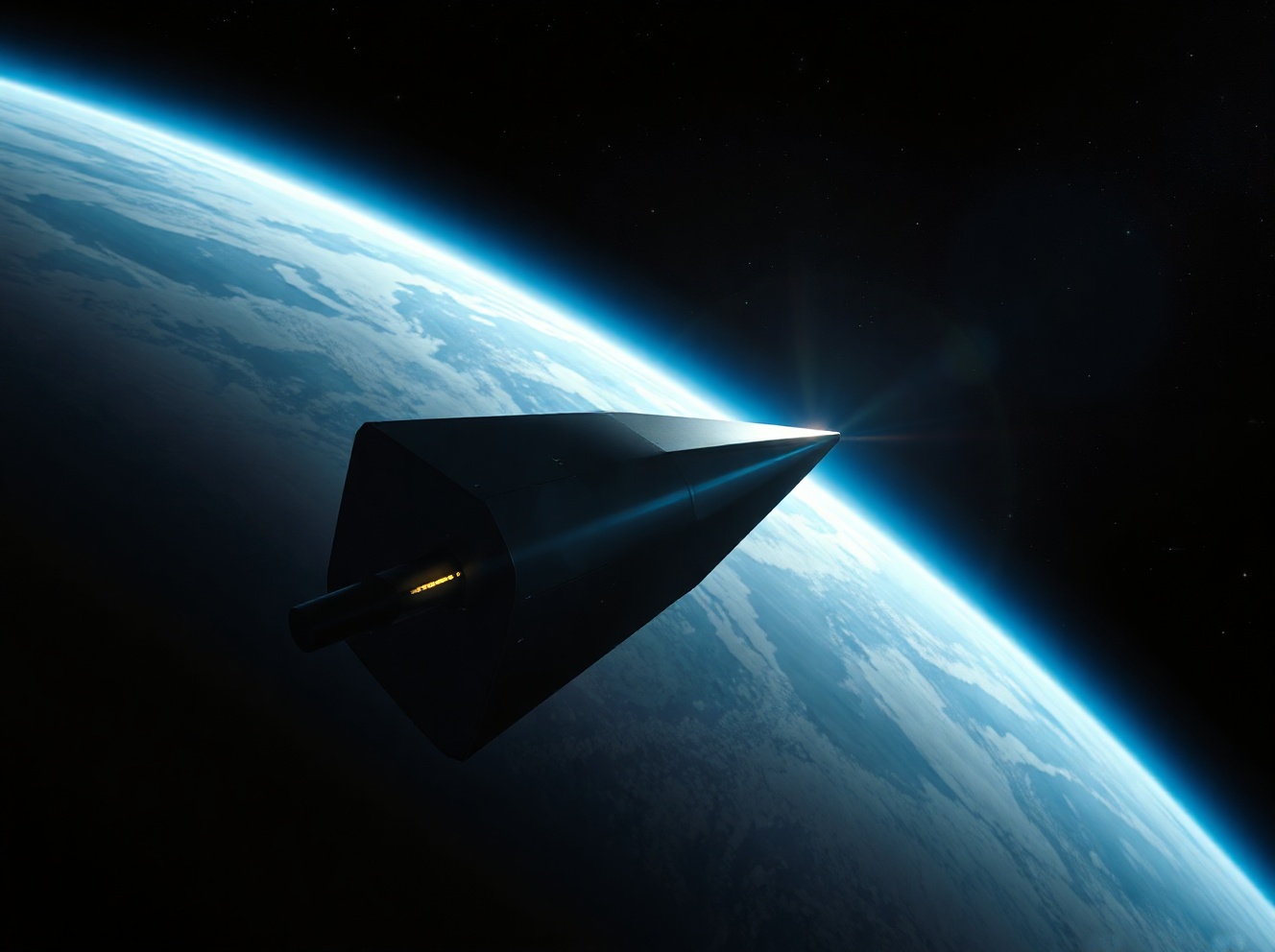
Rocket Startup Impulse Raises $500 Million to Hire Engineers, Not AI
Impulse Space, a startup founded by SpaceX propulsion veteran Tom Mueller, has secured $500 million in Series D funding to expand its workforce and accelerate the development of maneuverable spacecraft. The company plans to hire up to 200 new employees, focusing on engineers who can design, build, and test hardware in the real world, rather than relying solely on artificial intelligence.
Investor Confidence in Space and Defense
The funding round was led by 137 Ventures and BANNER VC, with participation from Founders Fund, Lux Capital, and Linse Capital. This investment signals growing investor appetite for space and defense technology, driven by increased U.S. government spending on national security and the anticipated initial public offering of SpaceX. Impulse Space is specifically targeting the U.S. Space Force with its highly maneuverable Mira platform, which is designed for in-space mobility and rapid satellite repositioning.
Human Expertise Over AI Hype
While many tech companies are racing to integrate AI into their operations, Impulse Space is taking a more measured approach. President and COO Eric Romo, who was the 13th employee at SpaceX, told Bitcoin World that the company’s software teams are using AI coding tools, but when it comes to solving complex engineering problems, deep learning models are not yet reliable. Romo, who created computer simulations of SpaceX’s engines in 2003, noted that simulations often miss the mark by 20% or more. “There’s not really any substitute for designing the thing, analyzing the thing, building it, and then getting it on the test stand,” he said. He also pointed out that training data for hardware design is scarce compared to the vast amounts of text and code available for large language models. “If you want to find the best designs for a turbo pump seal package in the world, you’re not going to find those online,” he added.
Expanding Engineering Talent Pool
Impulse Space began as a propulsion-focused company but has since evolved into building complete spacecraft, requiring expertise in vehicle structures and flight computers. To attract top talent, the company recently opened an office in Colorado, recognizing that aerospace engineers now have more geographic options beyond traditional hubs like Los Angeles. This expansion reflects a broader shift in the aerospace talent market, with opportunities in Seattle, Denver, and Texas.
Upcoming Missions and Lessons Learned
The company’s Mira spacecraft completed its third flight late last year, though it encountered a navigation system issue that caused it to expend much of its propellant early. Romo confirmed that the company is preparing a new Mira mission, expected to launch before the end of the year. The incident highlights the challenges of in-space operations and the importance of iterative testing, a philosophy central to Impulse’s approach.
Conclusion
Impulse Space’s $500 million raise and focus on human engineering talent underscores a pragmatic approach to innovation in the aerospace sector. While AI tools are useful for software tasks, the company is betting that real-world hardware expertise remains irreplaceable. With growing demand for in-space mobility and national security applications, Impulse is positioning itself as a key player in the next phase of space development.
FAQs
Q1: What is Impulse Space building?
Impulse Space is developing highly maneuverable spacecraft for in-space mobility, including the Mira platform for the U.S. Space Force and the Helios vehicle for rapid satellite transport to high orbits.
Q2: Why is Impulse Space hiring people instead of using AI?
The company believes that current AI models are not reliable enough for complex hardware engineering. Simulations often lack accuracy, and the necessary training data for hardware design is not publicly available, making human expertise essential.
Q3: Who is leading the company?
Impulse Space was founded by Tom Mueller, a former SpaceX propulsion engineer who led the development of the Merlin engine. The company’s President and COO is Eric Romo, an early SpaceX employee with deep experience in engine simulation and design.
This post Rocket Startup Impulse Raises $500 Million to Hire Engineers, Not AI first appeared on BitcoinWorld.


You May Also Like
NEAR Protocol (NEAR) Surges 20% Against Market Downturn — Can It Reach $3.77?

Ripple CEO Tells Bloomberg: What Are Working Daily to Take Over SWIFT

Bloomberg Odd Lots Host Calls This the Coldest Crypto Winter Ever — And It’s Not Just Bearish Noise



