

Historic Diplomatic Breakthrough: Trump Announces First Israeli-Lebanese Leader Talks in 34 Years
BitcoinWorld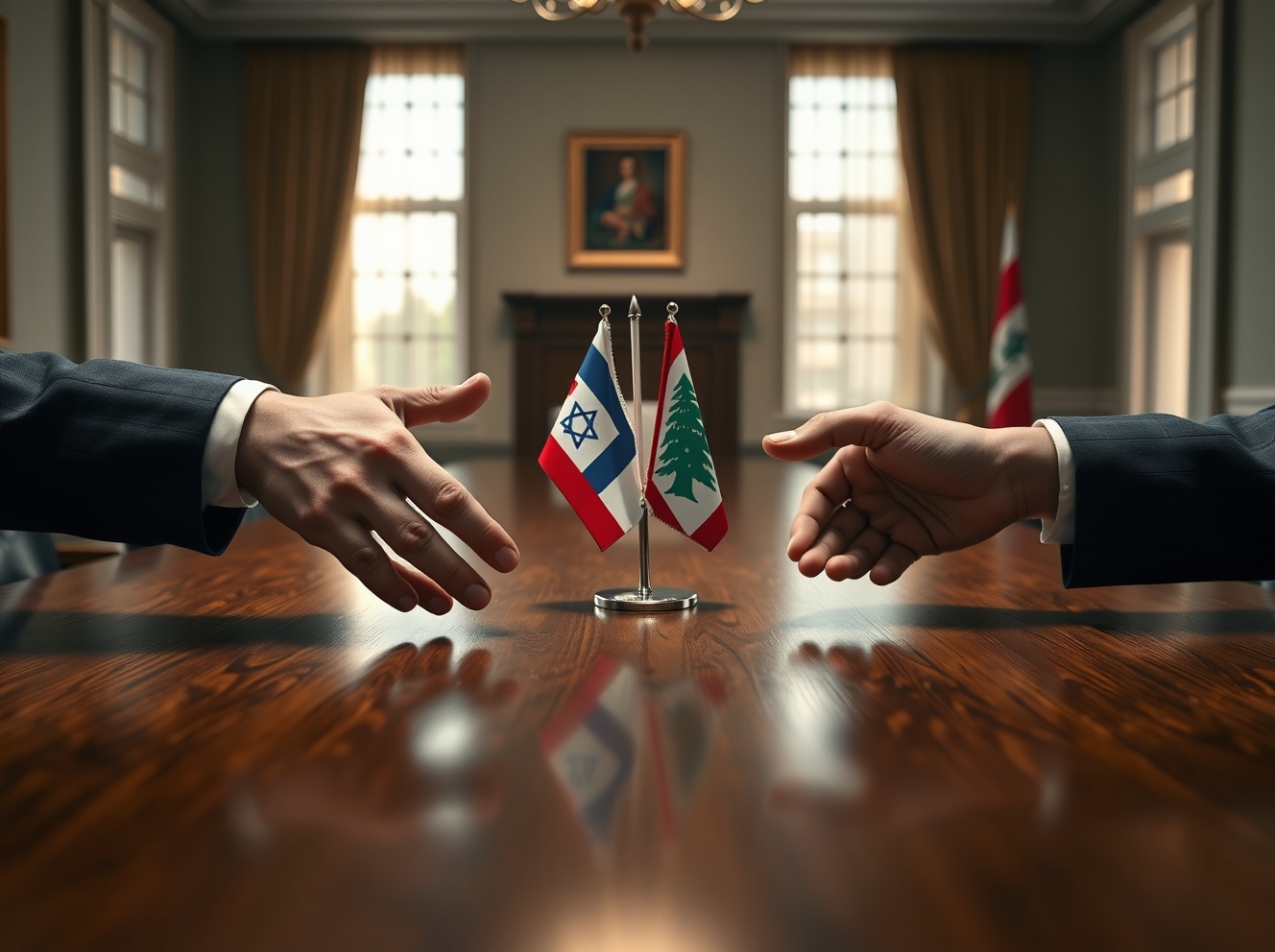
Historic Diplomatic Breakthrough: Trump Announces First Israeli-Lebanese Leader Talks in 34 Years
WASHINGTON, D.C., March 15, 2025 — In a stunning diplomatic announcement, US President Donald Trump revealed that Israeli and Lebanese leaders will engage in direct communication for the first time in thirty-four years, marking a potentially transformative moment in Middle Eastern relations and US foreign policy.
Trump Announces Historic Israeli-Lebanese Diplomatic Breakthrough
President Trump made the announcement during a press briefing at the White House. Consequently, this development represents the most significant diplomatic movement between the two nations since the 1991 Madrid Peace Conference. The United States has actively mediated between the parties for several months. Furthermore, this breakthrough follows extensive backchannel negotiations involving multiple international stakeholders.
The last official direct communication between Israeli and Lebanese leadership occurred in 1991. Since that time, relations have remained formally hostile. Lebanon has technically remained in a state of war with Israel since 1948. However, both countries have maintained an uneasy ceasefire along their shared border since 2006.
Geopolitical Context and Regional Implications
This diplomatic initiative occurs against a complex regional backdrop. Several Middle Eastern nations have recently normalized relations with Israel through the Abraham Accords. Meanwhile, Lebanon faces severe economic and political challenges. The country has experienced unprecedented financial collapse since 2019. Additionally, Lebanon has struggled with political paralysis and institutional dysfunction.
The potential dialogue carries significant implications for regional security architecture. Specifically, it could impact the longstanding conflict between Israel and Hezbollah. The Iranian-backed militant group maintains substantial influence within Lebanon. Moreover, Hezbollah controls extensive territory along the Israeli border. Any diplomatic progress would necessarily involve addressing this complex security reality.
Expert Analysis of Diplomatic Timing
Middle East analysts note several converging factors that make this moment particularly opportune for diplomatic engagement. First, Lebanon’s economic desperation creates potential leverage for international actors. Second, Israel seeks to expand its regional normalization efforts beyond Arab Gulf states. Third, the United States appears motivated to secure foreign policy achievements during President Trump’s current term.
Regional experts emphasize the unprecedented nature of this development. “Direct communication at the leadership level represents a qualitative shift,” explains Dr. Sarah Cohen, Senior Fellow at the Middle East Institute. “Previous interactions have typically occurred through military channels or third-party mediators. This signals potential movement toward more structured diplomatic engagement.”
Historical Background of Israeli-Lebanese Relations
The relationship between Israel and Lebanon has been characterized by conflict and tension for decades. Key historical moments include:
- 1948 Arab-Israeli War: Lebanon participated in the coalition against Israel’s establishment
- 1978 South Lebanon Conflict: Israel’s first major military incursion into Lebanese territory
- 1982 Lebanon War: Israel’s invasion to expel Palestinian Liberation Organization forces
- 2000 Israeli Withdrawal: Israel unilaterally withdrew from southern Lebanon after 22 years
- 2006 Lebanon War: 34-day conflict between Israel and Hezbollah
Throughout this history, formal diplomatic relations have never been established. The two countries maintain no embassies in each other’s capitals. Furthermore, travel between the nations remains heavily restricted for ordinary citizens.
Potential Agenda for Initial Discussions
While specific agenda items remain confidential, diplomatic sources suggest several likely topics for initial discussions. Maritime border disputes represent one pressing issue. Both countries claim overlapping offshore gas fields in the Mediterranean Sea. Additionally, border security arrangements will probably feature prominently in conversations.
The issue of Palestinian refugees in Lebanon may also arise during talks. Approximately 174,000 Palestinian refugees currently reside in Lebanon according to UNRWA statistics. Their status and potential repatriation have long been contentious regional issues. Moreover, water resource management could emerge as a practical cooperation area.
International Community Response
Initial international reactions have been cautiously optimistic. European Union officials welcomed the announcement as a positive development. United Nations Secretary-General expressed hope for constructive dialogue. Meanwhile, regional powers have offered mixed responses. Saudi Arabia and the United Arab Emirates issued supportive statements. Conversely, Iran and Syria expressed skepticism about the initiative’s prospects.
The announcement comes as the United Nations Interim Force in Lebanon (UNIFIL) prepares for its mandate renewal. This peacekeeping force has operated along the Blue Line border since 1978. Any diplomatic progress could potentially reshape UNIFIL’s mission parameters and operational scope.
Domestic Political Considerations
Both Israeli and Lebanese governments face complex domestic political landscapes that will influence diplomatic progress. In Israel, the current coalition government includes parties with divergent views on Lebanese relations. Some right-wing factions oppose any territorial concessions. Meanwhile, centrist elements advocate for regional integration.
Lebanon’s political system presents even greater challenges. The country operates under a complex confessional power-sharing arrangement. The presidency is reserved for a Maronite Christian. Meanwhile, the prime minister must be Sunni Muslim. This system often produces political deadlock. Additionally, Hezbollah’s parliamentary bloc holds substantial influence over government decisions.
Economic Dimensions of Potential Normalization
Economic considerations may provide powerful incentives for diplomatic progress. Lebanon’s economy has contracted by approximately 58% since 2019 according to World Bank data. The country suffers from hyperinflation exceeding 200% annually. Furthermore, approximately 80% of the population now lives below the poverty line.
Potential economic benefits of normalized relations could include:
- Access to Israeli natural gas through proposed pipeline projects
- Tourism development along shared border regions
- Agricultural cooperation and water management initiatives
- Potential for cross-border investment and trade
Israeli businesses have expressed interest in reconstruction opportunities in southern Lebanon. However, such economic engagement would require substantial security guarantees and political stability.
Security Challenges and Confidence-Building Measures
Security concerns represent the most significant obstacle to diplomatic progress. Hezbollah maintains an estimated arsenal of 130,000 rockets and missiles according to Israeli military assessments. The group has repeatedly declared its commitment to Israel’s destruction. Any diplomatic process would need to address this fundamental security threat.
Potential confidence-building measures might include:
- Establishment of direct military communication channels
- Agreements on border patrol protocols
- Joint mechanisms for addressing border incidents
- Gradual demilitarization of specific border zones
International security experts emphasize the need for incremental, verifiable steps. “Rushing toward comprehensive agreements would likely backfire,” notes General David Patterson (Ret.), former UNIFIL commander. “The most viable approach involves building trust through small, practical cooperation measures that deliver tangible benefits to both sides.”
Conclusion
President Trump’s announcement of impending Israeli-Lebanese leader talks represents a potentially historic diplomatic breakthrough after 34 years of silence. This development could reshape Middle Eastern geopolitics and US foreign policy achievements. However, substantial obstacles remain before meaningful normalization can occur. The coming weeks will reveal whether this diplomatic opening leads to sustained dialogue or proves temporary. Ultimately, the success of this initiative will depend on careful negotiation, mutual confidence-building, and addressing fundamental security concerns that have defined Israeli-Lebanese relations for generations.
FAQs
Q1: When was the last time Israeli and Lebanese leaders spoke directly?
The last direct communication between Israeli and Lebanese leadership occurred in 1991, making this upcoming dialogue the first in 34 years.
Q2: What role is the United States playing in these talks?
The United States has served as primary mediator, facilitating backchannel negotiations for several months before President Trump’s public announcement.
Q3: How has Hezbollah responded to this diplomatic initiative?
Hezbollah has not issued an official statement, but Iranian and Syrian reactions suggest the group likely views the initiative with skepticism given its longstanding opposition to normalization with Israel.
Q4: What are the main obstacles to Israeli-Lebanese normalization?
Primary obstacles include security concerns related to Hezbollah’s military presence in southern Lebanon, maritime border disputes, Lebanon’s political fragmentation, and historical animosities dating to 1948.
Q5: Could this lead to full diplomatic relations between Israel and Lebanon?
While full normalization remains distant, this dialogue represents a significant first step that could eventually lead to limited cooperation agreements, particularly regarding border security and economic matters.
This post Historic Diplomatic Breakthrough: Trump Announces First Israeli-Lebanese Leader Talks in 34 Years first appeared on BitcoinWorld.


You May Also Like

Two US Senators Demand Probe into White House Officials Over USD1 Stablecoin, Digital Asset Market Structure Bill

DRIFT Hacked: 280M$ Loss and Price Collapse




