

Analyst Sees Fed Rate Cuts Under Warsh, Crypto Regulation
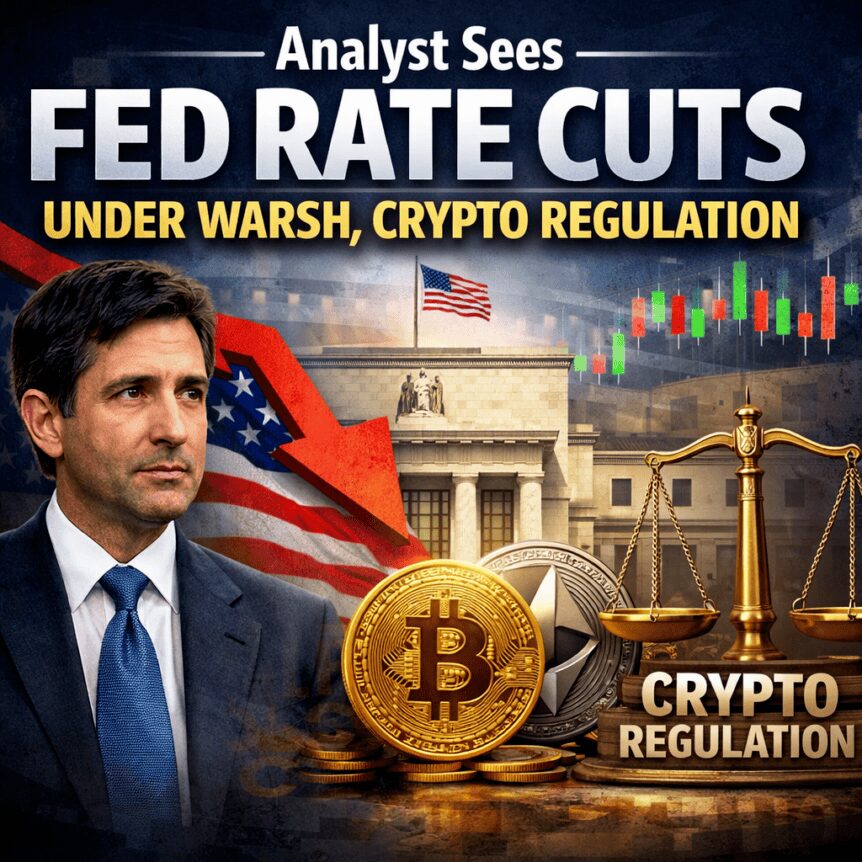
Kevin Warsh’s inauguration as chair of the U.S. Federal Reserve places monetary policy at the forefront of institutional scrutiny, with crypto markets and traditional finance alike watching for a potential shift in the policy stance. While a segment of market commentary has anticipated continued tightening, a notable faction—advocates of looser policy—argues for rate reductions in 2026. The new chair inherits a delicate mandate: manage inflation, preserve central-bank independence, and navigate a fiscal posture that could influence liquidity, risk appetite, and regulatory expectations across the crypto and broader financial ecosystems.
According to Cointelegraph, Warsh’s appointment arrives at a juncture where policy direction remains unsettled and market participants seek clarity on the Fed’s preferred balance between inflation control and growth support. The debate carries practical significance for crypto firms, exchanges, and banks as policy signals interact with licensing, AML/KYC obligations, and cross-border operations.
Source: Lawrence Lepard
During Warsh’s swearing-in ceremony, U.S. President Donald Trump framed the debt challenge as one that could be addressed through “growth,” a stance that market observers interpret as signaling an expansionary tilt in monetary conditions. The commentary underscores how political signals may influence expectations for the tempo of liquidity provision and the regulatory environment that crypto firms must navigate.
Investors, traders, and analysts continue to weigh Warsh’s potential impact on interest-rate policy and whether a shift toward easing would bend risk appetite higher for crypto assets. While some voices anticipate rate cuts, others warn that inflation dynamics and policy discipline could keep the Fed on a cautious path. In the near term, the crypto complex—Bitcoin, altcoins, and related equities—faces a period of heightened uncertainty as the policy framework and enforcement priorities adapt to the new leadership.
Related market commentary has highlighted the broader policy context. For instance, the CME Group’s FedWatch tool indicates that roughly two-thirds of traders expect a 25 basis-point or larger move by December 2026, underscoring persistent dispersion in the pricing of future policy moves. Against this backdrop, observers stress that any policy shift will interact with ongoing regulatory developments and cross-border considerations that affect crypto firms’ operating models and capital requirements.
Key takeaways
- The Warsh era introduces renewed questions about Federal Reserve independence and the policy path, with implications for the pace of rate adjustments and the signaling environment facing crypto markets.
- Market pricing remains uncertain: about 68% of traders, per the CME FedWatch tool, anticipate a rate increase of 25 basis points or more by December 2026, highlighting a broad range of possible trajectories.
- Crypto markets are sensitive to shifts in U.S. monetary policy, with potential impacts on liquidity, risk appetite, and cross-border licensing and compliance considerations for exchanges and stablecoins.
- Lawmakers have raised concerns about independence and potential conflicts of interest that could influence regulatory outcomes affecting crypto firms and related industries.
- The policy environment extends beyond the United States, with regulatory developments such as MiCA and ongoing oversight by the SEC, CFTC, and DOJ shaping compliance strategies and licensing requirements for crypto participants worldwide.
Fed leadership and policy trajectory under Warsh
The confirmation of Warsh underscores a critical moment for the Federal Reserve’s governance framework amid a climate of inflation uncertainty and fiscal signals. Questions regarding the degree of independence the Fed can retain amid political and administrative pressure have resurfaced in congressional discussions. In April, lawmakers scrutinized Warsh’s commitment to preserving the central bank’s autonomy, raising concerns about the potential for policy choices influenced by the Executive Branch to affect monetary conditions and, by extension, the financial system and digital-asset sector.
Senator Elizabeth Warren explicitly highlighted the risk of conflicts of interest, noting that policy decisions could inadvertently align with the interests of political actors or linked financial interests. The discourse reflects a broader historical debate about the Fed’s independence in the face of fiscal policy objectives and market expectations, a dynamic with direct implications for crypto firms that rely on stable liquidity conditions and predictable enforcement approaches.
For market participants, the independence question translates into practical considerations about how quickly the Fed will respond to evolving inflation readings, labor market data, and financial stability concerns. A central question is whether policy normalization—if pursued—will occur at a pace that preserves market functioning and minimizes abrupt shifts in risk premia across crypto markets and related financial instruments.
Market expectations and rate path uncertainty
With Warsh at the helm, the policy outlook is characterized by competing narratives. A segment of market observers argues that the chair will embrace a gradual tightening or at least a longer persistence of higher rates to anchor inflation, while others anticipate a shift toward easing if inflation proves more transitory or if productivity gains from technology investment mitigate price pressures.
The current pricing signals, as reflected by the CME Group’s FedWatch tool, show a substantial portion of traders pricing in a 25 basis-point or larger move by December 2026. This dynamic underscores the challenge of achieving a stable consensus on the trajectory of interest rates and the accompanying risk-on or risk-off environment for crypto assets. The potential for a policy shift—whether toward normalization, stabilization, or easing—has meaningful implications for funding markets, exchange deposits, and the ability of crypto businesses to manage liquidity and capital adequacy in a regulated environment.
In parallel, public commentary from political leadership has added another layer of ambiguity. President Trump’s framing of debt reduction through growth—interpreted by some market participants as an endorsement of looser monetary conditions—adds to the complexity of forecasting policy moves. For crypto participants, the interplay between fiscal signals and monetary policy will influence impacts on stablecoin liquidity, bank access, and regulatory scrutiny, particularly as financial institutions reassess risk management and onboarding processes for digital-asset activities in light of evolving enforcement priorities.
Analysts warn that the combination of policy uncertainty and regulatory realignment could lead to a period of softness in asset prices across crypto and technology equities, at least until policy direction is clarified and enforcement priorities become more predictable. The prospect of a multi-quarter window of adjustment accentuates the importance of robust risk-management frameworks, including AML/KYC compliance, licensing obligations, and cross-border operational controls for crypto firms seeking to navigate an increasingly interconnected financial landscape.
Crypto policy implications within a regulatory framework
The policy shifts associated with a new Fed chair occur within a broader regulatory ecosystem that governs crypto markets. While the U.S. regime continues to evolve, international frameworks—such as the European Union’s MiCA—illustrate a growing trend toward formalized licensing, consumer protection, and market integrity standards for digital assets. For crypto firms operating globally or seeking cross-border service models, alignment with these standards is essential to maintain banking relationships, access liquidity, and meet ongoing AML/KYC obligations.
From a compliance perspective, the Fed’s policy stance interacts with the regulatory posture of the SEC, CFTC, and DOJ, particularly in areas such as classification of crypto assets, securities-law considerations, and enforcement priorities. A policy environment that leans toward stricter oversight or more explicit clarity on asset classification could drive a realignment of product offerings, custody arrangements, and stablecoin arrangements, influencing licensing decisions and capital requirements for exchanges and custodians.
In practice, the development matters for regulators and market participants for several reasons. First, policy clarity helps crypto firms plan liquidity strategies, funding lines, and collateral management in a way that aligns with prudential standards. Second, it informs risk-based supervision and the allocation of supervisory resources to areas such as AML/KYC controls, transaction monitoring, and cross-border transfers. Third, it frames a broader policy narrative about the financial system’s resilience and the role of digital assets within it, a narrative that regulators may reference when considering upcoming policy proposals or enforcement actions.
Looking ahead, the regulatory trajectory will hinge on how the Fed balance inflation dynamics with economic growth signals, how it coordinates with fiscal policy, and how U.S. authorities align with international standards. For crypto market participants, monitoring statements from the Fed, the administration, and relevant regulators will be essential for anticipating licensing shifts, enforcement emphasis, and cross-border operational strategies tied to MiCA compatibility, U.S. licensing regimes, and the evolving AML/KYC compliances.
Closing perspective: The policy environment remains dynamic, with the Fed’s leadership under Warsh likely to influence liquidity conditions and risk appetites for years to come. Crypto firms, exchanges, banks, and institutional investors should watch for emerging signals on independence, rate path, and enforcement priorities, as these factors will shape compliance requirements, licensing strategies, and cross-border operations in a rapidly evolving market structure.
This article was originally published as Analyst Sees Fed Rate Cuts Under Warsh, Crypto Regulation on Crypto Breaking News – your trusted source for crypto news, Bitcoin news, and blockchain updates.


추천 콘텐츠

The History and Future of Physical Bitcoin

OpenAI Shows ChatGPT Completing Paperwork Using Voice and Image Uploads

EUR/GBP Exchange Rate Surges as Bank of England Rate Hike Expectations Intensify – Market Analysis


인기 뉴스
더보기
