

Key takeawaysPublished data shows privacy coins trading 213% above their level at Bitcoin's October 6, 2025 peak, making privacy the only one of ten tracked crypto sectors above that mark while BitcoiKey takeawaysPublished data shows privacy coins trading 213% above their level at Bitcoin's October 6, 2025 peak, making privacy the only one of ten tracked crypto sectors above that mark while Bitcoi
Privacy Coins Are the Only Crypto Sector Above Bitcoin's 2025 Peak, Up 213% as Zcash Climbs to Seventh Largest

Key takeaways
Published data shows privacy coins trading 213% above their level at Bitcoin's October 6, 2025 peak, making privacy the only one of ten tracked crypto sectors above that mark while Bitcoin sits 36% below its own high and the median top-200 asset is down 58%. The privacy sector's market capitalisation has grown from $7.1 billion to $33.6 billion over twelve months, an increase of roughly $26.5 billion that puts the category near Tron's total valuation, with close to half of that growth arriving in the past 30 days. Zcash has driven the majority of it, rising 2,496% over the year and climbing from 82nd to 7th by market capitalization while accounting for around 62% of the sector's total value. Among the 25 largest cryptocurrencies, only Zcash, Hyperliquid's HYPE, Monero and WhiteBIT Coin trade above their October 6 prices, and two of those four are privacy assets. Excluding Zcash entirely, the cap-weighted privacy basket is still up 85% over one year and 56% since the Bitcoin peak, with all eight privacy assets holding at least a year of trading history in positive territory.
Overview
Three hundred and thirty-five days after Bitcoin topped out at $126,199 on October 6, 2025, most of the crypto market is still working its way back. Bitcoin trades roughly 36% below that high, the median asset among the top 200 sits 58% lower, and every narrative that defined the previous cycle has given ground, with gaming down 74%, decentralised physical infrastructure down 67% and Layer 2 tokens down 63%. Privacy is the exception, and by a considerable margin. Glassnode data puts the sector 213% above its level at the Bitcoin peak, the only one of ten tracked categories in positive territory against that benchmark, and the firm's own framing described the sector as up 213% and not only because of Zcash. The market capitalisation of privacy assets within the top 200 has grown from $7.1 billion to $33.6 billion in twelve months.
1. The Top 25 and the Four Assets Above the Peak
Bitcoin topped at $126,199 on Binance on October 6, 2025, and Glassnode scores every asset and sector against where it traded on that date, which as of the September 6 data cut is 335 days of history.
Among the 25 largest cryptocurrencies by market capitalization, only four trade above where they stood that day. Zcash leads the group after its rise into the top ten. Hyperliquid's HYPE token is the second, carried by a perpetual futures venue that has grown into one of the largest derivatives markets in crypto, with open interest recently around $11 billion including roughly $3.6 billion tied to real-world assets. Monero is the third, having broken out of a multi-year trading range earlier in 2026 when it moved above $600. WhiteBIT Coin, the exchange token of the European trading platform, completes the list.
The composition of that group is as informative as its size. Two of the four are dedicated privacy protocols, one is the token of a derivatives exchange generating real trading fees, and one is an exchange token. None of the four belongs to the sectors that defined the previous cycle's narrative cycle, which means no Layer 1 competitor, no Layer 2 scaling token, no artificial intelligence protocol, no gaming asset and no decentralised physical infrastructure network has recovered its position at the top of the market. Capital that has held its value over this period sits either in assets with a specific monetary thesis or in assets attached to a business that collects fees.
The breadth data underneath reinforces how narrow the recovery has been. Only 25 of the top 200 assets are positive on the year, with the median asset down 55% over twelve months and down 58% when measured from the October peak specifically. Set against that, all eight privacy assets holding at least a year of trading history are positive over the same window, compared with roughly one in eight across the top 200 as a whole. A category in which every constituent with sufficient history is up, inside a market where seven in eight assets are down, is a statistical outlier in itself.
2. Sector by Sector
Glassnode divides the market into ten sectors and scores each against its price on the day Bitcoin peaked. Privacy is the only category in positive territory, at 213%, and the distribution of the other nine describes which parts of the last cycle have held value and which have not.
Decentralised finance has held up best among the losers at roughly 27% below its October level, which is notable given that DeFi protocols generate measurable fee revenue rather than trading purely on forward expectations. Exchange tokens follow at about 36% down and Layer 1 networks at around 40%, with artificial intelligence tokens close behind near 42%. Real-world asset protocols sit roughly 57% lower despite tokenization being among the most heavily promoted institutional themes of the year. The steepest damage is concentrated in the sectors that ran hardest on narrative during the previous cycle, with memecoins down about 62%, Layer 2 networks around 63%, decentralised physical infrastructure near 67%, and gaming worst of all at 74% below its October level.
Reading down that list, the pattern separating the top from the bottom has less to do with technology than with whether an asset represents a claim on something. The categories that held up carry either revenue or a monetary argument, while the categories that fell furthest were valued primarily on adoption that had not yet arrived. In absolute terms, the privacy sector's expansion adds roughly $26.5 billion of market value over the year, taking the category from $7.1 billion to $33.6 billion and placing it near the total capitalisation of Tron. Close to half of that growth arrived within the past 30 days, which describes a rotation that accelerated sharply toward the end of the period.
3. Zcash Carries the Number
Zcash is responsible for most of the headline figure. The asset has risen 2,496% over the past year and climbed from 82nd to 7th by market capitalisation, and it now accounts for roughly 62% of the privacy sector's total value.
When one asset represents nearly two-thirds of a category's capitalisation, a cap-weighted sector return is substantially a report on that asset rather than on the category, so the 213% figure and Zcash's own performance are not independent observations. The recent leg has drawn support from institutional access. Grayscale's Zcash ETF began trading on NYSE Arca on August 25 as the first US-listed exchange-traded product offering spot exposure to a privacy asset, and it had attracted roughly $34.4 million in net inflows by September 4 as ZEC pushed above $1,000. Those inflows are the meaningful number from that launch, since the fund opened holding about $304 million that had already been sitting in a private trust since 2017 rather than representing new capital. Network fundamentals moved alongside the price, with Zcash hashrate rising from around 25 GSol/s in late August to above 30 GSol/s.
4. The Case That This Is a Sector Rather Than One Asset
Removing Zcash entirely, the cap-weighted privacy basket is up 85% over one year and 56% since the October peak, which leaves the category comfortably ahead of every other sector even without its largest constituent. Monero has doubled over the same twelve months, and Monero, Dash and Horizen have each outperformed Bitcoin over the trailing 90 days. The strength was also visible earlier in the year and across different names. Dash gained 71% during an earlier 2026 stretch alongside advances in Monero, Decred and Horizen, and Monero broke out of a multi-year trading range when it moved above $600. When Bitcoin cleared $81,000 in late August, privacy assets led again, with Zcash and Dash among the strongest performers. A pattern that repeats across separate assets, separate codebases and separate periods is harder to explain as a single squeeze.
5. What the Past 30 Days Complicate
All ten sectors Glassnode tracks posted gains over the past 30 days, and 91.5% of the top 200 assets rose during that window, the broadest monthly advance in the dataset. Privacy led that rally at 90%, but it led a rising market rather than climbing against a falling one. The decoupling is visible on the twelve-month view and on the measurement from the October peak, and it is not what the last month looks like. This matters for how the rotation should be understood. A sector that outperforms while everything else falls suggests defensive positioning and capital seeking a specific property. A sector that leads while everything rises suggests high beta to a broad recovery, which is a different mechanism producing a similar chart. The twelve-month record supports the first reading and the past month supports the second, and both are in the same dataset.
6. The Risks the Performance Data Does Not Capture
Two exposures sit underneath these returns and neither shows up in a sector performance chart. The first is leverage; Zcash futures open interest has reached roughly $2.3 billion, which makes the asset carrying 62% of the sector increasingly sensitive to positioning rather than to spot demand. A leveraged rally amplifies moves in both directions, and an unwind in the largest constituent would reprice the sector figure regardless of what the smaller assets do.
The second is regulatory. Privacy assets have continued to gain while facing anti-money-laundering scrutiny and exchange delisting pressure across several jurisdictions, and that scrutiny has not eased as prices have risen. The property that generates the demand thesis is the same property that generates the regulatory exposure, so the two scale together.
Privacy is the only sector that has recovered its position from the market top, the strength extends across every asset in the category with a year of history rather than resting on Zcash alone, and roughly $26.5 billion of market value has moved into the sector over twelve months. Whether that reflects a durable reassessment of financial confidentiality or an unusually strong rotation into a small, leveraged category is the question the next drawdown will answer, because a sector that has only been tested during a recovery has not yet been tested.
Frequently Asked Questions
Which crypto assets are trading above their October 2025 peak?
Among the 25 largest cryptocurrencies, only four sit above their October 6, 2025 levels: Zcash, Hyperliquid's HYPE, Monero and WhiteBIT Coin. Two of those four are privacy protocols. Across the wider market, only 25 of the top 200 assets are positive on the year, with the median asset down 55%.
Why is privacy called the trade of the year?
Published Glassnode data shows privacy as the only one of ten tracked sectors trading above its level at Bitcoin's October 2025 peak, up 213%. Every other sector remains below that mark, ranging from decentralised finance at roughly 27% down to gaming at 74% down, while Bitcoin itself trades 36% below its high.
Is the privacy rally only about Zcash?
Zcash accounts for roughly 62% of the sector's market capitalisation and has risen 2,496% over the year, so it drives most of the headline figure. But excluding Zcash entirely, the cap-weighted privacy basket is still up 85% over twelve months and 56% since the October peak. Monero has doubled, and Monero, Dash and Horizen have each outperformed Bitcoin over the past 90 days.
How large is the privacy sector now?
The category has grown from $7.1 billion to $33.6 billion over the past year, adding roughly $26.5 billion in market value and reaching a scale comparable to Tron's total capitalisation. Close to half of that growth occurred within the past 30 days.
What are the main risks to the privacy trade?
Leverage and regulation. Zcash futures open interest has reached roughly $2.3 billion, which makes the asset representing 62% of the sector sensitive to positioning rather than spot demand alone. Privacy assets also continue to face anti-money-laundering scrutiny and delisting pressure across several jurisdictions, and that exposure scales with the same property that drives the demand thesis.
How has Grayscale's Zcash ETF affected the rally?
The fund began trading on NYSE Arca on August 25 as the first US-listed spot product for a privacy asset, and it had drawn roughly $34.4 million in net inflows by September 4 as ZEC moved above $1,000.
Disclaimer: This article is for informational purposes only and does not constitute financial, investment, or trading advice. Digital assets are volatile and you may lose capital. Conduct your own research before making any decision.
市場の機会
Notcoin価格(NOT)
--
----
USD
Notcoin (NOT) ライブ価格チャート
このページで共有されている記事は公開プラットフォームから収集したものであり、参考情報としてのみ提供されています。MEXCの立場や見解を代表するものではありません。すべての権利は Emmanuel Olamiye に帰属します。第三者の権利を侵害するコンテンツがあると思われる場合は、service@support.mexc.com までご連絡いただければ速やかに削除いたします。MEXCはいかなるコンテンツの正確性、完全性、適時性も保証せず、提供された情報に基づいて取られたいかなる行動についても責任を負いません。本コンテンツは、金融、法律、またはその他の専門的なアドバイスを構成するものではなく、MEXCによる推奨または支持として解釈されるべきものでもありません。専門家の洞察と詳細な分析については、MEXC 学ぶ をご覧ください。
Notcoin の最新情報
もっと見る
SKハイニックス米国上場ガイド:SKHY上場日、ADRの仕組み、AIメモリへのエクスポージャー、MEXCでのアクセス
SKハイニックス(SK Hynix)は米国市場デビューに向けて前進しており、世界の投資家に対し、AIメモリサプライチェーンで最も重要な企業の1つにアクセスする新たな手段を提供しようとしています。この韓国の半導体メーカーは、SKHYのティッカーシンボル(予想)で、ナスダックでの米国預託証券(ADR)を通じた大規模な米国株式売出を開始しました。
ロイター通信によると、SKハイニックスはこのADR発行を通じて約43兆ウォン(約280億7000万ドル)の資金調達を目指しています。同社は1779万株の新株を発行する計画で、10ADRが普通株式1株に相当します。最終的な価格決定は7月9日に予定されており、ナスダックでの取引デビューは7月10日と予想されています。
この上場が重要な理由は、SKハイニックスが単に米国市場へのアクセスを求める一般的な外国企業ではないからです。同社は、AIアクセラレーターや最新のデータセンターインフラの動力源となる重要なコンポーネント、広帯域メモリ(HBM)の世界的なトップサプライヤーの1つです。米国上場の目的は、SKハイニックスの投資家層を拡大し、米国機関投資家の取引アクセスを改善し、市場がこのAIメモリのリーダーに対して高い流動性プレミアムを付与するかどうかを試すことにあります。
同時に、投資家はこの上場をリスクのないAIアクセスイベントとして扱うべきではありません。今回のオファリングは新株発行を伴うものであり、AI主導のメモリ株の大幅な上昇の後に行われ、さらに市場が設備投資(Capex)、生産能力の拡大、そして将来のメモリサイクルの反転リスクに極めて敏感になっている時期と重なっています。
2026/07/08
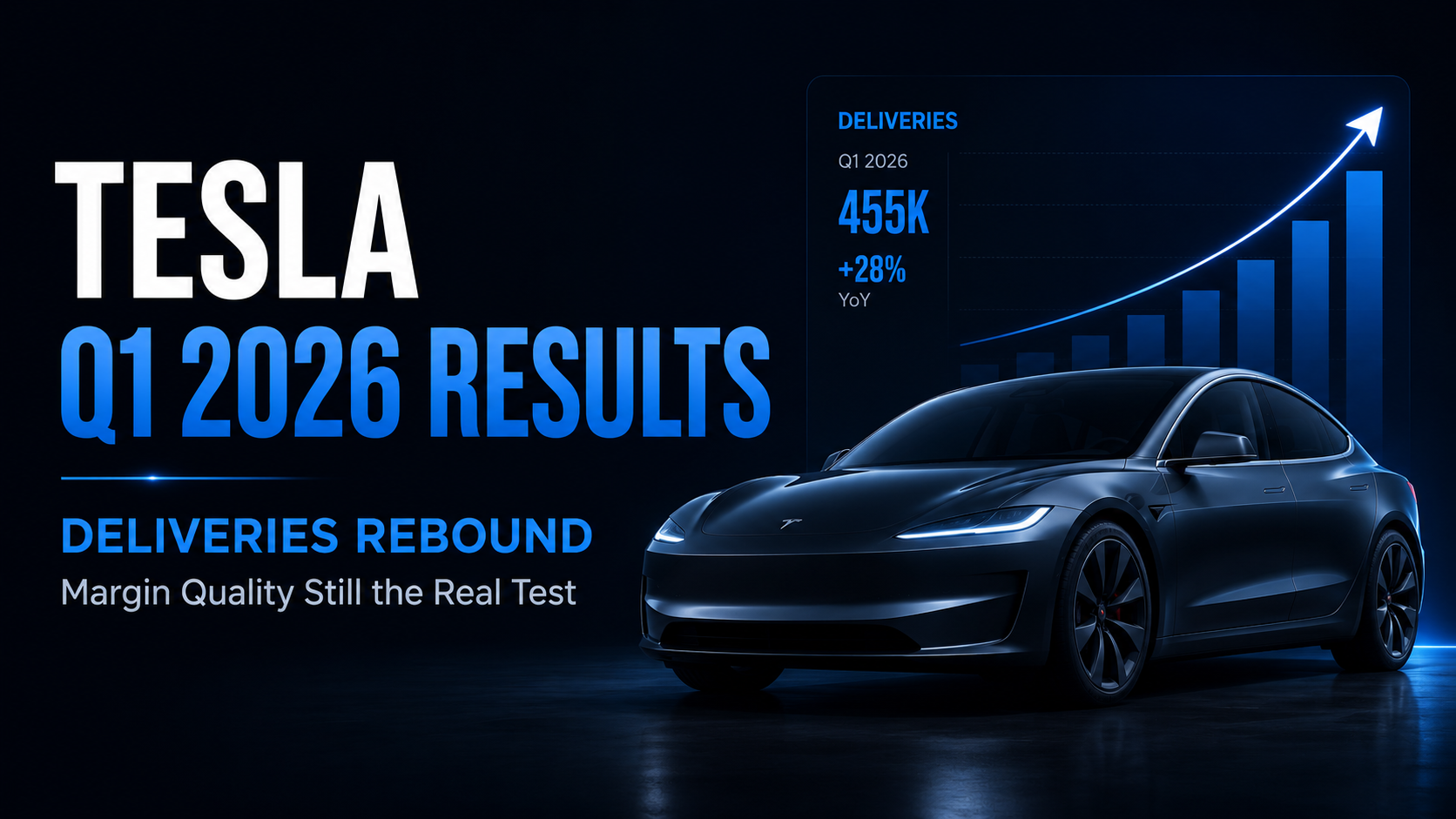
テスラ2026年第1四半期決算レビュー:納車台数は回復したが、真の課題は利益率の質
テスラは、2026年4月22日の米国市場閉場後に2026年第1四半期(Q1)の財務結果を発表しました。同四半期の納車台数は358,023台、総売上高は224億ドル、普通株主に帰属するGAAPベースの純利益は4億7,700万ドルを記録しました。全体のGAAP粗利益率は21.1%に改善し、営業利益率は4.2%に達しました。
ヘッドラインのシグナルは、テスラの納車台数が前年同期の弱い水準から単に回復したことだけではありません。より重要な疑問は、納車台数の増加、FSD関連の収益、車両コストの低下、および自動車部門の粗利益率の改善が、テスラの収益力に対する信頼を再構築できるかどうかです。次回のTSLA決算日を注目している投資家にとって、Q1はQ2に向けた重要なテストの場を提供しています。すなわち、販売台数の成長が持続可能でより質の高い収益に転換できるかという点です。
2026/07/09
Apple 2026年度第2四半期決算レビュー:iPhoneの収益とサービスの成長がEPSのストーリーを維持
Appleは2026年4月30日、2026年3月28日に終了した四半期を対象とする2026年度第2四半期決算を発表しました。売上高は前年同期比17%増の1,112億ドルに達し、希薄化後1株当たり利益(EPS)は22%増の2.01ドルとなりました。Appleによると、当四半期は会社全体の総売上高、iPhone売上高、およびEPSにおいて3月期としての過去最高記録を樹立し、サービス部門の売上高も過去最高を更新しました。
この結果は、単なるハードウェアサイクルの決算報告に留まりません。Appleの第2四半期実績は、iPhone需要、サービス部門の成長、そして株主還元プログラムが三位一体となり、同社の力強いEPS成長ストーリーを強固に支え続けていることを実証しました。Appleの決算発表、AAPLの業績、あるいは次の決算発表時期を追う投資家にとって、第2四半期後の最大の焦点は、市場がより強力なAIの進展や製品サイクルの起爆剤を待つ間、Appleがそのプレミアムなバリュエーションを維持し防衛できるかどうかにあります。
2026/07/09


ホット
現在、市場で大きな注目を集めているトレンドの暗号資産
暗号資産価格
取引高が最も多い暗号資産