

European Gas Futures Tumble 5% on Trump’s Iran Peace Deal Announcement
Key Highlights
- Dutch TTF natural gas futures plummeted more than 5% on Friday, reaching their lowest point in two weeks.
- President Trump announced that a peace agreement between the U.S. and Iran might be finalized this weekend.
- Planned U.S. military operations against Iran were cancelled by Trump, reducing conflict escalation concerns.
- Approximately 20% of the world’s LNG supply passes through the Strait of Hormuz, making it a critical supply route.
- Iranian officials have yet to confirm a finalized agreement, leaving markets in a state of cautious optimism.
Natural gas prices across Europe experienced a significant decline on Friday following remarks from President Donald Trump suggesting a potential diplomatic resolution with Iran. The Dutch TTF natural gas benchmark contract, Europe’s primary pricing reference, tumbled more than 5% to approximately €47 per megawatt-hour, marking its lowest trading level in a fortnight.
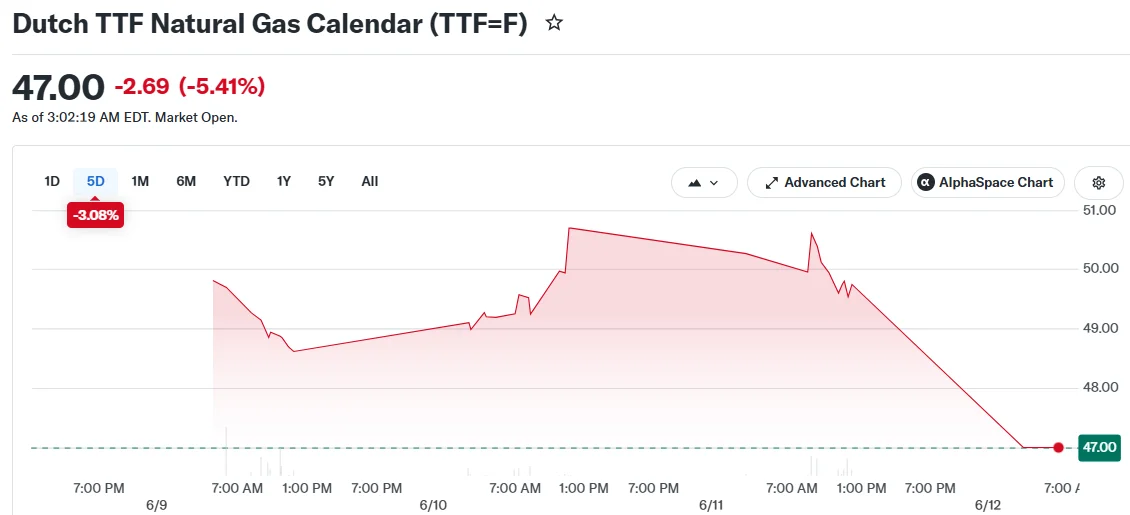 Dutch TTF Natural Gas Calendar (TTF=F)
According to Trump’s statements, a comprehensive peace agreement could potentially be executed in Europe within days. The President also revealed that he had called off scheduled U.S. military actions targeting Iran. These developments triggered a rapid selloff in energy commodities as market participants scaled back expectations of imminent supply chain disruptions.
The Strategic Importance of the Strait of Hormuz
The Strait of Hormuz has emerged as a focal point for energy market anxiety throughout recent weeks. This critical maritime chokepoint facilitates the transit of roughly 20% of global liquefied natural gas shipments. Any military confrontation or blockade in this strategic waterway could severely constrain supply flows to European nations and international buyers.
Earlier in the week, Trump had issued warnings about potentially seizing Iran’s Kharg Island and asserting control over Iranian energy infrastructure. These aggressive statements had propelled gas prices toward multi-week peaks and maintained elevated anxiety among market participants as summer approached.
European markets face heightened vulnerability given that current underground gas storage inventories are tracking below previous year levels. Any constriction in global LNG availability could have amplified price increases during the critical summer storage replenishment period.
Qatar, a leading LNG producer, relies on Strait of Hormuz transit routes for its export operations. Although Europe sources considerable gas volumes through pipeline infrastructure and Atlantic basin suppliers, it remains a competitor for spot LNG cargoes in the international marketplace.
Traders Remain Wary Despite Price Decline
Notwithstanding the substantial price correction, market participants maintain skepticism about whether a definitive agreement has been reached. Iranian representatives have not yet publicly acknowledged the existence of a completed framework agreement, though some officials indicated that primary terms have been settled.
The United Kingdom’s natural gas futures contract similarly declined approximately 2% on Friday, briefly touching one-month lows during early trading before recovering modestly by settlement.
Crude oil prices also retreated to two-month lows following the same diplomatic developments. Market analysts characterized Trump’s peace deal statements as the most substantive indication to date of genuine diplomatic progress.
The ICE Dutch TTF futures contract, serving as Europe’s benchmark gas pricing instrument, descended below the €47 threshold, briefly reaching €46.19 during intraday trading. This represents a notable retreat from levels exceeding €50 observed earlier in the trading week.
The geopolitical risk premium that had accumulated throughout weeks of escalating U.S.-Iran confrontation was rapidly being eliminated from market valuations. However, absent formal signatures on a binding agreement, traders are anticipated to maintain vigilance.
Any resumption of hostile actions or breakdown in diplomatic negotiations could swiftly reverse Friday’s price decline and propel European gas futures back toward their recent elevated levels.
The post European Gas Futures Tumble 5% on Trump’s Iran Peace Deal Announcement appeared first on Blockonomi.


You May Also Like
Ripple (XRP) Price Prediction 2026–2030: Is $5 Realistic?
‘We Sell Bitcoin If We Have To’: Saylor Rejects Blame For Bitcoin Sell-Off

Final $242K BFX Presale Triggers BlockchainFX Listing Date Countdown


Trending News
More24/7 Live News
More
