

👨🏿🚀TechCabal Daily – Brass gets Stacked
Good morning. 
Nigeria’s healthtech sector has mobilised $271 million across 128 active startups, yet structural friction, including low electronic medical records (EMR) adoption and funding volatility, limits its durable impact. This report maps the required strategic actions for sustainable scale, going beyond deficits to offer a full roadmap for progress.
Read TechCabal Insights’ new State of Healthtech in Nigeria (2026).
Download the report.

Get smarter about Francophone Africa with our newsletter, Francophone Weekly—the startups, tech policies, and institutions building the pipelines for ecosystem growth.
- Spiro raises $215 million
- Brass to be folded into Paystack MFB
- Pick n Pay’s old delivery app breached
- GETESA to expand telecom infrastructure
- World Wide Web 3
- Opportunities
Mobility
Spiro raises $215 million in its third major raise in under a year
 Image Source: Tenor
You know that viral meme of a man trying—and failing—to carry more cash than he can physically hold? Spiro might relate. The Nairobi-based electric mobility (e-mobility) startup is becoming the literal embodiment of that meme—except, in its case, it seems comfortable handling all that haul.
On Monday, the company raised $215 million in equity funding, with backing from Equitane, the investment firm founded by Indian entrepreneur and Spiro founder Gagan Gupta, and Impact Fund Denmark.
If nobody was keeping count, we were; Spiro has now raised $365 million in total debt and equity funding in the last nine months alone, a massive overhaul that now puts the e-bike manufacturer at a near-$1 billion valuation, Gupta told Bloomberg.
Why is the company raising so much money? Spiro is no longer just selling e-bikes; it already controls half of that market in Kenya. It wants to embed itself deeply in the manufacturing process.
Historically, the e-mobility startup has imported partially assembled vehicle frames and components from partners like Horwin and assembled them into motorcycles tailored for African roads. But its acquisition of UK-based Coexlion in May suggests a bigger ambition: moving into ground-up manufacturing, where it can control everything from vehicle design to key components.
That shift would give Spiro more than production capacity. It would create a stronger moat built on proprietary technology, lower manufacturing costs, and tighter control of its supply chain. Combined with its growing battery-swapping network across seven markets, that strategy could make Spiro harder for rivals to replicate and help explain why investors continue to back the company with ever-larger cheques.
With that new ambition, Spiro needs a lot more money than it has probably ever raised. Equitane’s participation also suggests that one of Spiro’s closest insiders believes the company is ready for its next phase of growth. The investment firm is deploying fresh capital to support Spiro’s manufacturing ambitions in Africa.
Zoom out: In January, Equitane backed MAX, a Nigerian e-mobility startup, in a $24 million funding round, showing that the Gupta-founded asset manager is casting a wider net across Africa’s electric mobility sector.
Money20/20 in Amsterdam Event.

Join us for a night of cocktails, conversations, and networking on the sidelines of Money20/20 in Amsterdam. Spaces are limited. RSVP here.
Fintech
Brass, the Nigerian business banking fintech, will be folded into Paystack MFB
 Image Source: Tenor
Brass, the Nigerian business banking fintech that was acquired by a Paystack-led consortium in 2024, has finally been folded into Paystack’s microfinance banking operations.
The company that once pitched itself as a modern banking layer for African businesses will no longer exist as a standalone company, and its customers will be migrated to Paystack Microfinance Bank (Paystack MFB) by July 31.
What was Brass trying to build? Before things went sideways in 2023, Brass tried to be the operating system for SMEs’ money. It offered current accounts, corporate cards, payroll, expense controls, and cash flow analytics, all wrapped in software. That dream collided with reality when withdrawal delays in 2023 exposed how fragile a deposit‑taking fintech can be without its own regulatory cushion.
The Paystack‑led rescue in 2024 bought it time. A transition to “Brass 2.0” had been planned for 2025 after several members of its former technical team were laid off following the departure of the company’s founding executives.
However, the endgame appears to have changed. Rather than rebuilding Brass as an independent company, Paystack preserved customer trust and continuity before moving to integrate the startup’s technology, customers, and know-how into its own microfinance banking operations.
Why does Paystack want Brass in its MFB operations? Folding Brass into its infrastructure gives Paystack a business banking suite for its customers. With Brass in view, the fintech turned microfinance bank could then control the rails for how money comes in (payments), how it sits (deposits), and how it goes out (payroll, vendor payments, credit).
While Brass did not survive the transition, its original thesis—that African businesses want a single, software‑driven command centre for their finances—will live on with Paystack’s logo on the login screen.
Naira Life 2026 is here!

The theme for this year’s Naira Life Conference by Zikoko is “All About Wealth.”
Join 2,000+ in Lagos on August 22 for a day of practical money conversations and workshops designed to move you from simply earning an income to building lasting wealth. Get 15% off early bird tickets.
Cybersecurity
Pick n Pay says its old delivery app was breached
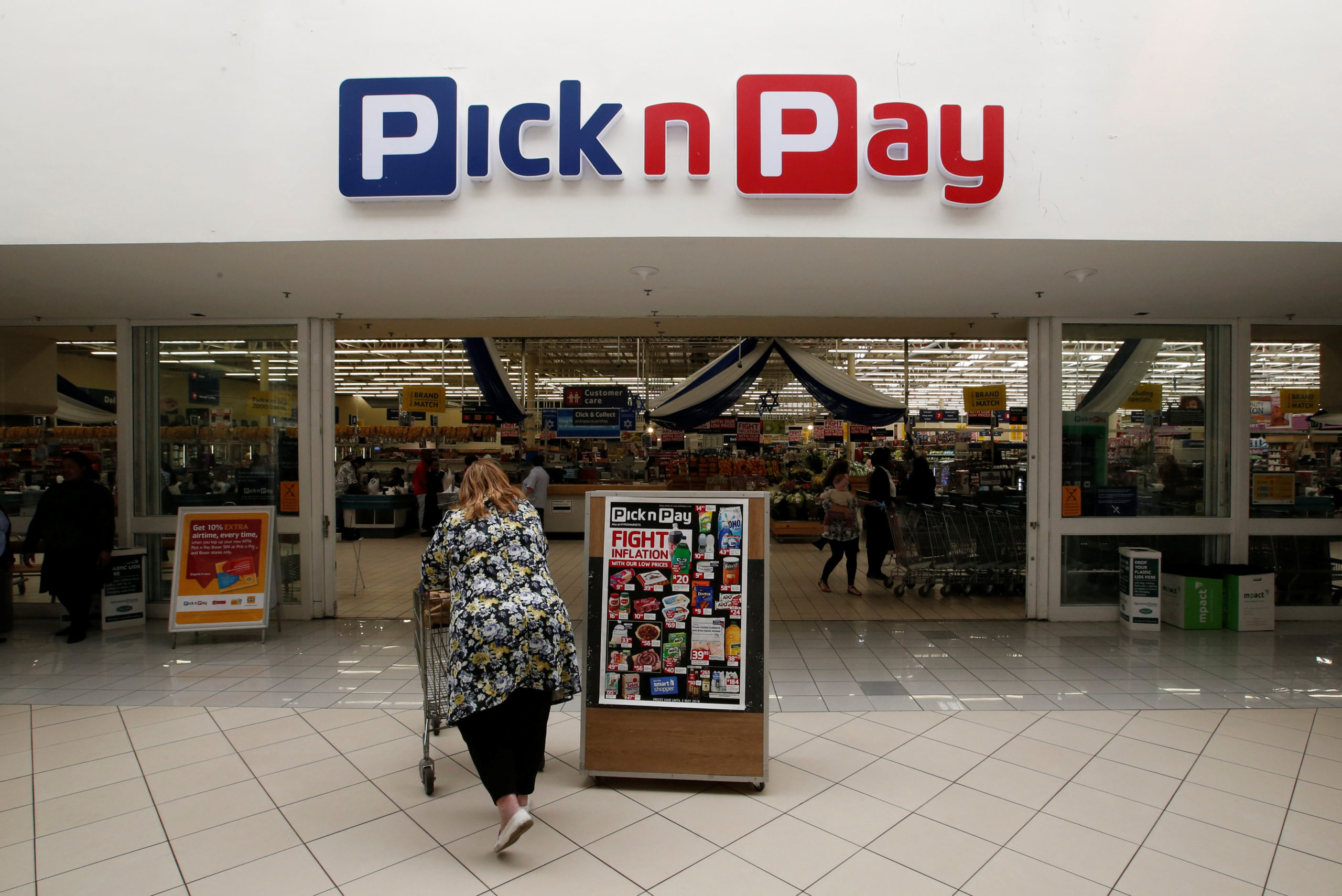 Image Source: Reuters
Pick n Pay, one of South Africa’s biggest retailers, has just learned an awkward lesson about how the Internet’s memory works: old apps never really die if you keep their data plugged in.
The company has disclosed that a cyberattack exposed customer data linked to an older version of its on-demand delivery service, first launched as “Bottles” and later rebranded as Asap!. The platform had long since been replaced, but the customer records apparently never got the memo.
What did hackers access? The compromised data includes names, contact details, delivery addresses, and limited payment card information belonging to customers who signed up on or before 2022. Pick n Pay says full card numbers and card verification value (CVV) codes were not stored on the affected system, reducing the risk of direct card fraud.
Yet, the most interesting detail is not what was stolen. It is where it was sitting.
The breach did not originate from Pick n Pay’s current digital infrastructure. Instead, it came from a retired platform that continued holding customer information years after it disappeared from public view. It points to a problem that extends far beyond one retailer: companies are getting better at launching digital products than shutting them down.
Every new app creates a database. Every database creates risk. And when old systems linger online, they can become soft targets for attackers long after the business has moved on.
Zoom out: South Africa’s tech sector has recently become a target for hackers. Following the high-profile March breach at Standard Bank, the country’s largest bank, which exposed customer names and card details—specifically card numbers and expiry dates—as of the bank’s last update on April 14. Cyber attackers also claimed to have targeted government agencies, including the South African Revenue Service (SARS), the country’s taxman. The agency denied those claims.
While in Pick n Pay’s case, the breach may have exposed data tied to a platform retired years ago, there is no telling how valuable it can become in the hands of data tracers and brokers who’d buy those IDs from them.
Showcase Your Brand at Moonshot by TechCabal

Founders. Investors. Policymakers. Enterprise leaders. Moonshot 2026 brings together the people shaping Africa’s technology ecosystem across AI, commerce, climate, enterprise, and culture. Spotlight your brand today.
Telecoms
GETESA wants to expand its telecom infrastructure, launch mobile money in Equatorial Guinea
 Image Source: Tenor
GETESA, Equatorial Guinea’s state-owned telecom operator, appears to have looked at its network and decided it was time for a factory reset.
The telco has unveiled a 12-month modernisation plan that includes 5G, expanded fibre infrastructure, public Wi-Fi, eSIM technology, and a new mobile money platform called Getesa Money. It also wants to revive a national fibre-optic network that has largely been reserved for the country’s electricity utility.
The ambition is understandable. After the telecom firm conducted an audit, it found ageing equipment, slow Internet speeds, network congestion, and weak technical planning were crippling its service quality to customers. More customers complained, and GETESA seems to be actively heeding their call.
For a country where 60.4% of the population is already online, the upgrade is less about getting people connected and more about improving what happens after they connect. Faster networks could support everything from streaming and cloud services to digital payments and online businesses.
The most interesting addition may be mobile money. GETESA’s mobile money plan is also notable because in Africa, telco-backed operators—spanning players like Orange Money, VodaPay, and Telkom Pay—are becoming a dime a dozen.
Across Africa, telecom operators have discovered that connectivity is only half the business. The other half is moving money. If GETESA can pair better coverage with financial services, it could become more than a telco. It could become a bigger part of how Equatorial Guineans communicate, transact, and access digital services.
The challenge, as always, is execution. Announcing 5G is easy. Building the infrastructure to make it useful is the hard part.
CRYPTO TRACKER
The World Wide Web3
Source:

|
Coin Name |
Current Value |
Day |
Month |
|---|---|---|---|
| Bitcoin | $73,404 |
+ 0.74 |
– 4.94% |
| Ether | $2,006 |
+ 1.59% |
– 13.70% |
| XRP | $1.30 |
+ 2.16% |
– 6.15% |
| Solana | $81.77 |
+ 1.40% |
– 3.63% |
* Data as of 06.38 AM WAT, June 2, 2026.
Opportunities
- The Stellar Development Foundation has launched its first accelerator programme targeting Europe, the Middle East, and Africa, partnering with blockchain venture firm CV Labs to back ten early-stage startups building payments infrastructure, tokenised assets, and decentralised finance applications. The 12-week programme, beginning August 2026, will run primarily remotely but includes an on-site component in Cape Town and concludes with a demo day at Stellar’s Meridian conference in Lisbon in October. Each selected startup can receive up to $150,000 in XLM, Stellar’s native token, in initial funding. Apply by July.
- The Future Investment Initiative Institute (FII), in partnership with MIT Solve, has launched the 2026 FII Innovators Pitch, inviting startups building with AI and frontier technologies to apply. The programme targets solutions across sustainability, healthcare, AI & robotics, and education. Selected startups will pitch live at the 10th Future Investment Initiative in Riyadh, Saudi Arabia, this October (all expenses covered) and join the FII Ventures Programme, gaining access to investors, policymakers, and global partners to support their growth. Apply here.
- Flutterwave promotes 25% of its global workforce in talent retention move
- Ask An Investor: Oui Capital’s Pius Bankong on evaluating founders through an operator’s lens
- Follow the Money: How every recharge fed Nigeria’s $5.8 billion telecom machine
Written by: Emmanuel Nwosu and Zia Yusuf
Edited by: Emmanuel Nwosu and Ganiu Oloruntade
Want more of TechCabal?
Sign up for our insightful newsletters on the business and economy of tech in Africa.
- The Next Wave: futuristic analysis of the business of tech in Africa.
- Francophone Weekly by TechCabal: insider insights and analysis of Francophone’s tech ecosystem
P:S If you’re often missing TC Daily in your inbox, check your Promotions folder and move any edition of TC Daily from “Promotions” to your “Main” or “Primary” folder and TC Daily will always come to you.



You May Also Like

ARDR Price Soars 19.41%: Altcoin Rotation Fuels Momentum

Pundit: Don’t Wait for This Official Announcement Before Buying XRP

Republican senator warns Trump: Kill the slush fund 'or else'


Trending News
More
