The post Japanese Yen faces pressure against US Dollar as BoJ leaves interest rates unchanged at 0.75% appeared on BitcoinEthereumNews.com. The Japanese Yen (JPYThe post Japanese Yen faces pressure against US Dollar as BoJ leaves interest rates unchanged at 0.75% appeared on BitcoinEthereumNews.com. The Japanese Yen (JPY

Japanese Yen faces pressure against US Dollar as BoJ leaves interest rates unchanged at 0.75%

For feedback or concerns regarding this content, please contact us at crypto.news@mexc.com

The Japanese Yen (JPY) faces selling pressure against the US Dollar (USD) after the Bank of Japan (BoJ) decided to leave interest rates unchanged at 0.75%. Still, the USD/JPY pair is 0.14% down to near 159.70 as the US Dollar underperforms its peers.

The BoJ was expected to hold interest rates steady as surging oil prices due to conflicts in the Middle East, involving the United States (US), Israel, and Iran, have raised concerns over Japan’s economic outlook.

This is the second straight meeting when the BoJ has left interest rates steady. Meanwhile, investors await BoJ Governor Kazuo Ueda’s press conference for fresh cues on the monetary policy outlook.

On Tuesday, BoJ’s Ueda expressed confidence that prices and wages will continue to accelerate ahead of the monetary policy announcement on Thursday. “Expect underlying inflation to converge toward our target in the latter half of fiscal 2026 through fiscal 2027,” Ueda said.

During the press time, the US Dollar trades slightly lower after a sharp upside move on Wednesday, following the Federal Reserve’s (Fed) monetary policy outcome. In the policy announcement, the US central bank left interest rates unchanged in the range of 3.50%-3.75%, as expected, and signaled that monetary policy adjustments will be appropriate only if inflation starts showing signs of easing.

Bank of Japan FAQs

The Bank of Japan (BoJ) is the Japanese central bank, which sets monetary policy in the country. Its mandate is to issue banknotes and carry out currency and monetary control to ensure price stability, which means an inflation target of around 2%.

The Bank of Japan embarked in an ultra-loose monetary policy in 2013 in order to stimulate the economy and fuel inflation amid a low-inflationary environment. The bank’s policy is based on Quantitative and Qualitative Easing (QQE), or printing notes to buy assets such as government or corporate bonds to provide liquidity. In 2016, the bank doubled down on its strategy and further loosened policy by first introducing negative interest rates and then directly controlling the yield of its 10-year government bonds. In March 2024, the BoJ lifted interest rates, effectively retreating from the ultra-loose monetary policy stance.

The Bank’s massive stimulus caused the Yen to depreciate against its main currency peers. This process exacerbated in 2022 and 2023 due to an increasing policy divergence between the Bank of Japan and other main central banks, which opted to increase interest rates sharply to fight decades-high levels of inflation. The BoJ’s policy led to a widening differential with other currencies, dragging down the value of the Yen. This trend partly reversed in 2024, when the BoJ decided to abandon its ultra-loose policy stance.

A weaker Yen and the spike in global energy prices led to an increase in Japanese inflation, which exceeded the BoJ’s 2% target. The prospect of rising salaries in the country – a key element fuelling inflation – also contributed to the move.

Source: https://www.fxstreet.com/news/japanese-yen-faces-pressure-against-us-dollar-as-boj-leaves-interest-rates-unchanged-at-075-202603190259

Market Opportunity
Lorenzo Protocol Logo
Lorenzo Protocol Price(BANK)
$0.03531
$0.03531$0.03531
-2.13%
USD
Lorenzo Protocol (BANK) Live Price Chart
Disclaimer: The articles reposted on this site are sourced from public platforms and are provided for informational purposes only. They do not necessarily reflect the views of MEXC. All rights remain with the original authors. If you believe any content infringes on third-party rights, please contact crypto.news@mexc.com for removal. MEXC makes no guarantees regarding the accuracy, completeness, or timeliness of the content and is not responsible for any actions taken based on the information provided. The content does not constitute financial, legal, or other professional advice, nor should it be considered a recommendation or endorsement by MEXC.

You May Also Like

SEC Backs Nasdaq, CBOE, NYSE Push to Simplify Crypto ETF Rules

SEC Backs Nasdaq, CBOE, NYSE Push to Simplify Crypto ETF Rules

The US SEC on Wednesday approved new listing rules for major exchanges, paving the way for a surge of crypto spot exchange-traded funds. On Wednesday, the regulator voted to let Nasdaq, Cboe BZX and NYSE Arca adopt generic listing standards for commodity-based trust shares. The decision clears the final hurdle for asset managers seeking to launch spot ETFs tied to cryptocurrencies beyond Bitcoin and Ether. In July, the SEC outlined how exchanges could bring new products to market under the framework. Asset managers and exchanges must now meet specific criteria, but will no longer need to undergo drawn-out case-by-case reviews. Solana And XRP Funds Seen to Be First In Line Under the new system, the time from filing to launch can shrink to as little as 75 days, compared with up to 240 days or more under the old rules. “This is the crypto ETP framework we’ve been waiting for,” Bloomberg research analyst James Seyffart said on X, predicting a wave of new products in the coming months. The first filings likely to benefit are those tracking Solana and XRP, both of which have sat in limbo for more than a year. SEC Chair Paul Atkins said the approval reflects a commitment to reduce barriers and foster innovation while maintaining investor protections. The move comes under the administration of President Donald Trump, which has signaled strong support for digital assets after years of hesitation during the Biden era. New Standards Replace Lengthy Reviews And Repeated Denials Until now, the commission reviewed each application separately, requiring one filing from the exchange and another from the asset manager. This dual process often dragged on for months and led to repeated denials. Even Bitcoin spot ETFs, finally approved in Jan. 2024, arrived only after years of resistance and a legal battle with Grayscale. According to Bloomberg ETF analyst Eric Balchunas, the streamlined rules could apply to any cryptocurrency with at least six months of futures trading on the Coinbase Derivatives Exchange. That means more than a dozen tokens may now qualify for listing, potentially unleashing a new wave of altcoin ETFs. SEC Clears Grayscale Large Cap Fund Tracking CoinDesk 5 Index The SEC also approved the Grayscale Digital Large Cap Fund, which tracks the CoinDesk 5 Index, including Bitcoin, Ether, XRP, Solana and Cardano. Alongside this, it cleared the launch of options linked to the Cboe Bitcoin US ETF Index and its mini contract, broadening the set of crypto-linked derivatives on regulated US markets. Analysts say the shift shows how far US policy has moved. Where once regulators resisted digital assets, the latest changes show a growing willingness to bring them into the mainstream financial system under established safeguards
Share
CryptoNews2025/09/18 12:40
Visa Crypto Labs Launches Command-Line Tool for Secure AI Payments

Visa Crypto Labs Launches Command-Line Tool for Secure AI Payments

The post Visa Crypto Labs Launches Command-Line Tool for Secure AI Payments appeared on BitcoinEthereumNews.com. Visa Crypto Labs launches “Visa CLI,” a Command
Share
BitcoinEthereumNews2026/03/19 19:06
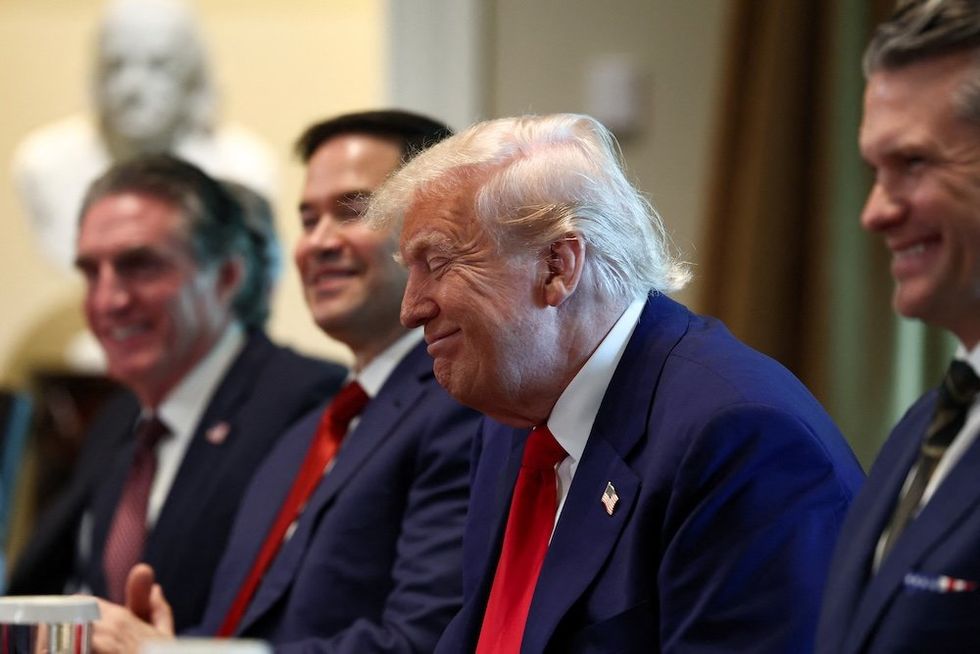
Trump just shattered an economic record — and it's catastrophic

Trump just shattered an economic record — and it's catastrophic

Under President Donald Trump, the United States national debt crossed $39 trillion for the first time as of Tuesday — meaning that it has grown by $1 trillion since
Share
Alternet2026/03/19 18:14