

Tanzania expanding mining exploration to 50 percent of land
- Tanzania expanding mining exploration to cover 50 percent of land
- Tanzania signs mining exploration pact with South Korea
- Gold continues to lead Tanzania export earnings
President Samia Suluhu Hassan has embarked on expanding Tanzania mining exploration to cover 50 percent of the country by 2030 up from the current 16 percent.
The development comes after Tanzania’s mining sector having exceeded agriculture as the leading foreign exchange earner.
The mining sector led by gold exports has taken the top position in terms of annual revenue racked in the government coffers.
According to the Tanzania Minister for Minerals, Anthony Mavunde, as of last year, the mining sector contributes an impressive 4.8 percent of the country’s GDP.
This is a significant increase from 3.5 percent in the previous year. The Minister remains confident that the sector earnings will exceed 10 percent as of this year, 2026.
The Minerals Minister attributed the development to the implementation of the Tanzania Mining Vision 2030 which emphasize expanding Tanzania mining exploration.
He highlighted that according to the 2023/2024 financial year report, the mining sector contributed approximately 9.1 percent of Tanzania’s GDP and is expected to exceed 10 percent in the 2024/2025 financial year report that is due to be released later this year.
“The mining sector is experiencing rapid growth and this due to the government’s efforts as stipulated in the Mining Vision 2030…among other things it prioritizes efficient revenue collection and establishing an improved investment environment,” he told media.
According to the Minister, as of March 2025 the mining sector was responsible for creating more than 19,350 jobs. It follows that more jobs will be created of Tanzania mining exploration is expanded.
“It should be noted that 97 percent of these jobs went to Tanzanians….that is more than 18,850 jobs for Tanzanians and 505 jobs for foreigners,” the Minister detailed.
He was keen to underscore that the government is upholding laws that prioritize the creation of jobs for Tanzanians as per the the national local content policy.
Thanks to the growth of the mining sector, the Minister said, Tanzanian companies sold goods and services worth USD 1.48 billion to various mining endeavors.
“This demonstrates the importance of the private sector in boosting the mining sector, creating jobs and stimulating the economy in general,” he said.
To further develop the sector, Tanzania’s President Samia Suluhu Hassan has entered a pact with South Korea for the set up of a mining technology center that will equip the country with modern advanced equipment.
Also Read: Discovering the $23 Trillion Promise: Inside the DR Congo Mining Discovery Transforming the Green Economy
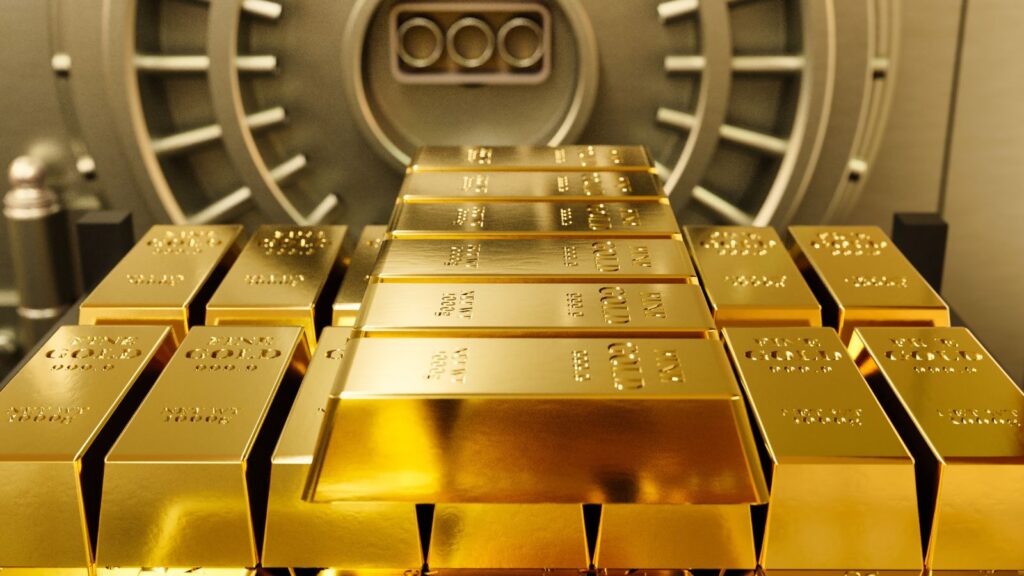 Tanzania mining exploration expands to cover 50 percent of the country as gold exports soar and foreign aid dwindles. Photo/File
Tanzania, Korea enter national mining exploration pact
The Tanzania Minister of Minerals recently met with a delegation of South Korea mining experts led by one Seong-Jun Cho, from the Korea Institute of Geoscience and Mineral Resources (KIGAM).
The Minister, Hon. Mavunde told press at the MoU signing event that the country is now aiming to expand mineral exploration to cover 50 percent of the country by 2030, as per presidential executive orders.
“This move noting is clear evidence of the government’s ongoing commitment to expand the mining sector and partner with the private sector for national development projects,” he asserted.
He further told press that the signed MoU is being implemented under a cooperation agreement between the Geological Survey of Tanzania (GST) and KIGAM.
The Minister said the project is valued at a whopping USD 16.5 million and other than exploration, it will include the establishment of a Mining Technology Center.
The MoU also cover set up of a joint digital mineral resources information dubbed Seesystem.
Other terms in the MoU include capacity building for experts, and establishing an Environmental, Social, and Governance (ESG) system that will be the basis for in-depth mineral exploration efforts.
“This project will provide opportunity for small scale miners to get special technical training that will build thier capacity,” said the Minister.
Tanzania mining exploration: Gold leads annual foreign exchange earnings
Gold is now Tanzania’s largest foreign exchange earner accounting for over 55 percent of total national exports in 2025, the Tanzania Ministry of Mining has reported.
According to the ministry, gold export earnings last year, 2025, were estimated to be between USD 4.4 and 4.7 billion, up nearly 36 percent from 2024.
Gold is performing so we’ll that the country has opted to change its original ‘No Sale’ stance and is now looking to sell part of it’s gold reserve to fund infrastructure projects.
Planning and Investment Minister Kitila Mkumbo made the announcement earlier this week in London following what he said is a directive from President Samia Suluhu Hassan to the central bank.
“The decision is on account of reduced aid and developing funding…we have to look at internal funding options,” the minister said.
According to the Minister, the Bank of Tanzania has been directed by the president to sell part of the country’s gold reserves.
Short of detailing the amount to be sold, when, and the related operational details, the Minister said, Tanzania’s gold reserves stand at over USD 1.3 billion by the end of December 2025.
Notably, the West has considerably reduced funding commitments to African countries. This coupled with the United States closure of the USAID, has gravely affected African budgetary needs, and Tanzania is no exception.
Most recently, the United Kingdom, announced that it’s own aid budget would be gradually cut from 0.5 percent to 0.3 percent of gross national income by 2027.
“Similar adjustments have also been introduced in France, Sweden, the Netherlands and Germany, in varying proportions, according to media reports,” Bloomberg reported this week.
So, it is no surprise that Tanzania is looking to sell some of it’s gold especially at a time when the country is just recovering from criticism from the European Union and others in the wake of the presidential election events of October 2025.
As a result of the election criticism, in November 2025, the European Parliament ruled on a non-binding resolution that caused the suspension of a 156 million euro aid programme to Tanzania.
“The European Commission has, however, said it is continuing dialogue with Tanzanian authorities without announcing a final decision,” Bloomberg reported.
It should be noted that gold has almost always served as a strategic buffer for Tanzania (and other nations) offering much needed protection against external shocks, currency depreciation, and inflation.
“However, unprecedented fiscal pressures have pushed the government toward monetizing this long-term asset to meet short-term financing needs,” details a TICGL report on Tanzania’s decision to sell.
The post Tanzania expanding mining exploration to 50 percent of land appeared first on The Exchange Africa.
You May Also Like

Regulatory Clarity Could Drive 40% of Americans to Adopt DeFi Protocols, Survey Shows

Michael Burry’s Bitcoin Warning: Crypto Crash Could Drag Down Gold and Silver Markets
