Don't Buy GTFS Crypto: Why the Global Trust Fund System Coin Looks Like a Rug Pull
GTFS crypto isn't 100% confirmed to be a scam. But it does show the kind of warning signs that make a coin look far riskier than I’d like.
In crypto, fake-sounding names, weak transparency, and thin proof are where bad stories usually begin. And GTFS crypto has pretty much all of them.
Key highlights:
- GTFS crypto is not confirmed to be a scam, but it shows several serious warning signs
- The project’s team, audit status, liquidity lock, and token distribution are impossible to verify
- A serious-sounding name doesn’t make a crypto project safe or legitimate
- The safest move is to avoid GTFS unless clear proof, transparency, and accountability appear (so far they haven’t)
What GTFS crypto claims to be, and why it feels off
Global Trust Fund System crypto sounds big on purpose. It sounds part bank, part institution, part old-money vault. That's not proof of anything.
A name like that can make a project feel official before you've checked a single fact. That's a problem, because many risky tokens borrow the tone of finance, trust, and global reach without offering the boring stuff that matters, code, documents, ownership, and accountability.
How trust-building language can hide weak facts
Words like "global," "trust," and "fund" do a lot. They suggest stability. They hint at scale. They borrow credibility from industries people already associate with money and rules.
But crypto names don't come with built-in truth. Anyone can put serious-sounding words on a landing page and add gold colors, charts, and a mission statement. That doesn't make the project real.
If someone launched a token called "National Wealth Reserve Chain," would the title alone make you trust it? Of course not. GTFS raises the same issue. The name can do more work than the evidence.
The biggest rug pull warning signs before buying GTFS coin
Crypto rug pulls usually don't start with one giant red flag. They start with a pile of smaller ones that people ignore because the story sounds exciting.
With GTFS, here’s my concern – key trust signals that safer projects usually show are missing, unclear, or hard to verify. That doesn't prove fraud beyond the shadow of a doubt, but it does make buying the token a bad bet.
This quick comparison shows what cautious buyers should be looking for.
| Check | What buyers want to see | Why GTFS feels risky |
| Public team | Real names and verifiable history | Easy-to-check accountability isn't obvious |
| Smart contract audit | A report from a known outside firm | No clear audit is front and center |
| Liquidity lock | Public proof the pool can't be drained fast | Missing proof leaves room for an exit |
| Token distribution | No wallet controls too much supply | Holder concentration needs close review |
When basic proof isn't easy to find, you shouldn't be the one funding the experiment.
An anonymous or hard-to-find team is a major problem
If the founders are hidden, who do you blame when the money disappears?
Anonymous teams aren't always scammers, but they remove one of the few forms of pressure that keep people honest. A public founder has a name, a reputation, maybe a business history, maybe a real face tied to the project. A fake profile has none of that.
That's why shady tokens love mystery. If the creators vanish, investors are stuck yelling at a logo and a dead Telegram group.
- No refunds
- No accountability
- No one to answer for broken promises
Before buying GTFS, ask the simplest question possible: can you verify the people behind it without guessing?
So far, after extensive research, my answer to this question is – no.
No public audit means no real safety check
A smart contract audit is an outside review of the token's code. While not foolproof, it's one of the few basic checks buyers can rely on.
Without an audit from a known firm, such as CertiK or ConsenSys, you're trusting code you probably haven't read and can't test well yourself. That opens the door to bugs, hidden controls, sell limits, or worse.
Some scam tokens even claim they're "audited" when the report doesn't exist, isn't finished, or comes from an unknown source. That's straight-up dishonesty, or at best, embellishment.
GTFS doesn't show a clear, public audit. That's a major hole.
Unlocked liquidity can let insiders walk away with the money
Liquidity is the pool of funds that lets people buy and sell a token.
If the developers control that pool and haven't locked it, they may be able to remove the money and leave everyone with tokens they can't sell for anything meaningful. That's the classic rug pull move.
Locked liquidity isn't perfect protection. Bad actors can still find other ways to hurt buyers. But no visible lock is a serious red flag, because it leaves the front door open.
The same goes for wallet concentration. If one wallet, or a few wallets, hold 20% or more of the supply, one dump can wreck the chart in minutes.
How a rug pull usually works, step by step
Most rug pulls follow the same ugly rhythm. Some details may be different from case to case, but the main script stays familiar.
Once you know the pattern, the warning signs stop looking random. They start lining up.
The hype phase pulls in early buyers
First comes the hype. A token gets pushed through social posts, chat groups, giveaways, memes, or influencer clips. The message is always some version of the same thing: get in early, don't miss the next big run, this is your shot.
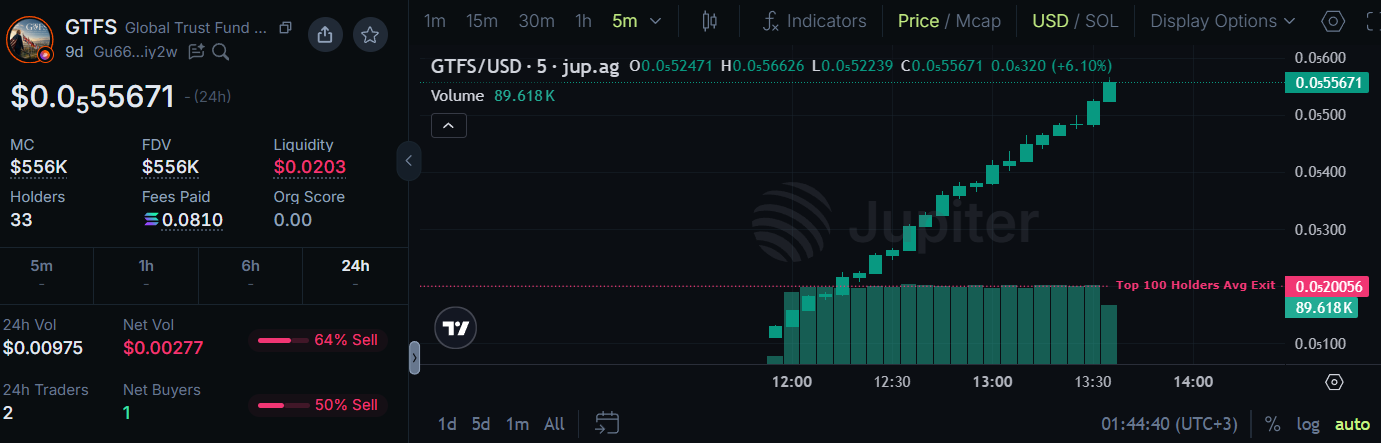
That kind of promotion works because it creates speed, urgency, and FOMO. When people feel rushed, they stop checking the contract, the team, and the wallet distribution. Fear of missing out does the rest.
A weak project can look strong for a few days if enough people pile in at once. Price spikes help the illusion. Buyers assume growth means legitimacy, when sometimes it only means the hype machine is working.
GTFS coin fits that kind of risk profile if the story gets louder than the proof.
The exit happens when insiders drain value
Then the trap closes.
Sometimes insiders remove liquidity. Sometimes they dump a large token supply. Sometimes the contract has rules that block normal selling, which leaves buyers stuck. However it happens, the end result is the same: the people in control get out first, and everyone else eats the loss.
Prices don't drift down in a rug pull. They fall off a cliff. What looked like momentum turns into a chart that can't recover because the value was never built on anything solid.
That's why early warning signs matter so much. By the time the public notices the exit, it's already over.
In a rug pull, the last buyers are exit liquidity.
Safer ways to judge a crypto project before you risk money
You don't need to be a developer to spot obvious trouble. You just need a process, and the discipline to stop when answers don't show up.
Check the team, the code, and the community for real proof
Start with identity. Look for founders with real names, real profiles, and a history you can verify on places like LinkedIn or X. If every account looks brand-new or recycled, take that seriously.
Then check the project's paperwork and code trail. A real token should have a readable whitepaper, a public contract address, clear tokenomics, and signs of active development. If the only material is slogans and countdown timers, that's a bad sign.
The community tells you a lot as well. Healthy projects can handle hard questions. Risky ones delete them, dodge them, or answer with more hype.
A quick pre-buy check should include:
- Public team members you can verify outside the project's own website.
- A visible smart contract audit from a known third party.
- Wallet distribution that doesn't give too much power to a few holders.
- Basic scam checks through tools like Token Sniffer, RugDoc, or Honeypot.is.
None of that takes all the risk away. It does cut through a lot of nonsense.
Use small test amounts, or skip it entirely
Even if a project passes a few checks, don't go in blind.
If you're still curious, use a tiny test amount first. In some cases, buyers even test whether they can sell, because certain crypto scam tokens are built to trap funds after purchase. If that sounds extreme, that's crypto.
Still, the best way to be smart is usually to be boring. If a token feels confusing, secretive, or overly aggressive, you don't need to solve the mystery. You can walk away. And often should.
There will always be another coin. There won't always be another chance to get your money back.
FAQ
Is GTFS crypto a scam?
GTFS crypto is not 100% confirmed to be a scam. However, it shows several warning signs that make it look very risky. These include unclear team details, no obvious public audit, and weak proof around liquidity safety.
Why does GTFS crypto look like a rug pull?
GTFS crypto looks risky because key trust signals are missing and unverified. Safer crypto projects usually show a public team, audited smart contracts, clear tokenomics, and proof that liquidity is locked.
Should I buy GTFS coin?
Based on the available warning signs, I think buying GTFS coin looks too risky. If a project cannot clearly prove who runs it, how the token works, and whether liquidity is protected, I’d prefer staying away.
How can I check if a crypto coin is a rug pull?
Start by checking the team, smart contract audit, liquidity lock, wallet distribution, and sell function. Tools like Token Sniffer, Honeypot.is, and RugDoc can help spot common scam patterns. Still, no tool can remove all risk.
The bottom line: the safest move is to stay out of GTFS crypto
GTFS isn't proven to be a rug pull, but it checks too many boxes that careful buyers should hate. The name sounds official, the proof looks thin, and the missing trust signals leave too much room for a bad ending.
That's enough reason to pass. In crypto, missing proof is proof of risk, and hype doesn't cover that up for long.
Protect your money by treating unclear teams, no audit, and unlocked liquidity as red flags.


You May Also Like
$280M drained via social engineering

Ex-Bush official says Trump is handing Democrats a loaded weapon — and MAGA will regret it