Overview
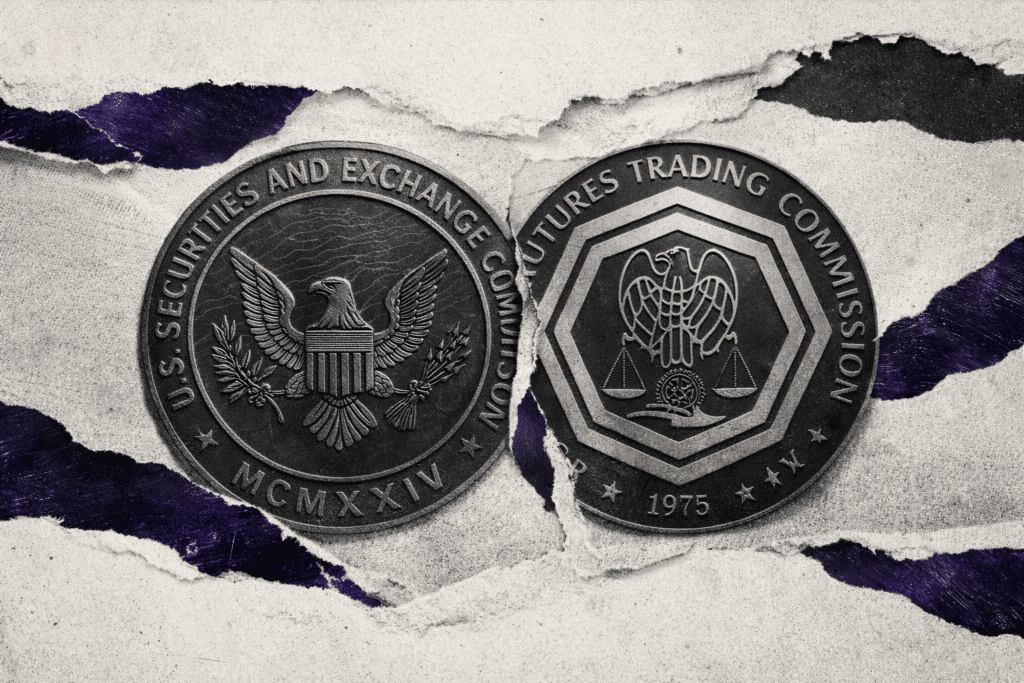
The relationship between America's two financial market regulators on digital assets has shifted from a public turf war to substantive joint action, which is why market participants need to recalibrate their assumptions. On January 29, 2026, the CFTC chairman announced his agency would abandon a separate parallel crypto initiative and partner with the SEC on Project Crypto. On March 11 the two agencies signed a memorandum of understanding. On March 17 they issued a joint interpretation establishing a five-part token taxonomy and confirming that most crypto assets are not themselves securities. The SEC chairman described the resulting coordination as unlike anything previously seen between these two often sparring agencies. For market participants, the question is no longer whether rules will exist. It is how the coming exemptions, custody arrangements, perpetual derivatives, and on-chain trading rules will be designed, because those details determine the operating boundaries for US trading platforms and DeFi projects.
Key Takeaways
The CFTC's announcement confirms the agencies jointly issued an interpretation on March 17, 2026, providing a coherent taxonomy covering digital commodities, digital collectibles, digital tools, stablecoins, and digital securities.
Jenner and Block's analysis notes the interpretation is binding on both the SEC and CFTC, unlike prior staff guidance, and identifies 18 major cryptocurrencies as examples of digital commodities.
The interpretation also addresses how a non-security crypto asset may become subject to, and cease to be subject to, an investment contract, and clarifies the application of securities laws to airdrops, protocol mining, protocol staking, and the wrapping of non-security crypto assets.
Sidley Austin's summary shows the SEC chairman previewed exemptive rulemaking to follow, including a time-limited startup exemption, a larger fundraising exemption, and an investment contract safe harbor.
The memorandum of understanding commits the agencies to regular meetings, data sharing, mutual notification of shared concerns, and staff cross-training, with coordinated responses where products implicate both frameworks.
The CFTC has directed staff to develop guidance on how intermediary registration requirements apply to developers of non-custodial software systems such as digital wallets and DeFi applications, a thread that directly determines DeFi's compliance posture.
How the Coordination Was Built
From Separate Tracks to a Shared Initiative
The starting point was a policy document.
Norton Rose Fulbright's account notes that in July 2025 the President's Working Group on Digital Asset Markets recommended the SEC and CFTC use their existing authorities to provide regulatory clarity for blockchain-based innovation, after which SEC Chairman Atkins launched Project Crypto. The genuine turning point came on January 29, 2026, when CFTC Chairman Selig, in a policy speech coordinated with Atkins, announced that rather than running a separate parallel Crypto Sprint initiative, the CFTC would partner with the SEC on Project Crypto.
The significance of that decision is underrated.
The Block's reporting recalls that under the previous administration the two agencies were seen as locked in a turf war, with one arguing most cryptocurrencies fell under commodity jurisdiction and the other maintaining that most tokens except bitcoin were securities. Merging the initiatives means the industry no longer has to choose between two contradictory interpretations.
The MOU Institutionalized It
The March 11 memorandum turned ad hoc cooperation into standing machinery.
The record shows the agencies will hold regular meetings, share data, notify each other of issues of mutual concern, and cross-train staff. More operationally, Atkins directed SEC staff to begin joint meetings with CFTC staff on product applications and exemptive relief requests, emphasizing that firms should not be shuffled between regulators when products implicate both frameworks. The MOU also commits to facilitating alternative compliance and a path for appropriately tailored super-apps, meaning unified platforms offering securities, derivatives, crypto assets, and banking services.
What the Token Taxonomy Actually Says
Five Categories and a Non-Security Default
The March 17 joint interpretation is the first substantive product of this machinery.
Weaver's analysis notes it establishes a new token taxonomy, confirms that most crypto assets are not themselves securities, and outlines when non-security crypto assets can be sold as part of an investment contract subject to securities regulation. The categories cover digital commodities, digital collectibles, digital tools, stablecoins, and digital securities.
The legal weight of this shift lies in the document's status. Previous guidance largely took the form of staff views that did not bind the commissions themselves, whereas this interpretation binds both agencies and directly identifies 18 major cryptocurrencies as examples of digital commodities. For trading platforms, listing decisions now have an official authority to cite for the first time.
The Boundaries Remain
A sober reading matters here. The interpretation is not a blanket exemption. Analysis notes that a minimum effective dose philosophy does not mean no enforcement, that the SEC will continue enforcing the anti-fraud provisions of the federal securities laws, and that prior violations of registration requirements are not cured by a subsequent separation from the investment contract. Classification clarity reduces characterization uncertainty, not historical compliance exposure.
The interpretation also addresses airdrops, protocol mining, protocol staking, and the wrapping of non-security assets. The airdrop treatment carries explicit conditions: the recipient must receive the asset without bargaining for or providing consideration, and the interpretation does not apply if the recipient gives the issuer money, goods, services, or other consideration. Details of that kind directly shape how projects design token distribution.
The Exemptions and On-Chain Rules Coming Next
Three Exemptions in Development
Classification is only the first step, and the funding environment will be determined by exemption design.
Benesch's summary shows the SEC chairman outlined three exemptions on March 17 that he views as critical to strengthening US crypto markets: a startup exemption providing time-limited registration relief for certain crypto asset investment contracts, a fundraising exemption aimed at new offerings involving crypto assets, and an investment contract safe harbor applying after managerial efforts have ceased and the asset has become more decentralized.
The third deserves the most attention. It ties the release of regulatory obligations to the degree of decentralization, effectively institutionalizing a path for a token to migrate from security characteristics toward commodity characteristics. That is precisely what the industry has lacked for years.
Custody Perpetuals and On-Chain Trading
The harmonization agenda also covers areas that directly shape trading infrastructure. At the January joint harmonization event, the CFTC chairman highlighted, alongside taxonomy, the tokenization of collateral, the introduction of perpetual derivatives, and new and revised exemptions. The agency has also directed staff to develop guidance on how intermediary registration requirements apply to developers of non-custodial software systems such as digital wallets and DeFi applications.
A parallel thread comes from the SEC. The record notes the agency has cleared a path for decentralized crypto asset security trading through a broker registration exception for user interfaces. Technical arrangements of this kind look minor but determine whether front-end operators bear broker obligations, with direct consequences for DeFi protocols' US compliance.
What It Means for Investors and the Industry
Three Practical Channels
The first is listings and products. The taxonomy gives trading platforms an official authority to cite, which should in principle accelerate listing of compliant assets and reduce characterization disputes. The second is fundraising. If the three exemptions land, the legal cost of raising within the United States falls materially, potentially reversing the offshore structuring that has dominated recent years. The third is DeFi. How registration obligations for non-custodial software developers are defined will determine whether protocol front ends, wallets, and aggregators can operate compliantly in the US.
Investors watching how policy developments transmit into crypto assets can track real-time responses through
MEXC market pages.
Watch Points and Risks
Four things deserve monitoring. The formal proposal text and comment periods for the exemptive rules, since previewed timelines and actual progress often diverge. The decentralization standard within the investment contract safe harbor, the hardest element to quantify and the one determining how many projects actually benefit. The final wording of the non-custodial developer guidance, the dividing line for DeFi compliance. And progress on perpetual derivatives and collateral tokenization rules, which decide whether compliant US venues can match offshore product lines.
The risks are equally clear. Execution risk, since the interpretation and subsequent rules depend on sustained coordination, and personnel or political changes could alter the pace. Scope risk, since classification clarity is not blanket permission, anti-fraud enforcement continues, and historical registration violations are not retroactively forgiven. Interpretation risk, since final rules may differ substantively from the current text, leaving business arrangements built on it subject to adjustment. And legislative interaction risk, since administrative harmonization and congressional market structure legislation advance on different schedules, and conflict between them would reintroduce uncertainty.
Exclusive View from the MEXC Crypto Pulse Research Team
What genuinely matters here is not which tokens land in which category but that the methodology of US regulation has fundamentally changed, moving from establishing rules through enforcement toward providing certainty through rulemaking, exemptions, and staff guidance. Two agencies moving from fighting over jurisdiction to building a shared initiative eliminates the risk the industry could least hedge, namely the same asset receiving opposite characterizations under two frameworks. The specifics of the taxonomy will evolve, but once the institutional arrangement of coordination exists, its value keeps compounding.
The market is likely to misread two things. First, equating classification clarity with regulatory loosening. The interpretation explicitly preserves anti-fraud enforcement and states that historical registration violations are not cured by subsequent decentralization, meaning the structure of compliance costs has changed rather than the total falling. Second, equating administrative harmonization with completed legislation. Certainty provided by agencies using existing authority carries less force than statute and is reversible across administrations. Durable long-term certainty still requires congressional confirmation, which is why markets track the market structure bill in parallel.
What investors should watch next is the decentralization standard within the investment contract safe harbor rather than the taxonomy itself. Classification answers what an asset statically is, while the safe harbor answers how an asset migrates from one status to another, and the latter is the variable that determines project funding paths and token design. A strict standard benefits mainly older, already-dispersed projects. A permissive one materially changes the issuance environment for new projects in the United States.
The lesson for crypto and fintech is that harmonization is converting crypto from a legally ambiguous asset class into a clearly stratified system. Not everyone wins in that process. Clear classification means different categories face differentiated compliance costs and market access, and the freedom afforded to assets in the digital commodity category differs entirely from that of assets tied to an investment contract. Understanding which layer your holdings sit in will matter more in practice than reading the overall policy direction.
FAQ
What is Project Crypto?
Project Crypto began as an SEC initiative launched by the chairman to modernize digital asset rules using existing regulatory authority, following recommendations from the President's Working Group on Digital Asset Markets report of July 2025. On January 29, 2026, the CFTC chairman announced his agency would not run a separate parallel crypto initiative and would instead partner with the SEC on Project Crypto, making it a joint effort aimed at coordinated federal oversight of crypto asset markets.
What categories does the token taxonomy contain?
The joint interpretation of March 17, 2026, establishes five categories: digital commodities, digital collectibles, digital tools, stablecoins, and digital securities, analyzing each under the securities definition. It confirms that most crypto assets are not themselves securities and identifies 18 major cryptocurrencies as examples of digital commodities. The interpretation binds both agencies, giving it greater force than prior staff guidance.
Does this mean most tokens escape securities law?
Not quite. The interpretation confirms most crypto assets are not securities in themselves, but also explains how a non-security crypto asset may be sold as part of an investment contract and thereby fall under securities regulation. It further states the SEC will continue enforcing anti-fraud provisions and that prior registration violations are not cured by an asset's subsequent separation from an investment contract. Classification reduces characterization uncertainty, not historical liability.
Which exemptions are being developed?
The SEC chairman outlined three. A time-limited startup exemption providing registration relief for certain crypto asset investment contracts. A fundraising exemption with broader application to new offerings involving crypto assets. And an investment contract safe harbor applying once an issuer has completed or permanently ceased the essential managerial efforts promised under the contract and the asset has become more decentralized. All three remain at the previewed rulemaking stage, with final text and timing still to come.
What does this mean for DeFi projects?
The impact concentrates in two places. The CFTC has directed staff to develop guidance on how intermediary registration requirements apply to developers of non-custodial software systems including digital wallets and DeFi applications. Separately, the SEC has cleared a path for decentralized crypto asset security trading through a broker registration exception for user interfaces. The final wording of both determines the US compliance status of protocol front ends, wallets, and aggregators.
How will perpetuals and custody rules change?
Both sit on the harmonization agenda. At the January joint event the CFTC chairman highlighted collateral tokenization and the introduction of perpetual derivatives alongside taxonomy and revised exemptions as priorities. If rules materialize, compliant US venues may gain a path to offer perpetual products, narrowing the product gap with offshore platforms. Specific rules have not been issued, so progress needs ongoing tracking.
How does harmonization relate to congressional legislation?
They are parallel but unsynchronized paths. Harmonization relies on agencies using existing authority, which moves faster but carries less force than statute and is reversible across administrations. Congressional market structure legislation, if enacted, would provide higher-order and more durable certainty. Ideally they complement each other, but their timelines differ, and conflicting provisions would reintroduce uncertainty, which is why both threads warrant tracking.
Disclaimer
This content is provided for informational and research purposes only and does not constitute investment advice, financial advice, legal advice, tax advice, or any recommendation to trade. Portions of the regulatory interpretations, exemptions, and subsequent rules discussed remain in development or at the preview stage, final text and scope may change materially, and specific compliance determinations should rest on official documents and professional legal advice. Prices of crypto assets, equities, and related financial instruments can be highly volatile, and past performance does not indicate future results. Regulatory documents and third-party analyses referenced here may be delayed, revised, or contain errors, and readers should verify independently. All investment decisions should be based on individual research, financial circumstances, and risk tolerance, with licensed professional advice sought where appropriate. The MEXC Crypto Pulse Team accepts no liability for any direct or indirect losses arising from the use of information contained in this content.
About the Author
The MEXC Crypto Pulse Team focuses on crypto market trends, on-chain narratives, fintech developments, and digital asset ecosystem research. The team tracks public market data, company announcements, third-party market platforms, and industry news sources to help users better understand market structure, risks, and opportunities.
Research References