

Robinhood Chain AI Agents Explained: Agentic Trading, Wallet Permissions and Risks

Robinhood describes Robinhood Chain as an AI-native blockchain, while the company has also launched Agentic Trading through Model Context Protocol, or MCP, integrations.
These developments are related to Robinhood’s broader financial strategy, but they are not the same product.
Robinhood Agentic Trading allows a third-party AI agent to interact with a dedicated brokerage account. Robinhood Chain provides blockchain infrastructure that developers can use to create programmable wallets and autonomous onchain financial applications.
Summary
Robinhood Agentic Trading is a brokerage product connected through Robinhood’s Trading MCP. An agent can view authorized account data and place orders through a dedicated Agentic account.
Robinhood Chain is an Ethereum Layer 2 supporting smart contracts, ERC-4337 account abstraction, session keys and gas sponsorship.
An AI agent operating through Robinhood’s brokerage MCP is not necessarily executing trades on Robinhood Chain.
Users remain responsible for actions performed by agents connected to their accounts.
| Feature | Robinhood Agentic Trading | Robinhood Chain AI Application |
| Environment | Robinhood brokerage | Onchain smart contracts |
| Connection | Trading MCP | Wallet, RPC and contracts |
| Asset custody | Brokerage account | Self-custody or smart wallet |
| Actions | Brokerage orders and account queries | Transfers, swaps, lending and contract calls |
| Control model | Agentic account permissions | Smart-wallet and contract permissions |
| Primary risk | Incorrect or unauthorized orders | Key, permission and contract risk |
What Is Robinhood Agentic Trading?
Robinhood Agentic Trading allows users to connect a compatible third-party AI agent to a dedicated Robinhood Agentic account.
Through Robinhood’s Trading MCP, an authorized agent can access information such as:
- Account value
- Buying power
- Positions
- Balances
- Transactions
- Order history
- Watchlists
The agent can also place supported orders in the dedicated Agentic account.
Robinhood states that users are responsible for trades placed by their agents. Depending on the selected settings, an agent may execute an order without requesting confirmation for every transaction.
What Makes Robinhood Chain “AI-Native”?
Robinhood Chain provides technical features that can support agent-controlled financial applications.
These include:
- EVM smart contracts
- ERC-4337 account abstraction
- Programmable wallets
- Gas sponsorship
- Batched transactions
- Session keys
- Spending controls
- Onchain price feeds
- DeFi integrations
An agent could use these components to execute a limited set of blockchain actions under predefined rules.
Robinhood Agentic Trading vs Onchain Agents
The distinction is essential.
A Robinhood Agentic Trading account is part of a brokerage environment. The agent communicates with Robinhood through an MCP server and places orders through the brokerage system.
An onchain agent interacts with a blockchain wallet and smart contracts.
Examples of onchain actions include:
- Swapping ETH for another token
- Depositing assets into a lending protocol
- Supplying Stock Tokens as collateral
- Rebalancing a tokenized portfolio
- Executing a contract after a price condition
- Bridging assets
- Paying an onchain service
The same AI interface could potentially connect to both systems, but permissions, settlement and legal structures remain different.
How Account Abstraction Supports AI Agents
Traditional externally owned wallets require a private-key signature for every transaction.
ERC-4337 smart accounts can support more flexible authorization models, including:
- Session keys valid for a limited time
- Maximum spending limits
- Approved contract lists
- Restricted token permissions
- Transaction batching
- Gas sponsorship
- Recovery mechanisms
For example, a portfolio agent could receive permission to rebalance three approved tokens within a daily limit while being unable to transfer assets to arbitrary addresses.
These controls can reduce risk, but only when designed and implemented correctly.
How AI Agents Could Use Stock Tokens
Robinhood Stock Tokens are standard ERC-20 tokens with Chainlink price feeds.
Potential agent applications include:
- Monitoring tokenized equity prices
- Rebalancing stock-token baskets
- Moving collateral between lending markets
- Maintaining target asset allocations
- Executing limit-style onchain strategies
- Managing stablecoin liquidity
- Generating portfolio reports
Developers must still address market hours, oracle updates, off-hours liquidity and legal eligibility.
What Is MCP?
Model Context Protocol is a standard that allows an AI system to connect to external tools and data sources.
Robinhood provides a Trading MCP endpoint that compatible AI platforms can use after user authentication.
The MCP connection does not mean the AI receives unrestricted access to every Robinhood account. Read access may cover account data, while trade execution is restricted to the dedicated Agentic account.
Users should review the authorization scope before connecting any agent.
Major Robinhood AI Agent Risks
Incorrect Interpretation
An AI agent may misunderstand a request, select the wrong asset or use an unintended order type.
Excessive Permissions
Broad permissions may allow an agent to make trades or transfers beyond the user’s original intention.
Autonomous Losses
An agent operating without per-transaction confirmation can execute multiple losing actions before the user intervenes.
Prompt Injection
Malicious content may attempt to manipulate an agent connected to financial tools.
Data Exposure
An authorized agent may receive sensitive position, balance, transaction and account information.
Smart-Contract Risk
Onchain agents can interact with vulnerable or malicious contracts.
Oracle and Liquidity Risk
An agent may act on stale prices or trade into thin liquidity.
Credential Compromise
Compromised MCP sessions, wallet keys or authentication tokens may expose the account.
How to Use Financial AI Agents More Safely
Users should:
- Use a dedicated account.
- Start with limited capital.
- Require approval for high-value actions.
- Set daily and monthly limits.
- Restrict permitted assets.
- Restrict destination addresses.
- Review every connected tool.
- Monitor transaction history.
- Revoke unused permissions.
- Avoid entering financial credentials into unverified agents.
- Test strategies in simulated environments.
- Maintain an emergency-disable process.
Robinhood Chain AI Agents vs Base MCP
Base also provides an MCP system for onchain agents.
Base MCP can help an AI assistant check balances, send assets, swap tokens, execute contract calls and pay x402-enabled services. Base generally requires user approval for write actions.
Robinhood combines two layers:
- A brokerage-focused Trading MCP
- A blockchain designed for programmable financial assets
Base currently emphasizes a broad onchain wallet and application ecosystem, while Robinhood’s differentiation includes brokerage connectivity and Stock Token infrastructure.
How This Connects to MEXC
AI agents may help users research markets, organize information or prepare trading decisions, but they do not remove financial risk.
Users can access MEXC Markets to review cryptocurrency and supported tokenized-asset markets directly.
Orders, withdrawals and leverage settings should be reviewed carefully rather than relying solely on automated recommendations. Users remain responsible for activity performed through their accounts.
FAQ
What is Robinhood Agentic Trading?
It is a brokerage product allowing a compatible third-party AI agent to access authorized data and place orders through a dedicated Robinhood Agentic account.
Does Agentic Trading run on Robinhood Chain?
Not necessarily. Robinhood’s brokerage MCP and Robinhood Chain are separate technical environments.
Can an AI agent trade without confirmation?
Depending on the user’s settings and permissions, an agent may place trades without requesting approval for every order.
What is an onchain AI agent?
It is software that uses a wallet or smart account to interact with blockchain contracts under programmed or delegated rules.
Does Robinhood Chain support smart wallets?
Yes. It supports ERC-4337 account abstraction, gas sponsorship, batching and session-key functionality.
Can AI agents trade Robinhood Stock Tokens?
Developers can build applications that interact with Stock Tokens, subject to wallet permissions, liquidity, protocol support and legal restrictions.
Who is responsible for an AI agent’s trades?
The account holder remains responsible for trades and actions authorized through the agent.
Can AI eliminate trading losses?
No. AI systems can make errors, operate on incomplete data and amplify losses through rapid automation.
Recommended Reading
- Robinhood Chain Risks Explained: FIFO Execution, Stock Token Ownership and Counterparty Exposure
- A Guide to Ondo Tokenized Stocks: How On-Chain Stock Exposure Works
- What Is RealStocks?
- How to Trade Tokenized Stocks on MEXC
Risk Warning
AI agents may misunderstand instructions, expose sensitive data or execute unintended financial actions. Automated trading does not guarantee profit and may accelerate losses.
Cryptocurrency, tokenized-asset and leveraged trading involve substantial risk. This article is for informational purposes only and does not constitute financial advice.
Description:Crypto Pulse is powered by AI and public sources to bring you the hottest token trends instantly. For expert insights and in-depth analysis, visit MEXC Learn.
The articles shared on this page are sourced from public platforms and are provided for reference only. They do not represent the position or views of MEXC. All rights belong to Oliver Hughes. If you believe any content infringes upon the rights of a third party, please contact service@support.mexc.com for prompt removal. MEXC does not guarantee the accuracy, completeness, or timeliness of any content and is not responsible for any actions taken based on the information provided. The content does not constitute financial, legal, or other professional advice, nor should it be interpreted as a recommendation or endorsement by MEXC. For expert insights and in-depth analysis, visit MEXC Learn.
Learn More About Gensyn
View More
SanDisk Stock Falls Below $1,600: Is the AI Memory Trade Breaking or Just Resetting?
SK Hynix Rebounds Over 3% After Falling 8%: Is the AI Memory Selloff Already Over?
Best AI Models in 2026: The Ultimate Benchmarking Guide for Developers and Traders
Latest Updates on Gensyn
View More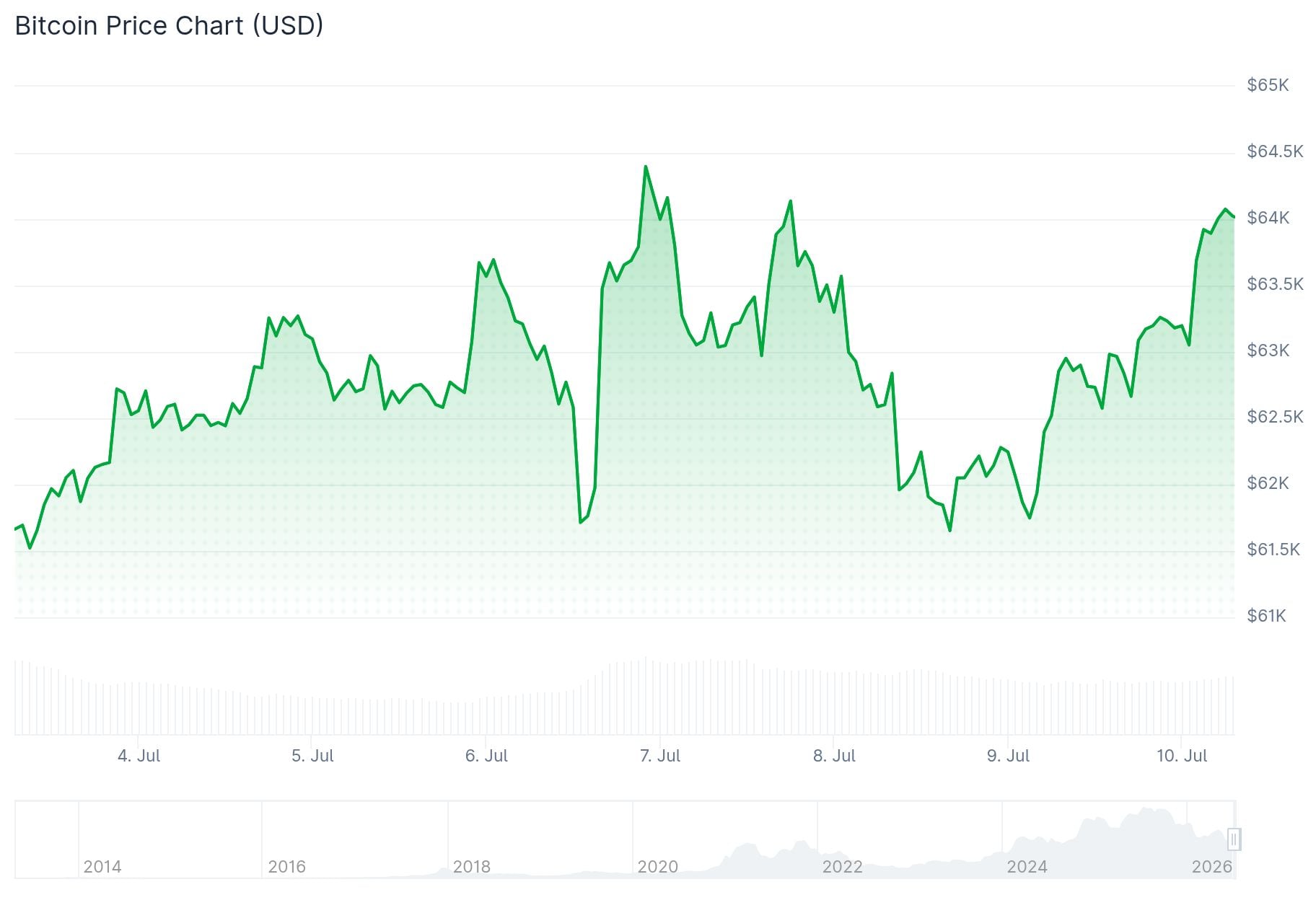
Daily Market Update: Nasdaq Gains 1.3% and Bitcoin Recovers as AI Chip Demand Grows

KlariVis Names Marcos Souza Chief Data & Analytics Officer, Elevates Guy DeCorte to Chief AI Officer
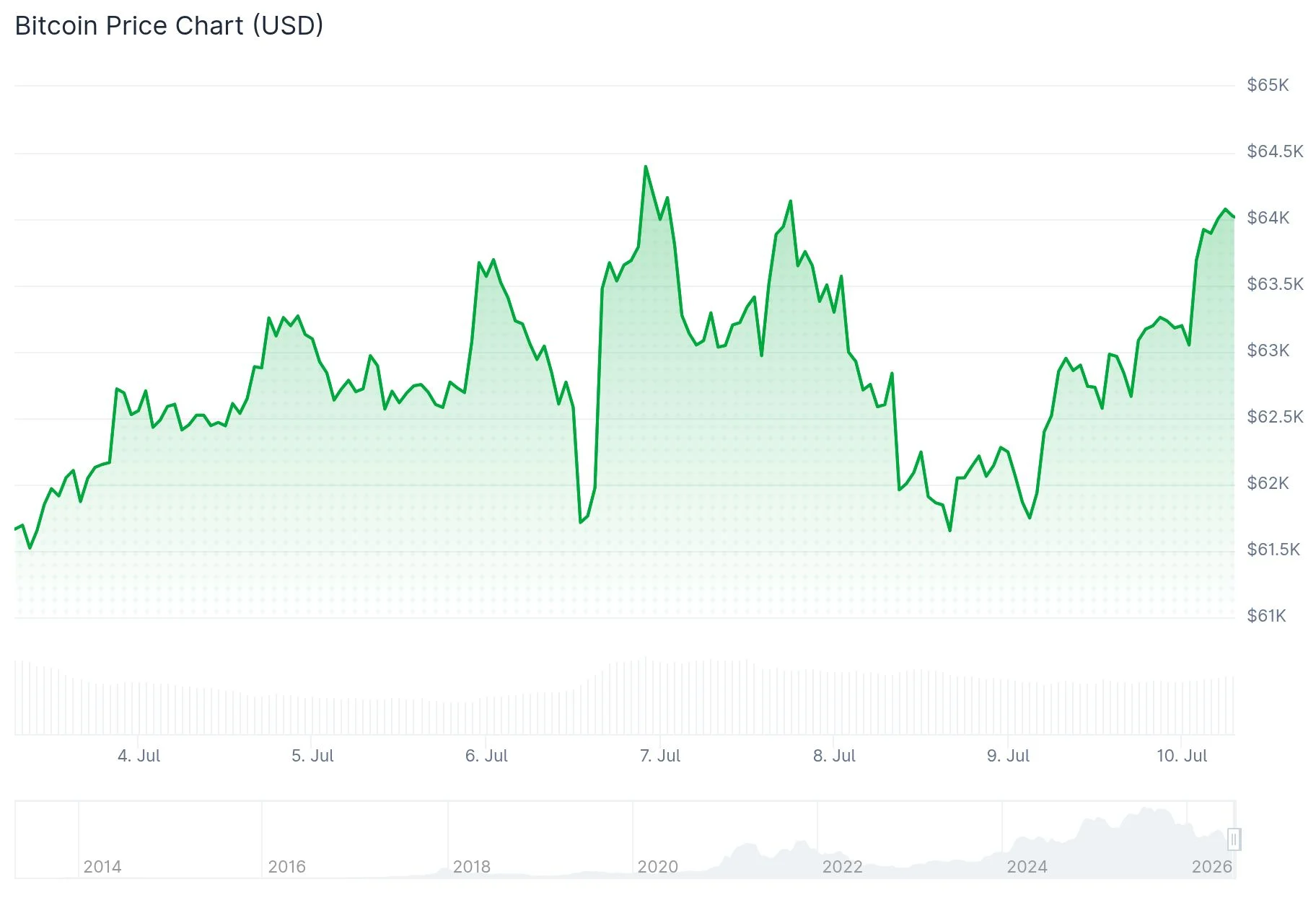
Bitcoin Surges Past $64K as Tech Stocks and Crypto Markets Rally Together
HOT
Currently trending cryptocurrencies that are gaining significant market attention
Crypto Prices
The cryptocurrencies with the highest trading volume
Newly Added
Recently listed cryptocurrencies that are available for trading