Overview
Chinese cloud artificial intelligence accelerator designer
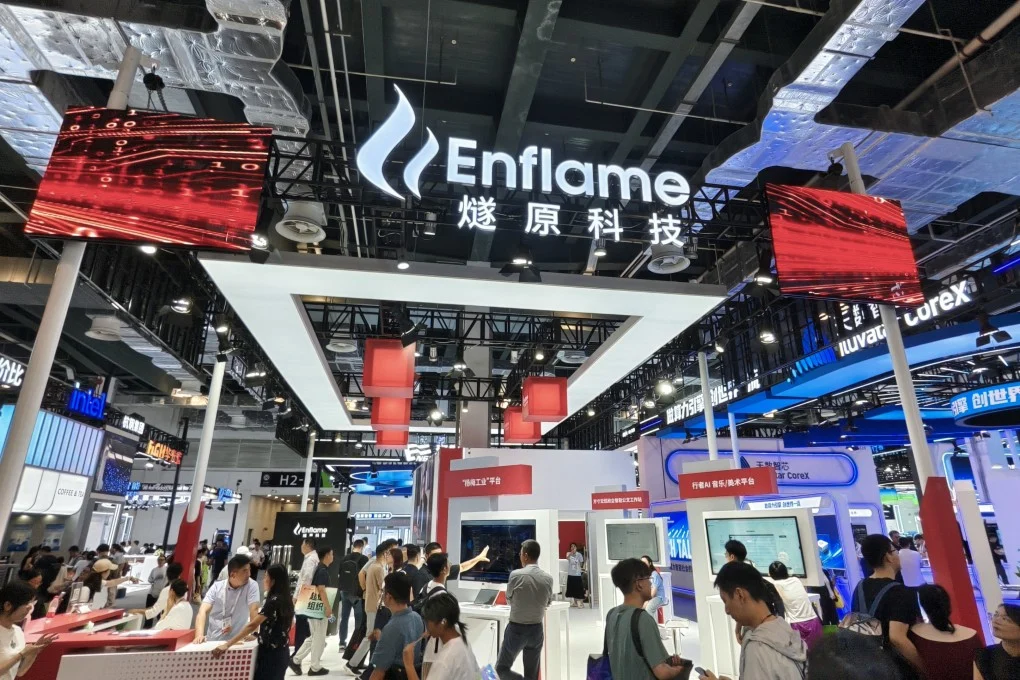
Enflame (ticker: 688801) officially commenced public subscription on the
Shanghai Stock Exchange STAR Market on September 2, 2026. As one of China's most prominent domestic compute unicorns, Enflame established an initial public offering subscription price of 142.18 yuan per share across 43.035173 million newly issued ordinary shares under online subscription code 787801. The offering aims to secure approximately 6.119 billion yuan in gross proceeds, establishing an implied initial market capitalization of roughly 61.187 billion yuan, or approximately 8.6 billion dollars. According to reporting from
Reuters and international semiconductor market trackers, this public listing reflects aggressive institutional capital allocation toward indigenous deep learning accelerators amid ongoing overseas hardware export controls. However, alongside this premium valuation multiple, prospective market participants face structural corporate realities, including continuous net operational losses, high capital expenditure requirements for advanced packaging, and heavy customer dependency on its largest institutional shareholder
Tencent.
Key Takeaways
Record capital formation on the STAR Market as Enflame sets its issue price at 142.18 yuan per share to raise 6.119 billion yuan, targeting an initial public market capitalization exceeding 61 billion yuan.
Rapid top line expansion driven by data center deliveries, with annual revenues climbing from 301 million yuan in 2023 to 990 million yuan in 2025, alongside forward projections indicating 2.3 billion to 3.0 billion yuan in revenue for the first three quarters of 2026.
Unprofitability persists despite narrowing losses, with net losses recorded at approximately 1.2 billion yuan in 2025 and projected between 700 million and 860 million yuan for the first nine months of 2026 due to extensive tape-out, foundry, and software engineering expenditures.
The Tencent ecosystem anchors commercial volume, with Tencent holding an approximate twenty percent equity stake while contributing roughly eighty-four percent of Enflame total corporate revenue in 2025, presenting both commercial validation and revenue concentration risks.
Geopolitical hardware polarization creates dual realities, opening a wide domestic procurement window for Enflame proprietary Suxi processors and TopsRider software stack while highlighting physical dependencies on advanced wafer fabrication partners and packaging supply chains.
Offering Mechanics and Valuation Metrics: The Pricing Behind 142.18 Yuan and the $8.6 Billion Capitalization
The bookbuilding and institutional inquiry process for Enflame on the Shanghai technology board illustrates robust institutional appetite for sovereign computing assets.
Subscription Code 787801 and Allocation Mechanics
Regulatory disclosures published by the Shanghai Stock Exchange confirm that retail and institutional accounts eligible for the STAR Market can participate using subscription code 787801. The maximum subscription limit for a single retail account is capped at 6,500 shares, requiring an allocation portfolio holding of at least 65,000 yuan in Shanghai-listed equity market capitalization. Backed by lead underwriter CITIC Securities, institutional inquiry books received broad participation from domestic mutual funds, sovereign wealth managers, insurance asset management arms, and qualified foreign institutional investors. Pricing the shares at 142.18 yuan establishes a rich price-to-sales multiple relative to historical billings, signaling market willingness to discount near-term profitability in favor of sovereign compute exposure.
Capital Allocation Across Advanced Compute Architectures
From the expected 6.119 billion yuan in net proceeds, the prospectus delineates that the entirety of the capital will be deployed across four primary strategic avenues: next-generation deep learning training chip development, distributed high-throughput inference hardware scaling, cluster inter-chip networking communication architecture, and foundation software stack optimization. Market intelligence from
Bloomberg indicates that with tape-out and mask set expenses climbing exponentially on sub-7-nanometer equivalent nodes, establishing a deep balance sheet liquidity reserve through secondary market equity issuance is essential for semiconductor designers seeking to sustain multi-year architectural cadences.
Financial Trajectory and Profitability Horizon: Tripled Revenues Versus Ongoing Net Losses
A detailed examination of the financial statements filed with the
China Securities Regulatory Commission reveals an enterprise moving rapidly from engineering validation into high-volume commercial scaling.
High-Velocity Growth in Year-to-Date Deliveries
Enflame operational revenues have expanded at an 83.76% compound annual growth rate over the preceding three fiscal years, generating 301 million yuan in 2023, 722 million yuan in 2024, and 990 million yuan in 2025. This delivery trajectory accelerated dramatically into 2026 as domestic hyperscalers integrated Enflame proprietary Suxi accelerators into production training fabrics. In its official prospectus guidance, management forecasted corporate revenues between 2.3 billion and 3.0 billion yuan for the first three quarters of 2026, representing a year-over-year growth rate ranging between 325.78% and 455.36%, surpassing the total cumulative turnover of preceding operating years.
Research Intensity and Amortization Dynamics
Despite top-line acceleration, bottom-line profitability remains negative. The company posted net losses attributable to parent company shareholders of 1.665 billion yuan in 2023, 1.510 billion yuan in 2024, and approximately 1.200 billion yuan in 2025. While loss margins are compressing, forward guidance projects net losses between 700 million and 860 million yuan across the first three quarters of 2026. Heavy structural investments in software stack optimization, intellectual property licensing, and specialized engineering compensation continue to absorb gross operating cash flows, reminding market participants that commercial self-sufficiency remains an ongoing engineering challenge.
The Tencent Factor: Ecosystem Synergies and Revenue Concentration Exposure
Among all institutional stakeholders, technology conglomerate Tencent represents both the principal growth catalyst and the most sensitive corporate governance variable in Enflame equity thesis.
Strategic Integration with a Twenty Percent Institutional Anchor
Corporate registry records show that Tencent holds an equity interest exceeding twenty percent in Enflame, making it the largest outside shareholder. Beyond equity backing, Tencent cloud data centers, social network infrastructure, algorithmic recommender engines, and proprietary foundation models have functioned as real-world testing environments for Enflame hardware. In the semiconductor sector, iterative hardware refinement requires continuous telemetry and execution feedback from enterprise-scale workloads, granting Enflame an execution feedback loop that standalone chip startups struggle to replicate.
Downstream Customer Concentration Realities
However, commercial dependence on Tencent introduces significant revenue concentration. Prospectus disclosures reveal that revenue generated from Tencent accounted for roughly eighty-four percent of Enflame total sales in 2025, rising sharply from approximately thirty-eight percent in 2024. Investigative reporting from the
Financial Times illustrates that extreme single-customer concentration presents valuation multiple discounts during institutional analysis. If Tencent diversifies its compute procurement toward alternative chip vendors or moderates annual infrastructure budgets, Enflame forward revenue trajectory could experience immediate variance.
Investors monitoring semiconductor sector re-anchoring and enterprise hardware volatility can track liquidity dynamics and derivatives pricing on institutional platforms.
Furthermore, liquidity metrics on
MEXC demonstrate sustained depth and cross-market turnover across equities-linked digital assets during major technological listing windows.
Competitive Landscape and Software Ecosystems: Carving Market Share in a Post-Cuda World
In the global compute ecosystem,
Nvidia has established an entrenched developer monopoly through its proprietary CUDA programming environment, requiring competing architecture providers to construct viable software translation layers.
The Software Compatibility Moat
Raw teraflops and memory bandwidth are insufficient to displace established enterprise hardware. Machine learning engineers prioritize developer ergonomics, pre-compiled operator libraries, and standard framework integration. To lower developer switching friction, Enflame developed its proprietary TopsRider computing platform, engineering broad compatibility across PyTorch, TensorFlow, and open-source distributed training orchestrators. Industry analysis by
Caixin Global highlights that achieving native execution parity with Western industry standards without introducing software compilation latency is the primary barrier separating real commercial adoption from government-subsidized pilot deployments.
Valuation Implications Across Chinese Semiconductor Peers
With its public listing, Enflame joins established STAR Market compute designers such as Cambricon and Hygon Information Technology, forming an expanding cohort of domestic accelerated hardware suppliers alongside unlisted peers such as Biren Technology and Moore Threads. Because domestic public markets assign strategic autonomy premiums to indigenous semiconductor enterprises, Enflame 61.187 billion yuan initial valuation establishes an important benchmark for future venture capital liquidity events and cross-market chip sector pricing.
Primary Structural Risks: Supply Chain Continuity, Advanced Foundry Access, and Commercialization Hurdles
While retail enthusiasm around the subscription window remains elevated, disciplined market participants must evaluate the physical and market risks surrounding the business.
Foundry Dependency and Advanced Packaging Constraints
Frontier artificial intelligence accelerators depend on advanced wafer fabrication processes and sophisticated high-density 2.5D or 3D chip-on-wafer packaging architectures. Given expanding unilateral trade measures and equipment export restrictions, access to leading-edge commercial foundries remains subject to regulatory variables. Any disruption in wafer allocation, substrate procurement, or advanced packaging yields could directly affect commercial hardware delivery cadences and project delivery schedules.
Enterprise Gross Margin Compression
Beyond fabrication, customer diversification beyond Tencent remains an operational requirement. Across traditional commercial enterprises, telecommunications operators, and regional supercomputing centers, competition among domestic hardware suppliers is intensifying. If Enflame must offer aggressive pricing concessions or custom integration services to win non-Tencent commercial bids, blended corporate gross margins could face downward pressure.
Exclusive View from James Mitchell
From a quantitative market structure and liquidity framework perspective, Enflame public subscription at 142.18 yuan per share and a 61.2 billion yuan valuation represents a classic strategic autonomy premium engineered through sovereign compute demand.
Retail market participants frequently concentrate exclusively on initial trading day gains, ignoring the structural valuation requirements underpinning an 8.6 billion dollar market capitalization. In traditional discounted cash flow modeling, sustaining a 60 billion yuan valuation requires an enterprise to either deliver multi-billion-yuan positive operating earnings within two fiscal cycles or prove that its proprietary software ecosystem commands high organic switching costs. As the prospectus demonstrates, Enflame present revenue surge is heavily anchored by Tencent purchasing volume, which constituted eighty-four percent of 2025 receipts. For professional derivative traders and systematic allocators, this provides upside revenue momentum in an expansionary infrastructure cycle, but long-term equity stability depends on commercial diversification outside the core shareholder base during late 2026 and 2027. Once opening secondary market volatility normalizes, only semiconductor enterprises capable of securing continuous advanced foundry throughput while generating diversified non-captive cash flows will defend their valuation multiples.
FAQ
What are the key subscription details for the Enflame STAR Market IPO today?
Enflame Technology is listed under Shanghai Stock Exchange ticker 688801 with online subscription code 787801. The offering price is set at 142.18 yuan per share for 43.035173 million ordinary shares, targeting gross proceeds of roughly 6.119 billion yuan and implying an initial market valuation of approximately 61.187 billion yuan.
Is Enflame currently profitable?
No, the company remains unprofitable at the operating level. Regulatory filings confirm net losses attributable to parent company shareholders of 1.665 billion yuan in 2023, 1.510 billion yuan in 2024, and approximately 1.200 billion yuan in 2025, with projected net losses between 700 million and 860 million yuan across the first three quarters of 2026 due to extensive research and advanced packaging overhead.
What is the revenue trajectory for Enflame heading into this IPO?
Corporate revenues have demonstrated rapid expansion, climbing from 301 million yuan in 2023 to 722 million yuan in 2024 and reaching 990 million yuan in 2025. For the first nine months of 2026, the company projected top-line revenues between 2.3 billion and 3.0 billion yuan, representing a year-over-year surge of 325.78% to 455.36%.
What role does Tencent play in Enflame operations and equity structure?
Tencent is Enflame largest institutional shareholder, holding an equity interest of approximately twenty percent. In addition to initial capital backing, Tencent provides primary commercial demand and live workload verification, though it also represented roughly eighty-four percent of Enflame total corporate revenue in 2025.
What are the main investment and operational risks associated with Enflame?
The primary operational risks include extreme customer concentration with heavy revenue dependency on Tencent, supply chain exposure regarding advanced foundry manufacturing and 2.5D packaging access under export control regimes, and ongoing operational cash burn that requires sustained commercial scale to achieve break-even.
What criteria must individual investors satisfy to participate in the subscription?
Because Enflame is listing on the Shanghai Stock Exchange STAR Market, retail investors must hold active STAR Market trading permissions, requiring an average daily asset balance of at least 500,000 yuan over the preceding twenty trading days alongside at least twenty-four months of registered securities trading experience, accompanied by adequate market capitalization allocations in Shanghai-listed equities.
Disclaimer
The information, analysis, and views contained in this article are provided for general educational and informational purposes only and do not constitute financial advice, investment advice, legal advice, tax advice, or a recommendation to buy or sell any security, digital asset, or financial derivative. Equity securities and financial instruments are subject to high market volatility and capital risk. Past operational performance, financial results, and quantitative indicators do not guarantee future market returns. Investors must conduct independent due diligence and evaluate their personal financial situation, risk tolerance, and investment goals before executing any trade. The MEXC Crypto Pulse team assumes no liability for any direct or indirect financial losses resulting from the use of or reliance upon the information published herein.
About the Author
James Mitchell specializes in technical analysis, market trends, and trading strategies for both Bitcoin and altcoins. Based in London, he has over 10 years of experience in financial markets. Before joining MEXC Learn, James worked as a senior analyst at a leading European investment firm, where he developed expertise in risk management and quantitative trading. His transition to cryptocurrency markets began in 2017, and he has since become recognized for his data-driven approach. He holds a Master's degree in Financial Economics from the London School of Economics. His analytical approach combines traditional technical analysis with on-chain metrics to provide readers with actionable insights. Areas of expertise include technical analysis, market trends and cycles, trading strategies, Bitcoin and altcoin analysis, and risk management.
Research References